Sweden researchers reshape surface to make superconductors more practical
Swedish researchers textured an MgO substrate with nanofacets to help ultrathin YBCO stay superconducting at higher temperatures and stronger magnetic fields.
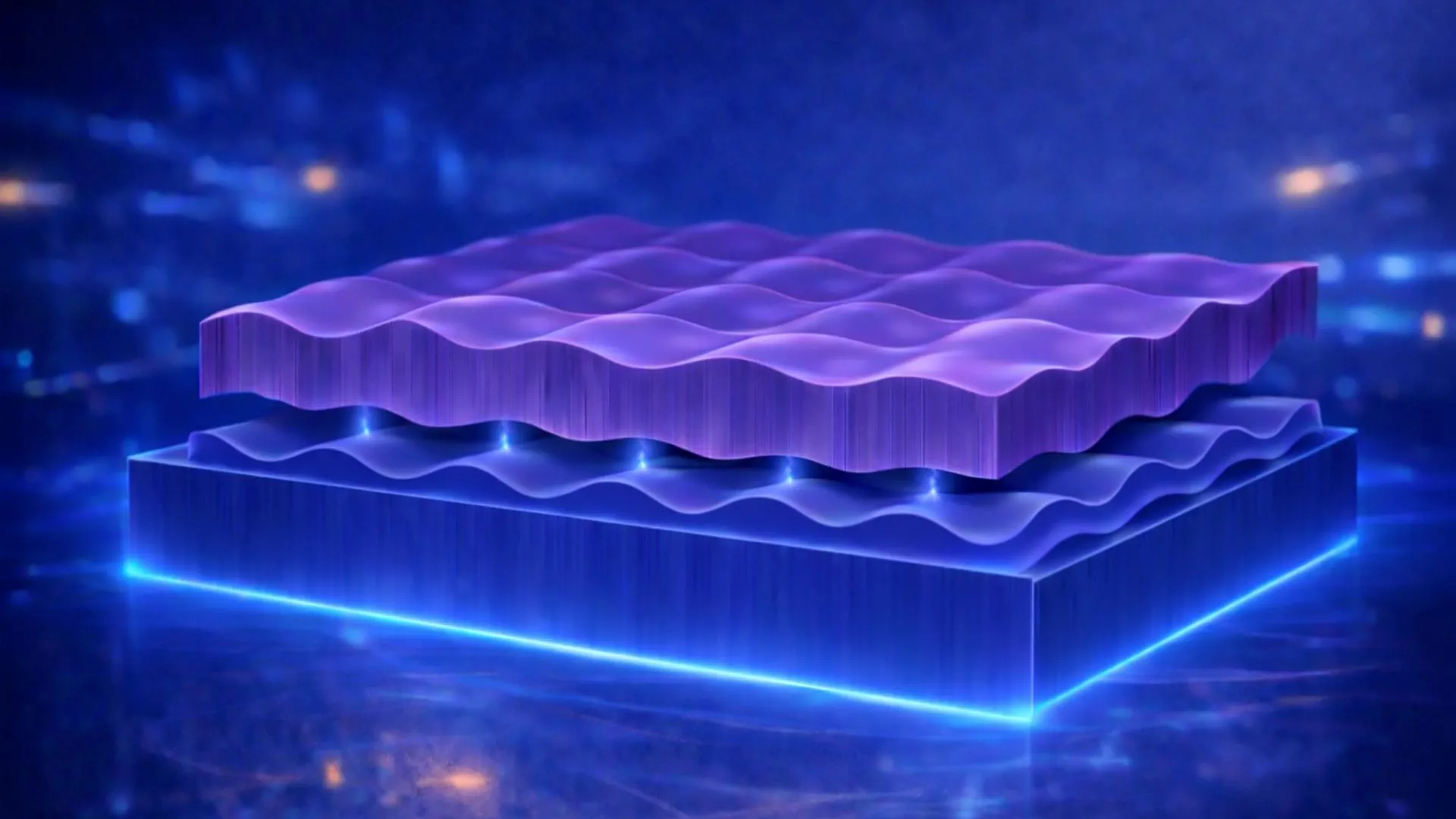
The more practical advance in superconductivity may have come from the surface under the material, not the material itself. In a Chalmers University of Technology-led study, researchers grew nanometer-thin YBa2Cu3O7, or YBCO, on a deliberately nanofaceted MgO substrate and found that the sculpted base improved both the superconducting onset temperature, Tcon, and the upper critical magnetic field, Hc,2.
The texture was created by annealing the MgO surface at 790°C, producing triangular nanofacets with an average height of about 1 nm and widths of 20 to 50 nm. Chalmers described the features as smaller than one millionth of a hair’s thickness, a reminder that the advance came from controlling the landscape at a scale far below what conventional manufacturing usually notices. The paper, published online Jan. 7, 2026 in Nature Communications, said the interface between the film and the substrate created an electronic environment that helped superconductivity persist under conditions that normally suppress it.
The researchers linked the boost to electronic nematicity and unidirectional charge density waves at the interface, suggesting substrate engineering can act as a new tuning knob for cuprate superconductors. That matters because superconductors can carry current without resistance or energy loss, but most still require extremely low temperatures and fail when exposed to magnetic fields, making them expensive and hard to deploy outside the lab. The team’s result does not claim room-temperature superconductivity. It points to a bottleneck that may be easier to manage: how to stabilize ultrathin superconductors in real devices.
The broader stakes are substantial. Digital devices, data centers and communications networks already account for an estimated 6% to 12% of global electricity use, and even modest gains in efficiency could ease pressure on power systems. If the substrate approach scales, the first beneficiaries are likely to be information networks, quantum devices and other electronics that have to operate in heat and magnetic fields. The work also fits into a longer research arc at Chalmers, where a 2024 paper from the same ecosystem argued that nanofaceted substrates can tune the ground state of cuprate thin films.
The author list includes Eric Wahlberg, Riccardo Arpaia, Debmalya Chakraborty, Alexei Kalaboukhov, David Vignolles, Cyril Proust, Annica M. Black-Schaffer, Thilo Bauch, Götz Seibold and Floriana Lombardi. The paper was received on March 11, 2025, accepted on Dec. 2, 2025 and then published online in January 2026, underscoring that this was a recent step in a field first transformed by J. Georg Bednorz and K. Alex Müller’s 1986 discovery of high-temperature superconductivity in cuprates.
This article was produced by Prism’s automated news system from verified source data, official records, and press releases, then run through automated quality and moderation checks before publishing. The system is built and supervised by the people who set the standards it runs under. Read our full AI policy.
Know something we missed? Have a correction or additional information?
Submit a Tip