Sweden to ban mobile phones in schools next academic year
Sweden, once a model for classroom digitization, is set to ban phones in schools after officials cited 30% pupil distraction and weaker reading conditions.
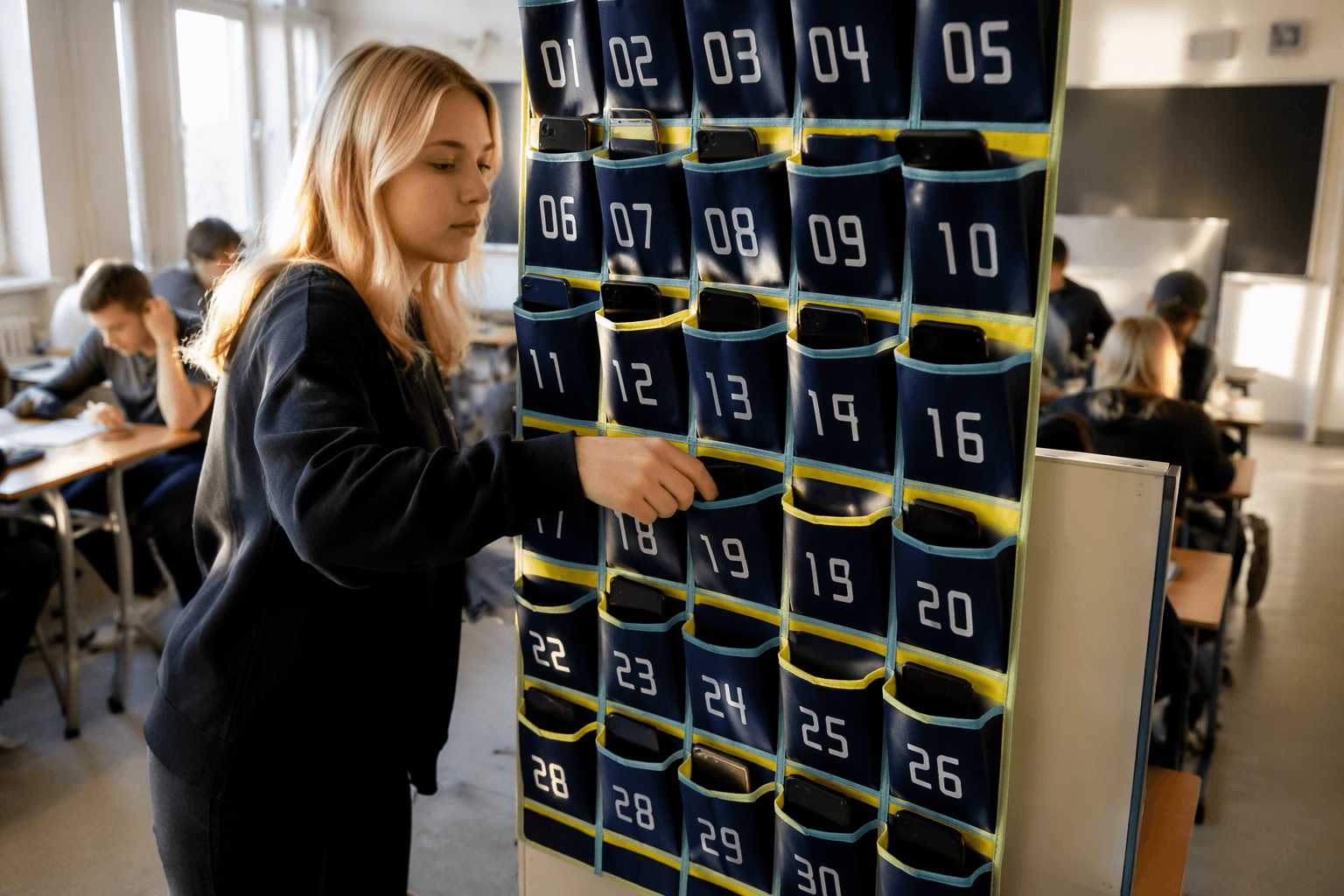
Sweden is preparing to bar mobile phones from schools next academic year, a sharp reversal for a country long held up as a leader in classroom digitization. The center-right government is now arguing that less screen time, more reading time and more physical books will give children better conditions to concentrate, learn to read and write, and build relationships.
The shift has been building for more than two years. In February 2024, ministers said screen-free environments could help children focus and master literacy. By June, the government was citing OECD-linked research showing that 30% of pupils were distracted by mobile phones and other digital devices during lessons, with Sweden above the OECD average on that measure. Officials treated that as evidence that digital convenience in schools had crossed into a distraction problem.
On September 25, 2024, the government launched an inquiry into how daily collection of mobile phones and other electronic communication devices could be organized in compulsory schools and after-school care. The mandate covered preschool class, compulsory school and equivalent school forms, as well as fritidshem, and it asked investigators to consider exceptions for special reasons and what should happen if a student refused to hand over a phone. In March 2025, the inquiry went further and proposed a nationwide ban during the entire school day in compulsory school forms and fritidshem. The government said the legal changes were intended to take effect on July 1, 2026.
Officials have tied the phone ban to a broader overhaul of Swedish education. The package includes curriculum changes, grading-system changes and teacher-training reforms, while the Swedish Schools Inspectorate and the National Agency for Education have been tasked with reviewing textbook access and the use of digital devices in schools. The government has described the wider effort as a back-to-basics reset, with more staff-supported libraries and more analogue teaching tools alongside a reduced dependence on screens.
Not everyone is convinced. The Swedish Association of Local Authorities and Regions, known as SKR, opposed the national ban and warned that it would create administrative burdens and liability questions if phones were lost or damaged. SKR also said schools would need secure lockers for phones, estimating the upfront cost at 45 million kronor, far above the inquiry’s 15 million-krona estimate. That dispute now sits at the center of a larger question for education systems beyond Sweden: whether the evidence has finally turned against the classroom tech enthusiasm that once looked untouchable.
This article was produced by Prism’s automated news system from verified source data, official records, and press releases, then run through automated quality and moderation checks before publishing. The system is built and supervised by the people who set the standards it runs under. Read our full AI policy.
Know something we missed? Have a correction or additional information?
Submit a Tip