Sweden's tougher immigration rules spark business warning on talent loss
Sweden will lift its work-permit wage floor to SEK 33,390, and employers warn the tighter line could drain talent from startups and key services.
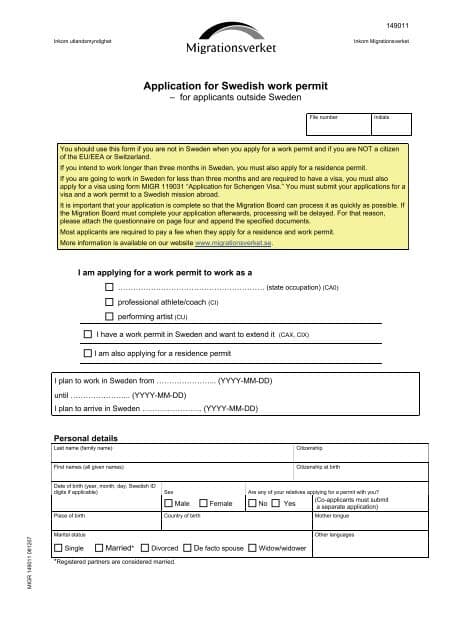
Sweden’s centre-right government is tightening work and citizenship rules just as business leaders warn the country is putting its innovation model at risk. The cabinet and the Sweden Democrats have said labour migrants will soon have to earn at least 90% of Sweden’s median wage, or SEK 33,390 a month, while 27 shortage occupations are set to be exempt.
The move builds on an earlier shift. On 18 June 2024, Sweden raised the salary threshold for work permits to 80% of the median wage, or SEK 28,480 a month. In January 2026, the government said it would push the bar higher again and pair the new floor with targeted exemptions for some tech and life-science startup workers, recent graduates in certain regulated professions, and refugees from Ukraine.

For employers, the concern goes well beyond border control. Startups, technology companies, health care providers and logistics firms already compete for scarce workers, and higher wage floors can make it harder to recruit foreign talent into jobs that do not always meet the new salary test. That risk is especially sensitive in Sweden, where globally known companies such as Spotify and Klarna have helped build a reputation for openness to international founders and skilled workers.
The political argument is stronger enforcement. The government’s own migration policy says it is tightening requirements to make Swedish citizenship more meaningful and cutting asylum-related immigration to sustainable levels. A March 2024 inquiry said there were widespread problems with abuse of labour-immigration rules, especially in low-skilled occupations, which has given ministers a case to argue that the system had become too loose.
Citizenship rules have also been hardened. Legislative amendments making citizenship by notification stricter took effect on 1 October 2024, and a January 2025 inquiry proposed still tougher standards, including a self-sufficiency requirement and a possible start date of 1 June 2026 if adopted. The direction is clear: Sweden wants fewer low-skilled migrants and tighter controls on who stays.
The economic stakes are larger than the immigration debate alone. Eurostat data show Sweden’s economy has outpaced the broader European Union over the past quarter-century, with average annual growth of 1.7% compared with 1.3% in the EU. That gap helps explain why business groups see the current crackdown as a test of whether an export-driven economy can win votes with tougher migration rules without weakening the supply of workers and founders that has helped drive growth.
This article was produced by Prism’s automated news system from verified source data, official records, and press releases, then run through automated quality and moderation checks before publishing. The system is built and supervised by the people who set the standards it runs under. Read our full AI policy.
Know something we missed? Have a correction or additional information?
Submit a Tip