Swinney says second Scottish independence referendum could come by 2028
Swinney put 2028 on the table for a new independence vote, but any path still runs through a Holyrood majority and a legal wall at Westminster.
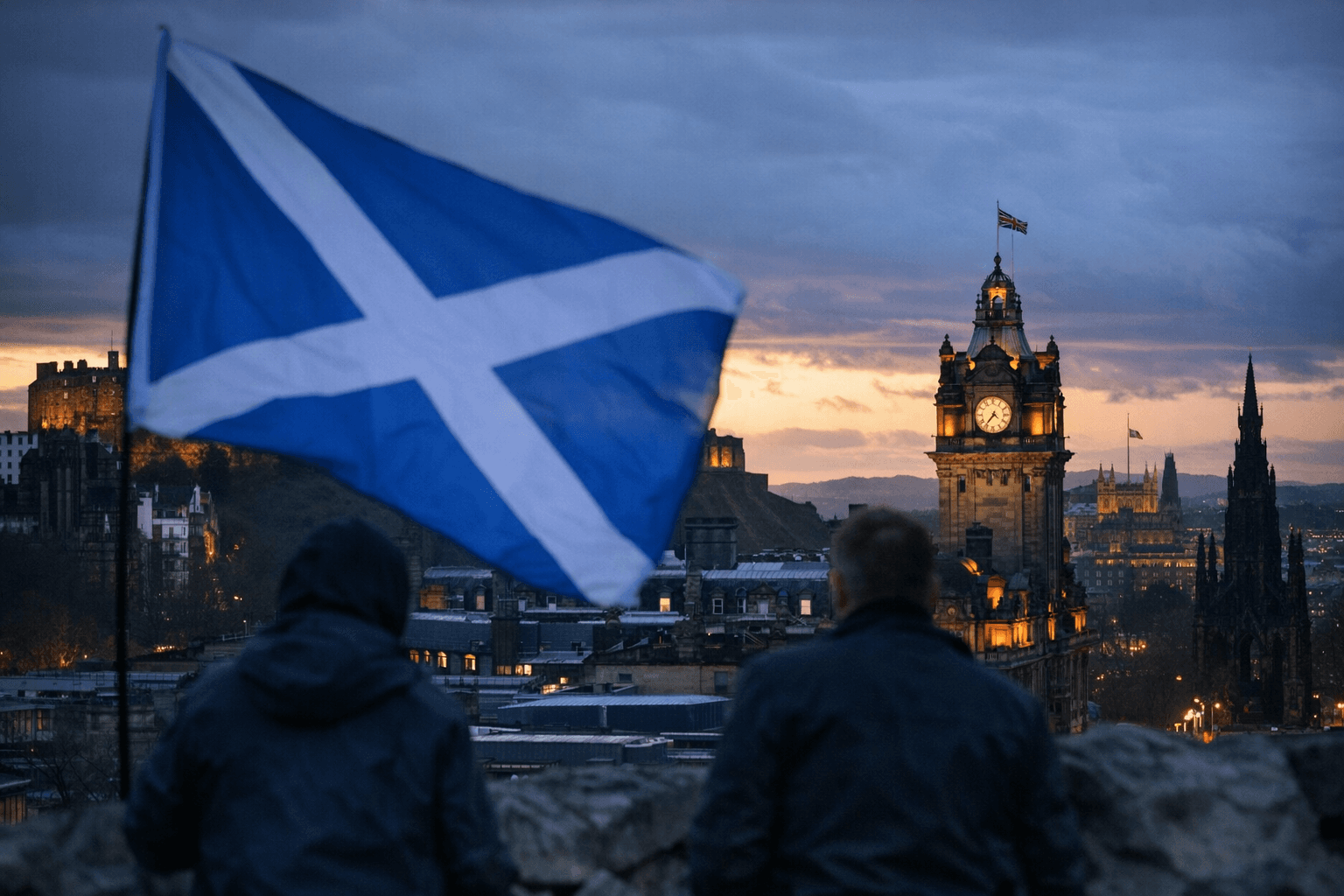
John Swinney used a televised debate in Paisley to put a new Scottish independence referendum in reach of 2028, but his claim immediately raised the harder question of how, legally and politically, such a vote could actually happen.
Speaking in the BBC Scotland Debate Night leaders special from Paisley Town Hall, the SNP leader said it was “perfectly conceivable” that Scotland could vote again on independence within two years. He tied that timetable to a simple condition: the SNP would need to win a majority at the Scottish Parliament election on Thursday 7 May to claim a mandate for another referendum.
That is a steep test. Holyrood has 129 MSPs, with 65 seats needed for a majority, and Swinney’s argument depends on the SNP turning an election fought on domestic issues into a renewed constitutional mandate. The timing also collides with the ruling that has defined the independence debate since 2022, when the UK Supreme Court said the Scottish Parliament cannot unilaterally legislate for an independence referendum. Any new vote would therefore need agreement from Westminster or another legal route.
Swinney has tried to keep the prospect of independence alive by casting the process as achievable. He has said Scotland could become independent within 18 months if voters backed the cause, pointing to the timetable used before the 2014 referendum and the earlier expectation that independence could arrive by 2016. The last vote, on 18 September 2014, produced a 55.3% No result against 44.7% Yes, on an 84.6% turnout, with 2,001,926 votes for No and 1,617,989 for Yes.
The other party leaders treated Swinney’s claim as both a challenge and a warning. Scottish Labour leader Anas Sarwar said the election was “not about independence” and argued that those who support it should spell out the route to another referendum. Scottish Conservative leader Russell Findlay said breaking up the UK would be an “unmitigated disaster.” Scottish Greens co-leader Ross Greer countered that Scotland’s future should be “in Scotland’s hands.”
The response from outside Scotland was just as blunt. UK Health Secretary Wes Streeting said there would be no second referendum under a Labour government, saying the UK had had enough of “chaos,” while Scottish Liberal Democrats said Swinney was insisting on the “impossible.” That leaves Swinney’s 2028 pitch looking less like a settled plan than an early test of whether the SNP can convert electoral strength into a credible path through law, numbers and negotiation.
This article was produced by Prism’s automated news system from verified source data, official records, and press releases, then run through automated quality and moderation checks before publishing. The system is built and supervised by the people who set the standards it runs under. Read our full AI policy.
Did this article answer your question?

