Taco Bell workers describe drive-thru weapon threat, sheltering in office
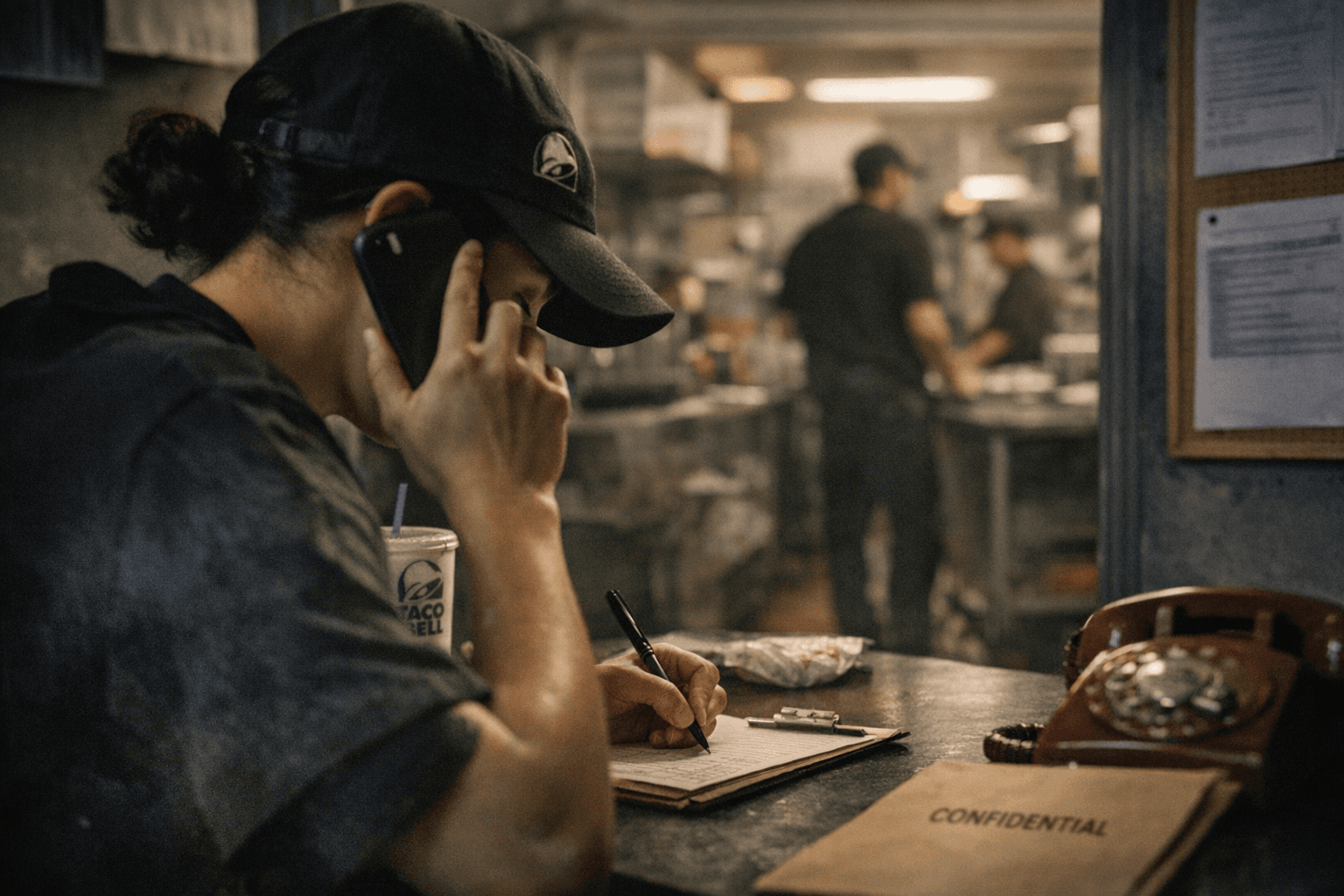
A Taco Bell employee described a drive-thru customer who "pulled the strap", prompting staff to shelter in the office. The account spotlights persistent late-night safety risks for crew.

A Taco Bell crew member shared a late-night drive-thru incident in which a customer "pulled the strap," causing employees to retreat and shelter in the back office until police arrived. The account, amplified by a large online worker conversation, lays bare the kind of confrontations that many crew members say they face during overnight and late-evening shifts.
Staff described using familiar quick-response steps when situations escalate: locking doors, retreating to a manager's office, and calling law enforcement. Those practices have become one of the few universal safeguards among stores with minimal overnight security presence, according to multiple current and former crew who recounted similar encounters. Reported incidents ranged from customers allegedly brandishing guns to heated disputes over change or incorrect orders that turned aggressive.
The episode underscores the heightened risks of working the drive-thru lane after dark. Late-night shifts tend to have thinner staffing, more cash on hand, and fewer managerial or security layers, increasing pressure on front-line workers to handle volatile encounters while keeping customers served. For many crew members, especially those closing the store, the drive-thru window is where the most unpredictable and potentially dangerous interactions occur.
Workers in the conversation also debated store-level responses and policies. Some said individual managers have adopted practical measures such as implementing a safe-room protocol and limiting cash drawer exposure; others raised questions about whether stores allow staff to carry weapons or hire security. Those questions remain points of tension in the worker community because official corporate policies and local franchise practices can differ and are not always clearly communicated to crew on the floor.
The human costs are immediate: anxiety on the job, increased turnover among staff unwilling to work late shifts, and added training burdens for managers who must coach crews on de-escalation and emergency steps. A pattern of frequent incidents can also strain relationships with local law enforcement and complicate scheduling and staffing decisions in neighborhoods where late-night incidents are more common.
For Taco Bell crew and managers, the conversation functions as a peer-to-peer safety briefing, a place to swap tactics that have worked and warn others about red flags. For operators and corporate leaders, the posts highlight an operational priority: whether to invest in stronger in-store security, clearer protocols, or staffing changes to reduce risk. As crews continue to report these on-the-job dangers, workers and employers alike will be watching for changes in training, staffing and store-level safety measures that could reduce the chance that a late-night order turns into a life-threatening confrontation.
Know something we missed? Have a correction or additional information?
Submit a Tip