Tailoring and Fit Checklist for Modern Power Dressing Confident, Not Rigid
Fit and proportion are non‑negotiable: modern power dressing should read confident, not rigid, with tailoring that flatters posture and moves with you.
Fit is the vocabulary of authority. Begin there: "Fit and proportion trump labels — a silhouette that flatters your posture and carries you through the day is" — that unfinished line from the Evergreen checklist is the manifesto. When clothing sits with intention—shoulder seams aligning, waistlines securing without pinching, hems that skim rather than swallow—you read as competent and composed. The quickest way to undermine authority is an ill‑fitting garment; the fastest way to assert it is a tailored piece that balances structure with ease.
Why fit matters Nikki Tucker, a self‑declared pant‑suit aficionado, captures the point precisely: "I am not talking about the stereotypical notion of big shoulder pads and masculine silhouettes, I am referring to the message of confidence that your clothing conveys when you step into a room." Fit translates physically and socially: it elongates, sharpens posture and communicates intent before you speak. Nora Gardner echoes the arc of evolution in power dressing—moving away from 1980s mimicry toward refined pieces that flatter "real women’s bodies"—which makes accurate tailoring and proportion the non‑negotiable foundation of a modern wardrobe.
- Structured waistbands — Gurkha, extended or reinforced — to secure trousers and skirts without gapping.
- Precision stitching and jetted pockets to keep the line clean; covered buttons and neat finishing at the lapel signal refinement.
- Cuff choices — from single‑button informal cuffs to four kissing button arrangements — that show attention to proportion at the wrist.
- Hybrid elements such as an inner layer with a hybrid zip, as in the Brown Glen Check hybrid jacket, which marry traditional structure with modern practicality.
- For dresses, princess seams, a standing collar and a sleek front zipper — the Evelyn Dress details that make it a favorite among news anchors and politicians — for a sculpted, camera‑ready silhouette.
The tailoring checklist: construction details that matter
The craftsmanship details listed in tailoring brochures are not decorative trivia; they are how you build authority. Look for:
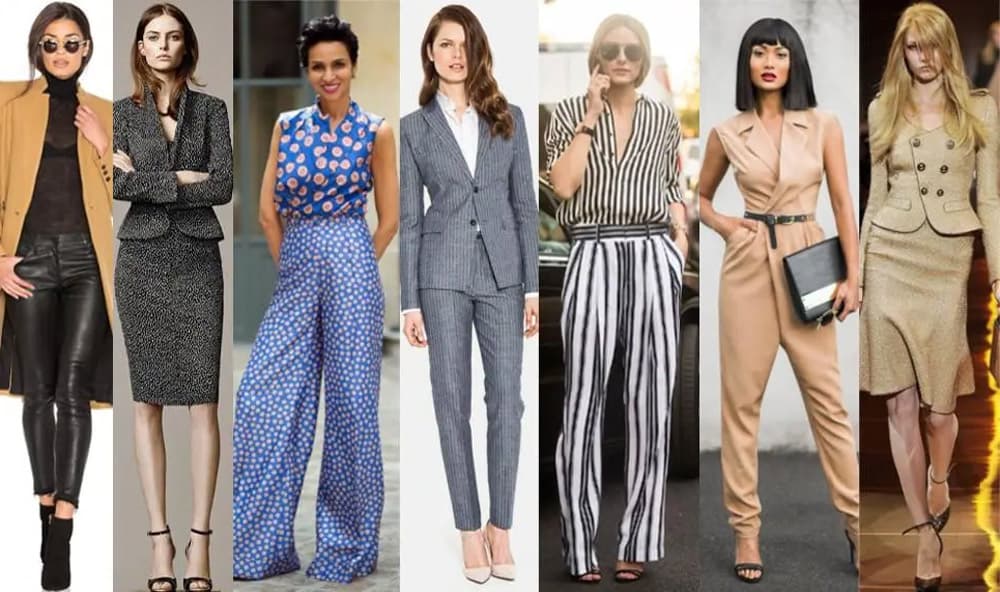
Silhouette strategies: elongated, angular, or experiment‑friendly There is not a single silhouette of power. Nikki Tucker’s approach for a 5ft litigator favored "clean long lines and sharp angular shapes" in Italian wools to elongate and convey authority. That measured simplicity—skirt suits, tailored dresses, slacks—creates a modular wardrobe that reads composed and versatile. By contrast, Katehewko encourages creative silhouette play: oversized jackets, flowing trousers and asymmetrical cuts are legitimate power moves when balanced with a tailored anchor. The modern brief is to choose a silhouette that serves posture and purpose—whether sleek and angular or deliberately voluminous.
Color directives: neutrals, accents, and the new energy Two distinct but compatible strategies emerge. A conservative palette—grey, navy and black—remains a shorthand for gravitas, especially when elevated with gold‑accented jewelry or pearl earrings, as Tucker prescribes. At the same time, bold color is having its moment: Perricutten highlights yellow in both pastel and golden tones, and suggests powder green (try the Ella Crepe Skirt pairing) as a refreshing alternative to navy and black. Nora Gardner’s wardrobe vocabulary includes Teal, Power Red and Electric Blue for moments when vibrancy supports visibility. The rule is simple: choose colors that reinforce your message—neutral for composed authority, saturated hues for creative leadership.
Fabrics and seasonality: choose weight for climate and consequence Material choices shape how power dressing functions across seasons. For elevated suiting, "finest Italian wools" deliver drape, resilience and a refined hand—ideal for long days and travel. Summer requires a different logic: linen, cotton blends and lightweight wool keep breathability front of mind while maintaining tailoring. Stretch crepe, cited by Nora Gardner, is a practical, camera‑friendly fabric for dresses like the Evelyn, offering comfort without losing structure. For destination or warmer climates, look to sage‑green linen/wool blends or blue/green wools to brighten the suit without losing polish.
Accessories, shoes and the finishing grammar Accessories are punctuation, not noise. Perricutten suggests geometric gold pieces—hexagon hoops or triangle drops—and a simple gold watch or cuff to reinforce clean lines, while Katehewko argues for statement accessories (chunky necklaces, oversized sunglasses) as mood setters. Footwear should read intentional: pointed nude stilettos are Perricutten’s finish of choice, whereas Katehewko permits stiletto boots or even statement sneakers depending on the tone. Avoid indifferent shoes—Tucker’s cautionary example of ballet flats paired with an unstructured jersey dress underlines how footwear can undo otherwise careful tailoring.

Case study: a litigator’s wardrobe reboot Nikki Tucker’s client story is a useful blueprint. A 5ft tall partner arrived in a knit jersey dress with a peplum, ballet flats and a cardigan; the outfit "lacked tailoring and fit," and failed to convey authority to an all‑male international client. Over several weeks Tucker created a modular wardrobe of skirt suits, dress shirts, tailored dresses and slacks in the finest Italian wools, sticking to clean lines and a neutral palette, with gold accents and pearl earrings. The result, Tucker writes, was clear: "This solution kept her looking feminine, but powerful without looking contrived." The lesson is practical—fit, fabric and consistent line beat costume every time.
Functional tailoring: hybrid pieces and made‑to‑measure details Modern tailoring is pragmatic. Hybrid jackets—like the Brown Glen Check with a navy hybrid zip or a black patch pocket jacket with a hybrid zip—add an inner layer for warmth and comfort without sacrificing the external shape. Cdnc Heyzine’s catalogue of details (structured waistbands, Gurkha options, precision stitching) underlines why made‑to‑measure matters: you can choose waistband style, cuff finishing and pocket placement to suit body and role. If ready‑to‑wear requires compromise, reserve budget for tailoring adjustments or a bespoke jacket with the exact cuff and pocket arrangement you prefer.
Occasion and context: office, media, and black tie Tailoring must respond to situation. Nora Gardner positions pieces—like the Evelyn Dress—for both the office and special events; its princess seams and standing collar translate well on camera and in the boardroom. For formal evenings, the tuxedo language retained in tailoring brochures matters: shawl collar double‑breasted tuxedos with jetted pockets and covered buttons remain the code for black‑tie formality. Think of your wardrobe as a set of calibrated responses: choose the silhouette, fabric and finish appropriate for client meetings, presentations or a formal dinner.
- Prioritize shoulder and waist fit first; adjust sleeve length and hem second.
- Request structured or Gurkha waistbands for trousers and skirts to prevent gaping.
- Ask about hybrid zips/inner layers for practical jackets that still read tailored.
- Favor Italian wool for heavy‑use tailored pieces; choose linen/cotton blends or lightweight wool for summer suits.
- Inspect finishing: jetted pockets, covered buttons, precision stitching and cuff detail.
- Make shoes and jewelry part of the fitting conversation; they complete the posture.
A short, explicit checklist to carry to fittings
Conclusion Modern power dressing is less imitation and more intention: an interplay of precise tailoring, considered fabrics and purposeful accents that together read confident, not rigid. Whether you invest in a Milano knit jacket with a waist‑cinching belt for "soft power dressing," a powder‑green Ella crepe skirt to refresh the palette, or a made‑to‑measure hybrid jacket with a navy zip, the mandate is unchanged—fit first, then character. As Anna Wintour reminds us, “Fashion is not about looking back. It’s always about looking forward.” Build a wardrobe that moves you forward.
Know something we missed? Have a correction or additional information?
Submit a Tip