Taiwan conflict could trigger U.S.-China nuclear escalation, study warns
A new defense assessment said a Taiwan war could move fast from conventional strikes to nuclear escalation, intensifying pressure on U.S. deterrence planning in Asia.

The sharpest policy warning before Asia’s top security gathering was not about an invasion itself, but about what could follow: a Taiwan fight could force the United States and China into strikes on each other’s command and communications networks, raising the chance that a conventional war would tip into nuclear escalation.
The International Institute for Strategic Studies said both militaries would likely mount sweeping operations aimed at rival command-and-communications hubs in a crisis over Taiwan. That pathway matters for U.S. planners because it suggests deterrence would not hinge only on ships, aircraft and missiles around the island, but on the resilience of command systems, communications links and decision-making under attack. In practical terms, that pushes alliance planning in the Indo-Pacific toward harder, deeper and more survivable military networks, along with higher defense spending on long-range strike, missile defense and distributed bases.
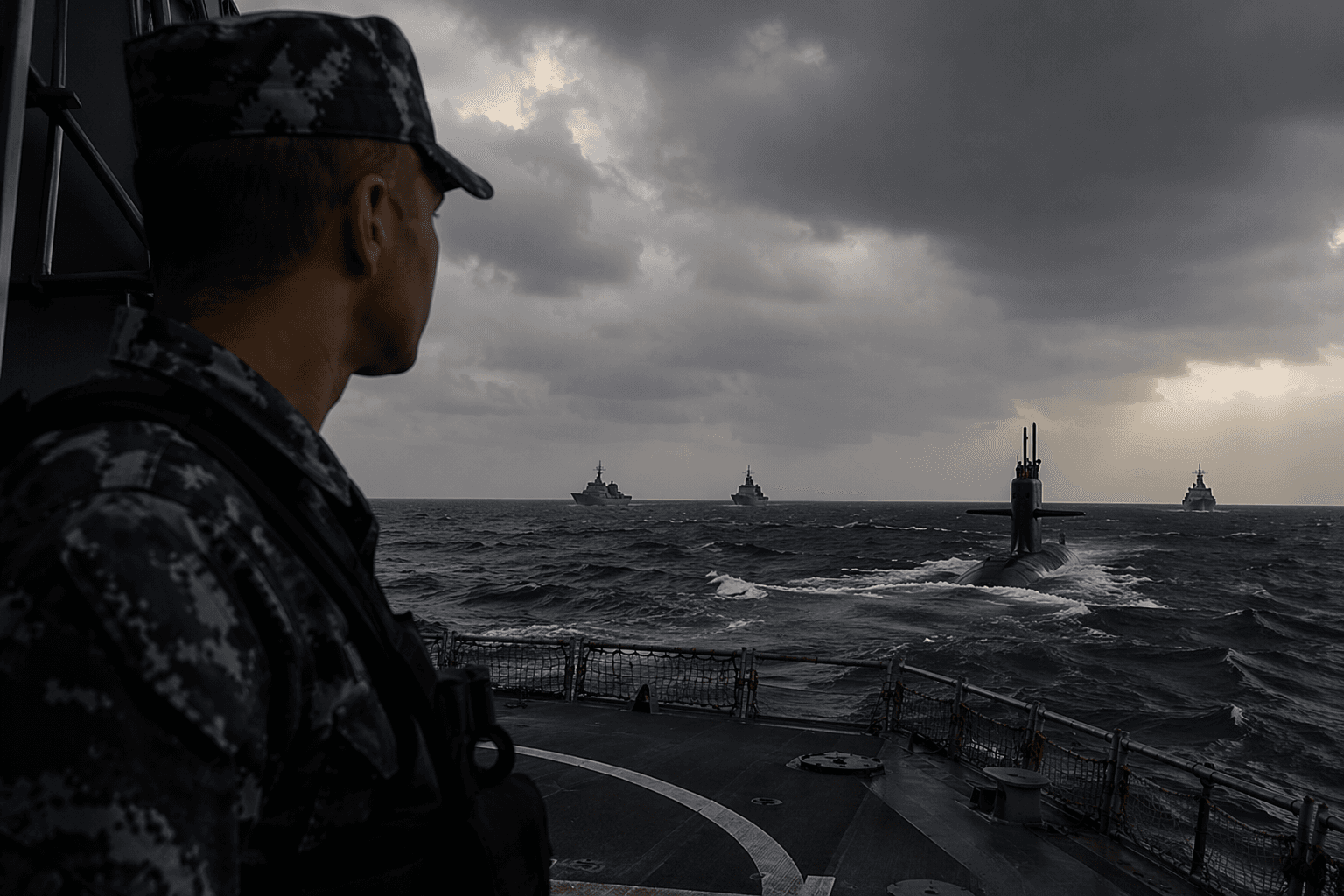
The London-based group said the Asia-Pacific was entering a new nuclear arms race. Its assessment said regional states with strategic interests were expanding nuclear arsenals, while non-nuclear states were investing in long-range conventional strike capabilities that make deterrence and crisis management more difficult. The report said there were no obvious stabilizing guard rails between the two superpowers, underscoring how little margin would exist if a Taiwan crisis began to escalate.
The warning landed in Singapore just before the Shangri-La Dialogue, which was set to run from May 29 to 31 and bring together officials, analysts, generals and weapons makers. The timing also followed a summit between Chinese President Xi Jinping and U.S. President Donald Trump in Beijing earlier this month, a meeting that reportedly stirred concern in Taipei about Washington’s commitment to defend the self-ruled island. Beijing still claims sovereignty over Taiwan and has not ruled out force, while Taiwan’s government rejects Beijing’s claim.
Trump’s defense secretary, Pete Hegseth, was expected to attend the Singapore meeting, while China had not yet confirmed whether Defense Minister Dong Jun would be there. That left the assessment to frame the conference’s central debate: whether U.S. deterrence can hold in a Taiwan crisis, or whether the region is already moving into a more dangerous era in which military signaling, alliance commitments and nuclear risk are tied together from the first exchange.
This article was produced by Prism’s automated news system from verified source data, official records, and press releases, then run through automated quality and moderation checks before publishing. The system is built and supervised by the people who set the standards it runs under. Read our full AI policy.
Did this article answer your question?