Takaichi seeks mandate in sudden Feb. 8 national election
Japan's prime minister dissolved the lower house, triggering a Feb. 8 snap election to seek support for consumer relief amid rising living costs.
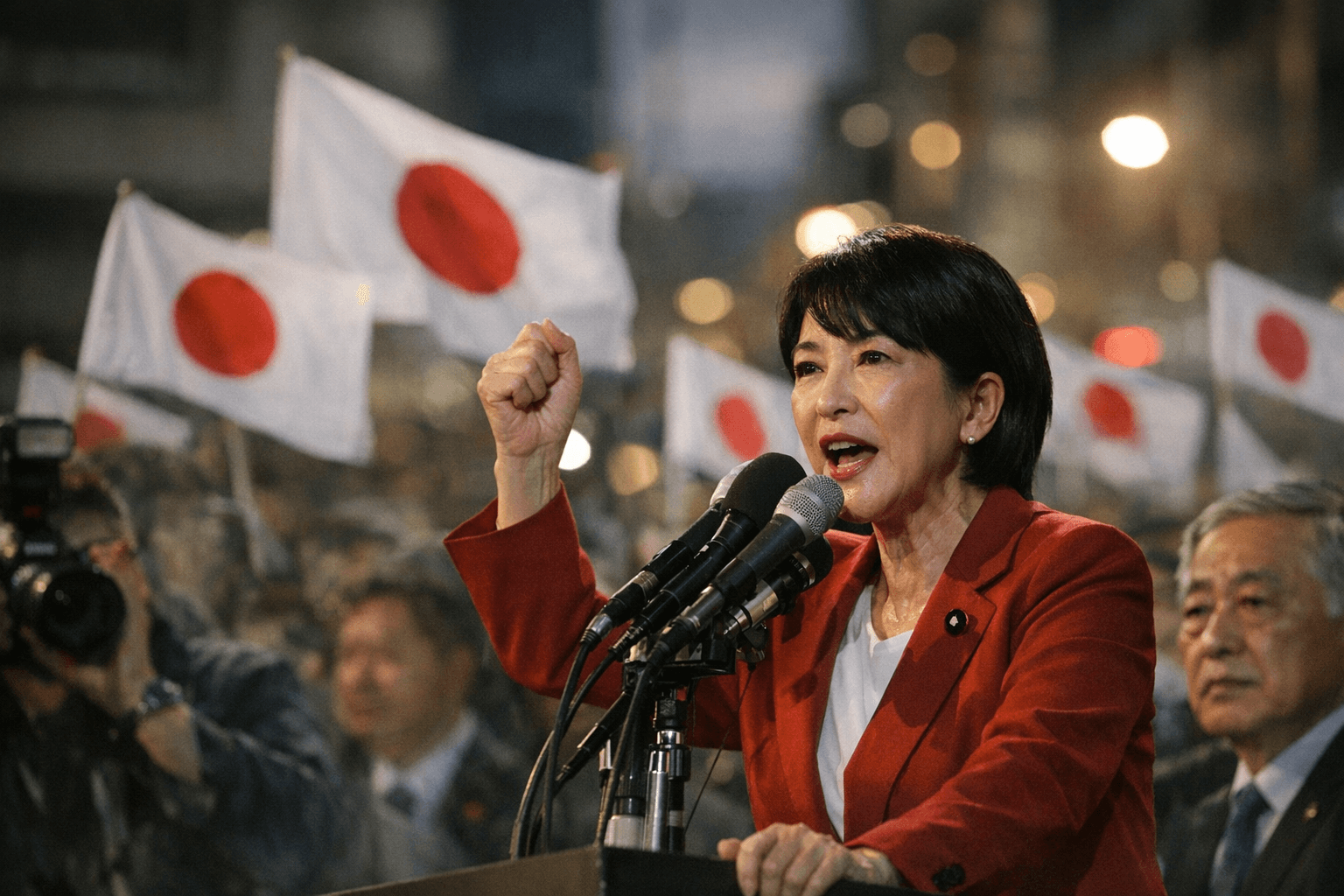
Prime Minister Sanae Takaichi dissolved the lower house on Jan. 23, formally triggering a snap election set for Feb. 8 and launching an accelerated political fight over economic policy and fiscal direction. The move came after Takaichi said she sought a public mandate for measures including consumer relief from rising living costs and other economic policies she says require fresh backing.
The short campaign compresses debates that could reshape Japan's economic course at a moment of mounting pressure on households and public finances. Japan's population is among the oldest in the developed world, with roughly 29 percent aged 65 or older, and the economy has posted modest growth for more than a decade, averaging about 1 percent annually. Public debt remains exceptionally high at roughly 260 percent of gross domestic product, constraining room for large-scale fiscal expansion while elevating sensitivity to any policy that could widen deficits.
Voters will choose all 465 seats in the lower house, the chamber that selects the prime minister and controls the budget. A victory for Takaichi and her allies would likely clear the way for targeted relief measures aimed at curbing near-term political pain from higher prices. Economists warn such measures, if financed by additional borrowing, could put upward pressure on government bond yields and complicate the Bank of Japan's delicate balance between supporting growth and maintaining market confidence.
Markets will be watching multiple channels of reaction. A stable result for the ruling coalition could reinforce policy continuity and support risk appetite in equities, while prospects of larger fiscal outlays without a clear funding plan could nudge 10-year Japanese government bond yields higher and weigh on the yen. Conversely, an unexpected setback for the government would raise near-term policy uncertainty and could spark volatility across domestic markets and regional currency pairs.
Longer term, the snap election spotlights enduring structural challenges that past administrations have deferred. Inflation, which rose above the Bank of Japan's 2 percent target in recent years after decades of near zero price growth, has strained household budgets, particularly for the elderly and low-income families. At the same time, constrained fiscal space and an aging workforce underscore the need for supply-side reforms to lift productivity, raise labor force participation, and diversify revenue through tax and spending adjustments.
Opposition parties have limited time to coalesce around alternative plans, forcing the campaign to spotlight short-term relief as well as broader reform narratives. The compressed timetable will test party organizations and could benefit candidates with more recognizable profiles, altering seat-level dynamics in rural districts where demographic shifts have been most pronounced.
For investors and policymakers alike, the February election is more than a political event; it is a near-term referendum on how Japan balances immediate relief for households with sustainable fiscal management and structural transformation. The outcome will shape not only next year's budget but also the trajectory of monetary policy interactions and Japan's longer-term economic resilience.
This article was produced by Prism’s automated news system from verified source data, official records, and press releases, then run through automated quality and moderation checks before publishing. The system is built and supervised by the people who set the standards it runs under. Read our full AI policy.
Did this article answer your question?

