Take Me Out to the Ball Game Turns 116, Still Baseball's Anthem
A 15-minute subway scribble launched baseball's eternal anthem. 'Take Me Out to the Ball Game' turns 116 still ringing through every major league ballpark.
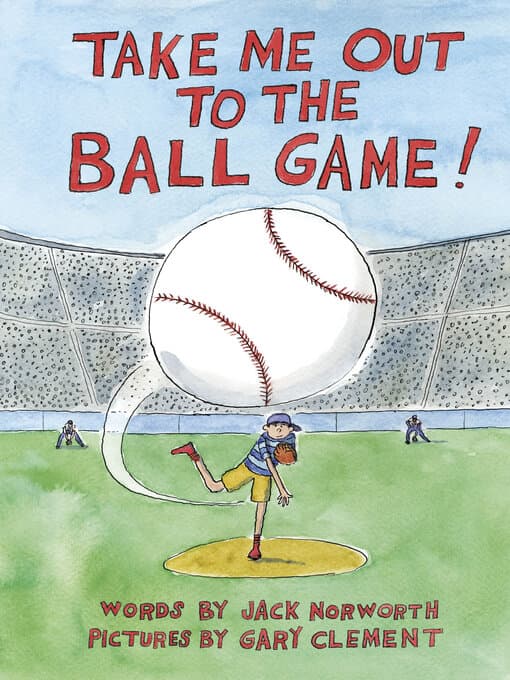
Few pieces of American music were born under such unlikely circumstances. Jack Norworth, a Tin Pan Alley lyricist who had never once set foot at a professional baseball game, scribbled the words to "Take Me Out to the Ball Game" in approximately 15 minutes while riding the New York City subway in April 1908. His sole inspiration: a sign reading "Baseball Today – Polo Grounds." That scrap of paper, now housed in the permanent collection of the National Baseball Hall of Fame in Cooperstown, New York, gave birth to what the Library of Congress ranks as one of the top ten songs of the twentieth century.
Born on a Subway Car
Norworth (1879–1959) handed his subway-scrawled lyrics to composer and music publisher Albert Von Tilzer (1878–1956), who set them to a waltz melody. The song was officially registered with the U.S. Copyright Office on May 2, 1908, published by the New York Music Co. The great irony at the heart of its creation: neither Norworth nor Von Tilzer had ever attended a professional baseball game before writing it. Norworth would not see his first Major League game until June 27, 1940, a full 32 years later, when the Brooklyn Dodgers defeated the Chicago Cubs, 5–4. Von Tilzer, for his part, attended his first game 20 years after composing the song.
The sheet music, originally subtitled "Sensational Baseball Song," sold millions of copies and became one of the most popular songs of 1908. Its cover featured more than thirty cameo photos of vaudeville stars, and the song was promoted through movie houses and theaters using hand-painted glass lantern slides. Norworth himself allegedly gave the first performance at Brooklyn's Amphion Theater just days after writing it, and his then-wife Nora Bayes, already famous as co-writer of "Shine On, Harvest Moon," helped popularize it further. The Haydn Quartet, led by tenor Harry MacDonough, recorded an early successful version on Victor Records. The first formally documented recording was made by Edward Meeker, whose version was later added to the Library of Congress National Recording Registry in 2010.
The Feminist Hidden in the Chorus
Most fans know only the chorus. Few know that the full song tells a story with a notably progressive core. The original 1908 lyrics follow Katie Casey, a woman who insists her boyfriend take her to the ballpark rather than to a show. Historian George Boziwick, former chief of the music division of the New York Public Library for the Performing Arts at Lincoln Center, uncovered that Norworth likely modeled Katie Casey on his girlfriend at the time: Trixie Friganza, a celebrated vaudeville actress, outspoken suffragist, and Kansas native born in Grenola in 1870. Friganza's portrait even appeared on the original sheet music cover.
"She was not necessarily a baseball fan, but she was independent and modern," Boziwick noted of Friganza. Katie Casey reflected that same spirit, a woman confidently asserting her own desires on her own terms. In 1927, Norworth revised the lyrics and renamed the protagonist Nelly Kelly; the new version softened her considerably, depicting a figure who "frets and pouts" to be taken to the game rather than demanding it outright. It was this milder 1927 version that Frank Sinatra and Gene Kelly immortalized in the 1949 film of the same name, which also cemented the subtitle shift from "Sensational Baseball Song" to "The Official Baseball Song." By that point, the original feminist subtext had largely vanished from public memory.
A Song for a Pivotal Season
The song arrived during one of the most dramatic seasons in baseball history. The 1908 National League race produced a three-way tie-breaker, ultimately ending with the Chicago Cubs defeating the Detroit Tigers to win the World Series. Baseball had already inspired hundreds of compositions by that point, including "The Base Ball Polka" from 1858, the first known baseball song, along with titles like "I've Been Making a Grandstand Play for You." But none had penetrated the national consciousness the way "Take Me Out to the Ball Game" did. Its combination of singable waltz melody, relatable premise, and vaudeville promotion machinery made it an immediate cultural event.
116 Years of Cultural Reach
The numbers accumulated over more than a century are staggering. The song is believed to be the third most frequently sung tune in the United States, trailing only "Happy Birthday" and "The Star-Spangled Banner." According to ASCAP, it is still performed live approximately 2,500 times per year. It has appeared in more than 1,200 films, television shows, and commercials, and has been recorded by more than 400 artists across arrangements spanning classical, jazz, barbershop quartets, and blues. On the song's fiftieth anniversary, Major League Baseball presented Norworth with a gold lifetime ballpark pass, a fitting tribute from the institution whose national pastime he had accidentally immortalized from a subway seat.
Harry Caray and the Seventh-Inning Stretch
Despite its immediate popularity, the song did not play at a ballpark until 1934, when it was first performed at a high school game in Los Angeles, California, and later during the fourth game of that year's World Series. The tradition of fans singing it together during the seventh-inning stretch, now universal across Major League Baseball, is largely the creation of one man: Hall of Fame broadcaster Harry Caray.
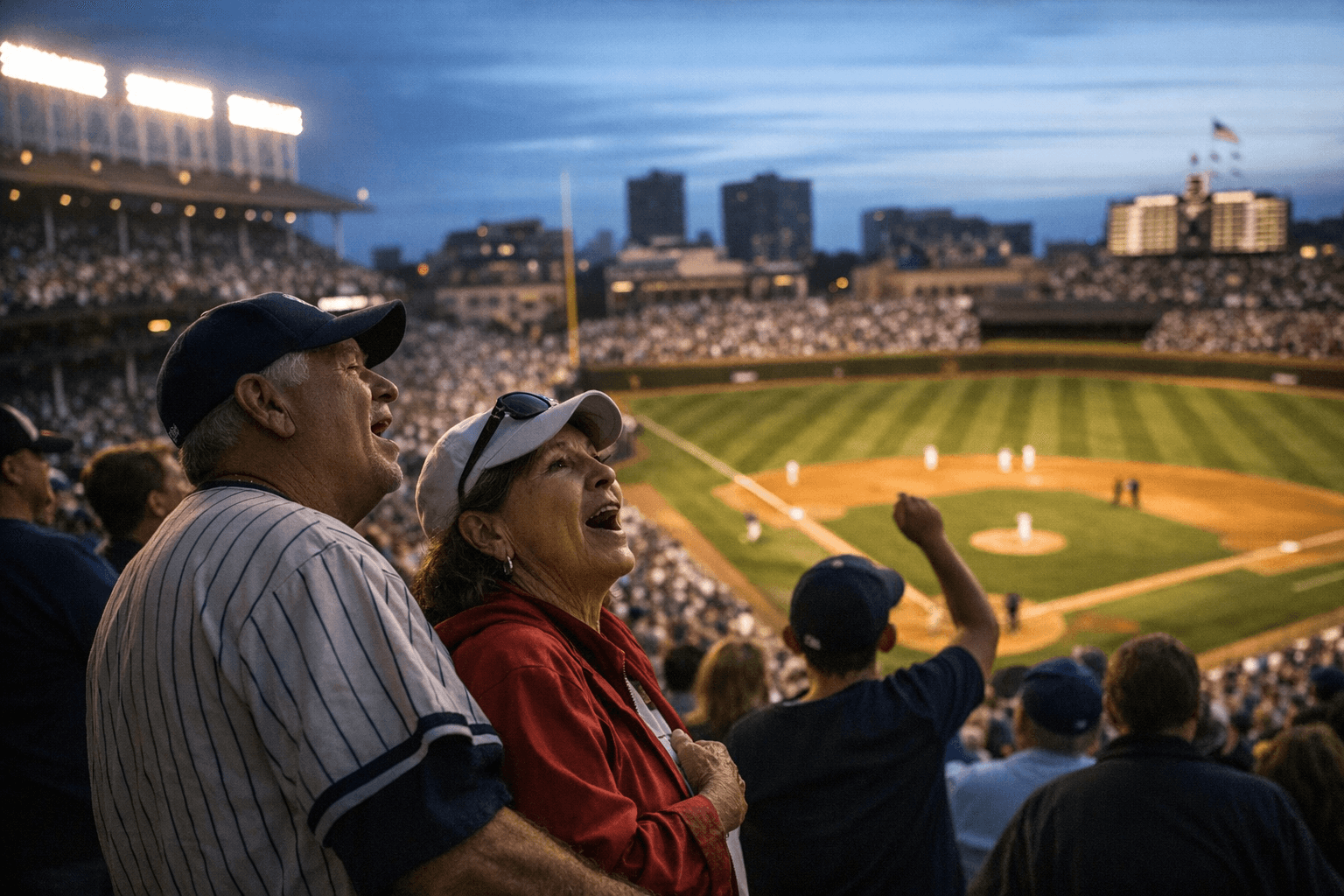
Caray had been singing the song quietly to himself in the broadcast booth during Chicago White Sox games when, in 1976, White Sox owner Bill Veeck Jr. arranged for an engineer to secretly connect a public address microphone in Caray's booth. Suddenly, the entire stadium could hear him. When Caray protested that his singing voice was nothing special, Veeck had a ready answer: that was precisely the point. An imperfect voice, Veeck argued, would make every fan in the stadium feel confident enough to join in. Caray brought the tradition with him to the Chicago Cubs in 1982, where nationally broadcast games spread the practice to ballparks across the country. He led the Wrigley Field crowd through the ritual through 1997 and described it as "a song that reflects the charisma of baseball."
Caray died on February 18, 1998, at age 84. The Cubs honored his memory by continuing the tradition, inviting celebrity guest conductors to lead the seventh-inning stretch sing-along, a practice that endures to this day. The stretch itself has roots stretching back possibly as far as 1869, with a popular origin story connecting it to President William Howard Taft in 1910.
An Anthem Built to Last
What began as a 15-minute inspiration on a New York City subway car has outlasted virtually every other cultural artifact of the same era. The song's staying power comes not from nostalgia alone but from what it does in the moment: it pulls strangers together, anchors them to a shared space, and invites them to sing imperfectly in public. That combination of accessibility and communal ritual, engineered almost accidentally by a songwriter who had never watched a single inning of baseball, has proved more durable than anyone in 1908 could have predicted. At 116 years and counting, the song remains exactly what the Polo Grounds sign promised: baseball, today.
This article was produced by Prism’s automated news system from verified source data, official records, and press releases, then run through automated quality and moderation checks before publishing. The system is built and supervised by the people who set the standards it runs under. Read our full AI policy.
Did this article answer your question?
.jpg&w=1920&q=75)