Teacher says he persuaded Andy Burnham to apply to Cambridge
A teacher who knew Andy Burnham as a schoolboy says he had to push him toward Cambridge. The episode now reads as an early test of class, confidence and access in British public life.
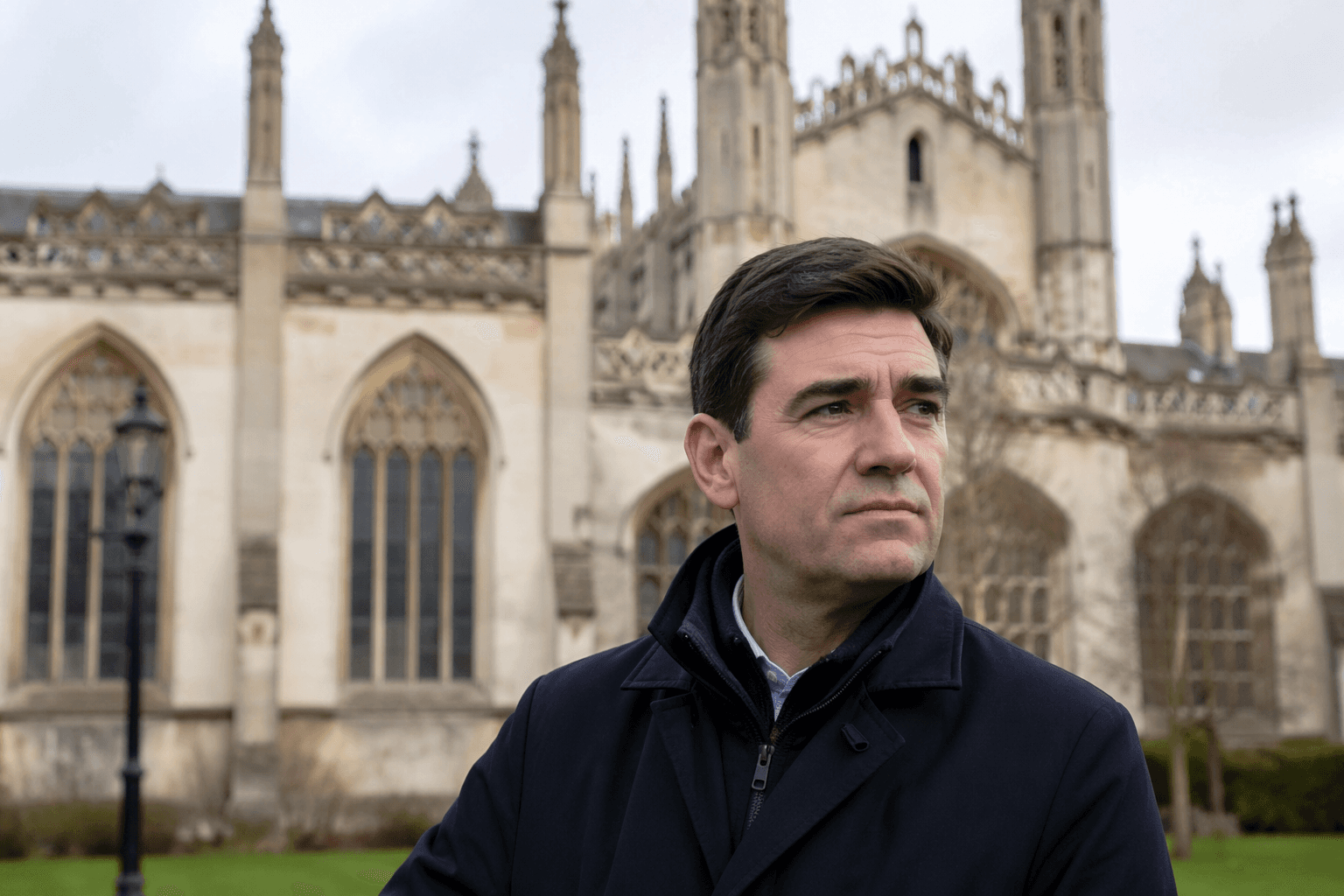
Stephen Harrington says he had to persuade Andy Burnham to apply to Cambridge University, because the future Labour heavyweight felt it was not a place for a working-class boy like him. Harrington taught Burnham English in the late 1980s at St Aelred’s Catholic High School in Newton-le-Willows, Merseyside, and says the push mattered at a moment when Burnham needed more than encouragement.
Burnham, born in 1970 and raised in Culcheth, Cheshire, went on to read English at Fitzwilliam College, Cambridge, and graduated in 1991. He has said Harrington did more than help with an application: he boosted Burnham’s confidence and changed what he believed was possible for someone from his background.
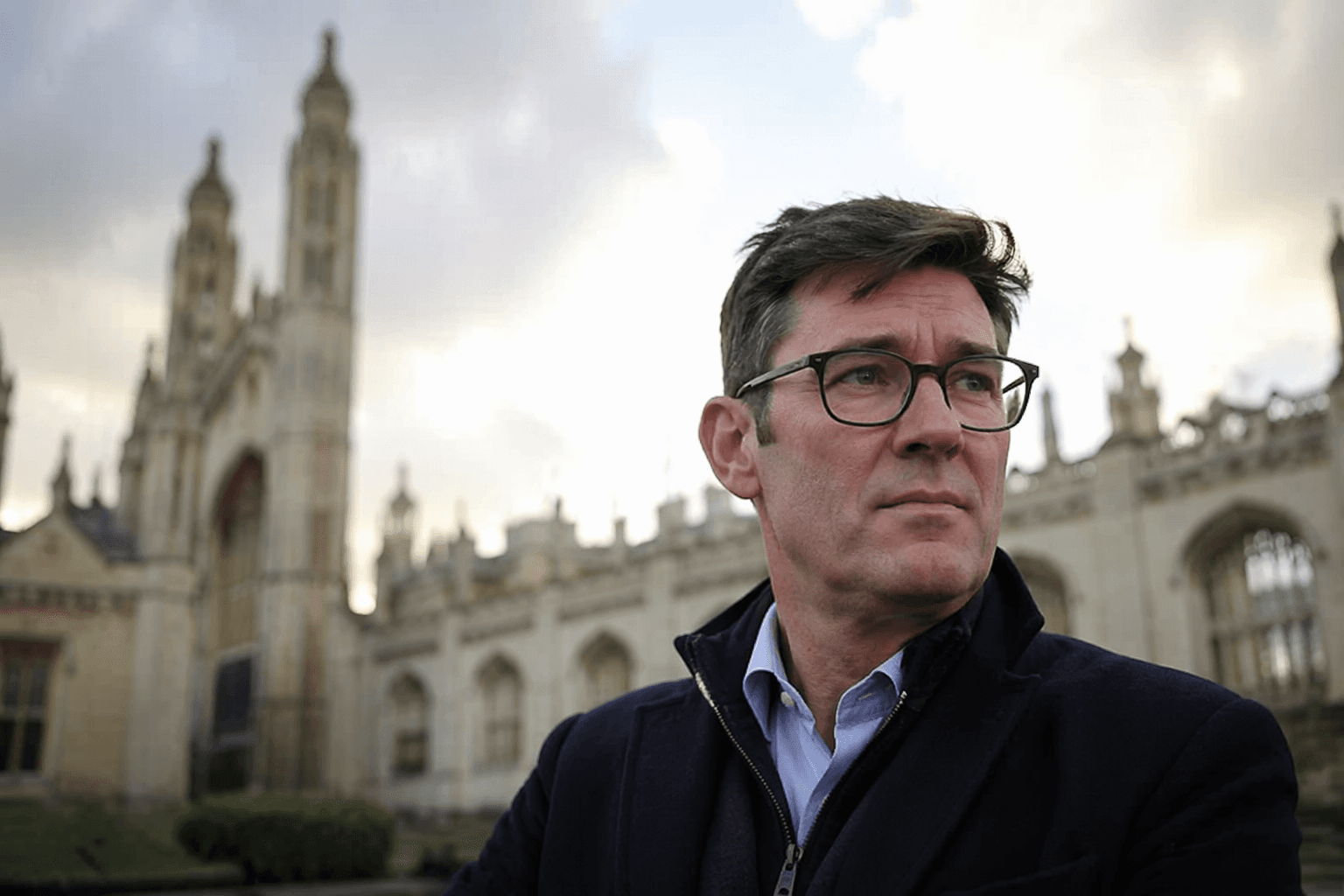
That account has become part of the wider story Burnham tells about his own rise. He has said he struggled at times to feel he belonged at Cambridge and later described experiencing “imposter syndrome” as a comprehensive-school student in a university he felt was dominated by private-school students. The contrast between St Aelred’s and Cambridge now sits at the centre of his public biography.
The political stakes are larger than a school anecdote. Burnham is widely tipped as a possible next Labour leader and even a future prime minister, which gives fresh weight to the moment a teacher at a Merseyside Catholic high school helped steer him toward one of Britain’s most selective universities. His path from a state-school classroom to Fitzwilliam College has long been presented as a story of aspiration and social mobility, but it also points to how dependent that journey can be on one teacher spotting potential and insisting a student belong in rooms he has not yet imagined.
Burnham’s rise has been shaped by that early intervention and by the divide he later encountered once he reached Cambridge. For a political class still drawn disproportionately from selective institutions, his schooldays now read less like a private triumph than a reminder of how narrow the route from ordinary state education into elite institutions and national office has become.
This article was produced by Prism’s automated news system from verified source data, official records, and press releases, then run through automated quality and moderation checks before publishing. The system is built and supervised by the people who set the standards it runs under. Read our full AI policy.
Did this article answer your question?

