Team USA women drive Paris Olympic success, spotlighting gender parity gains
Paris turned women’s sports into Team USA’s clearest shared triumph, but the real test is whether that unity lasted beyond the medals.
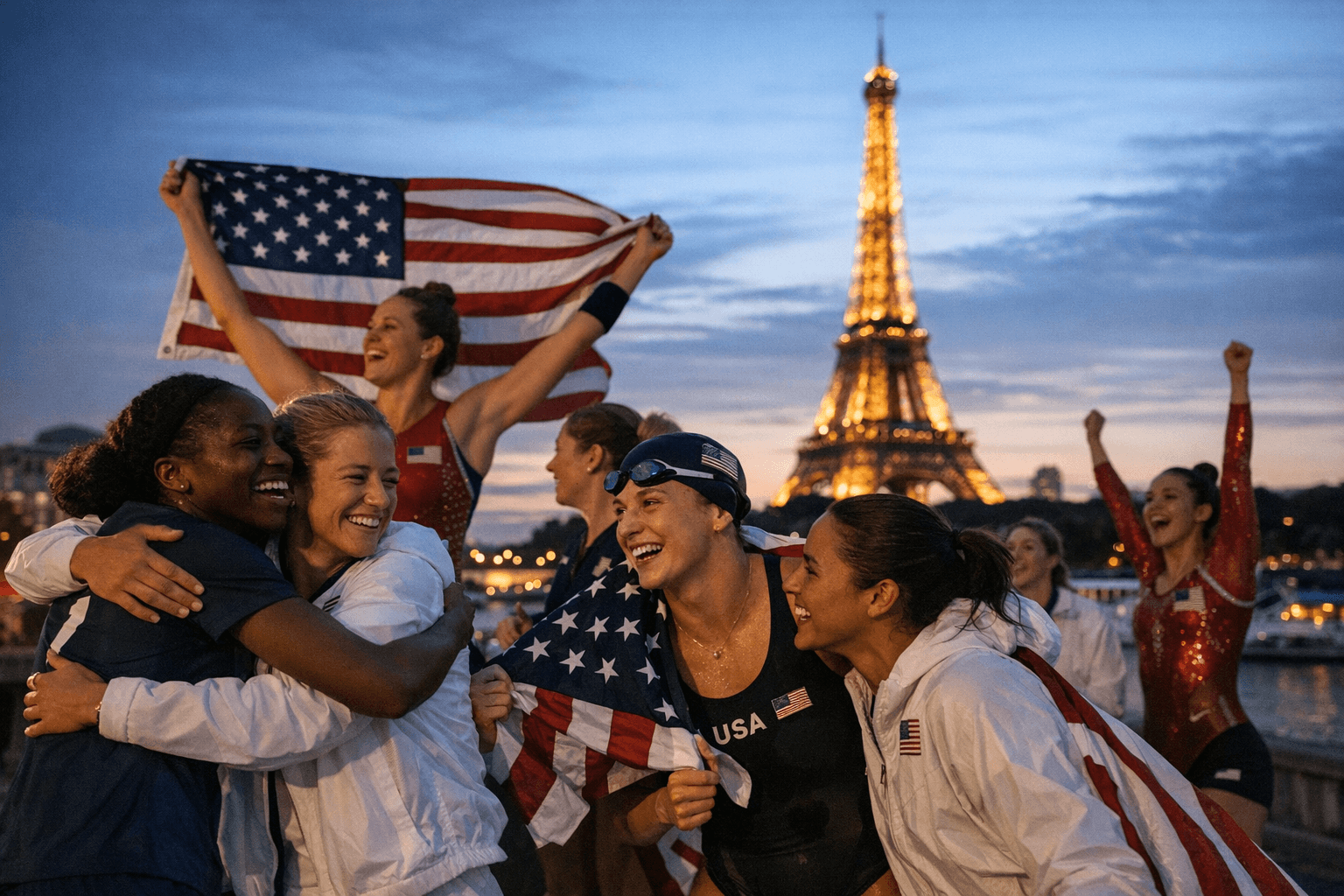
Paris made parity visible
The Paris Games gave Team USA a rare kind of national storyline: not just winning, but winning with women at the center of it. For the first time, the Olympics fielded equal numbers of male and female athletes, and Team USA’s men and women competed under equal pay and benefits protections through the Equal Pay for Team USA law. That mattered far beyond the podium, because the opening ceremony itself reflected a broader shift, with 96% of National Olympic Committees choosing one male and one female flag bearer.
Those signals created a powerful image of unity, but symbolism only goes so far. The stronger question is whether the shared moment of Paris translated into durable change in how Americans watch, fund, and value women’s sports once the flame went out.
Women’s teams powered the medal count
On Aug. 10, 2024, the U.S. Women’s National Soccer Team beat Brazil 1-0 to win Olympic gold in Paris, capturing the program’s fifth Olympic title. The route to that medal was punishing and precise: six wins in 17 days across four French cities, a schedule that tested depth, conditioning, and mental resilience as much as talent. It also extended one of the most consistent dynasties in Olympic team sports, with U.S. women’s football winning gold in Atlanta, Athens, Beijing, London, and Paris, plus silver in Sydney.
The U.S. women’s basketball team added to that momentum by winning its eighth straight Olympic gold, another reminder that women were not a side story in Paris. Team USA finished the Games with 126 total medals, including 40 golds, and women’s teams were a central reason the United States again stood atop the medal table. In a year when public life often felt fragmented, these wins gave viewers something increasingly rare: a cross-cutting cultural reference point that cut across region, politics, and age.
That kind of shared attention is not trivial. Major sporting moments can create a brief sense of common language, especially when they involve athletes who have long had to fight for equal treatment and equal visibility. But if national unity is to mean anything more than a fleeting broadcast glow, it has to show up in the systems that shape opportunity.
The pipeline starts long before the Olympics
The deepest roots of this Paris moment go back to Title IX, enacted in 1972 and credited with expanding girls’ and women’s access to athletics. The U.S. Department of Education says Title IX requires schools to provide equal athletic opportunity regardless of sex, a legal foundation that changed the geography of sport in schools and colleges across the country. That policy did not simply increase participation numbers, it widened the pipeline that eventually produces Olympians, coaches, and leaders.
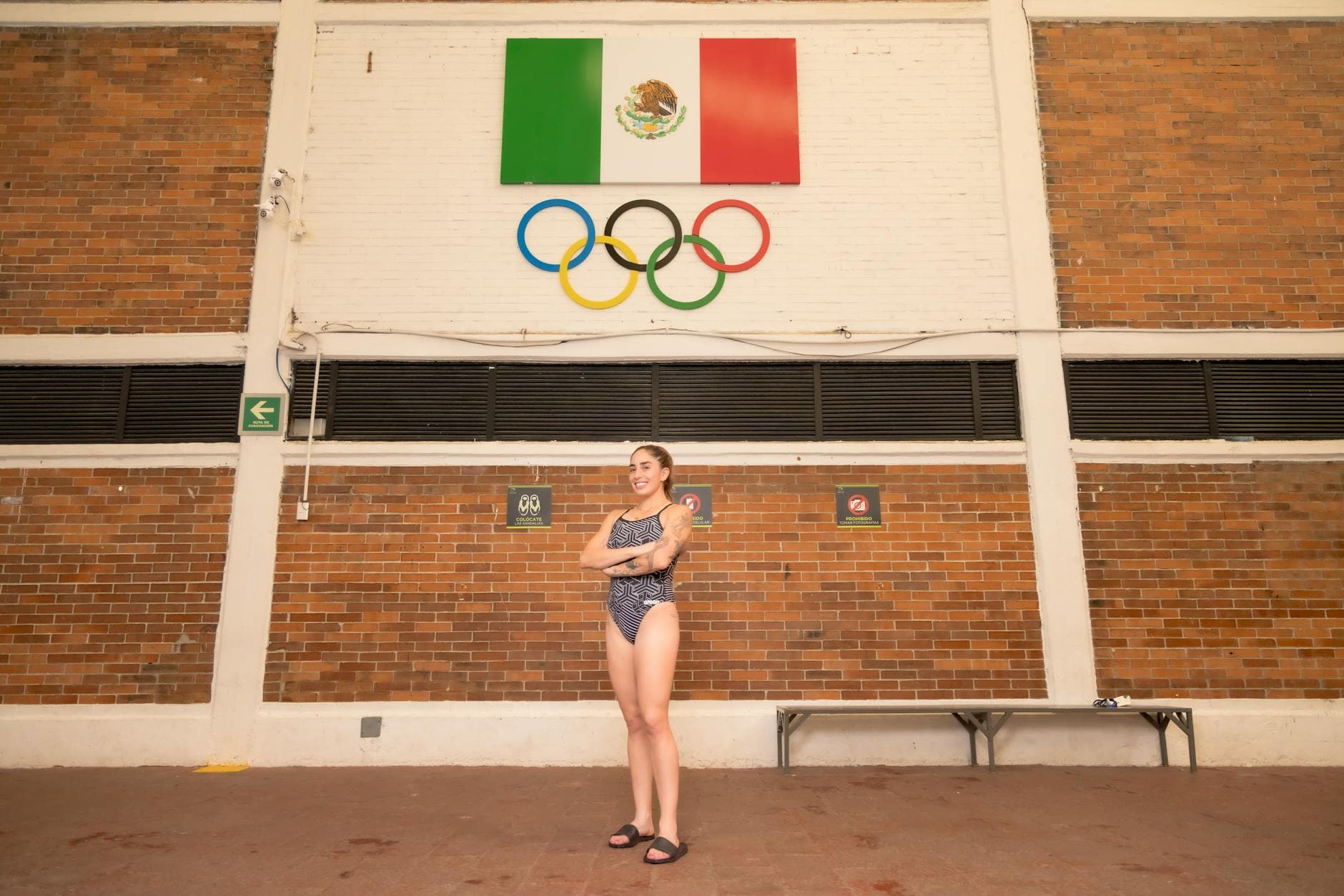
The NCAA’s latest figures show that pipeline is still growing. It reported a record 235,735 women student-athletes across all divisions in 2023-24, and a record 242,341 women student-athletes in 2024-25 across women’s championship and emerging sports. Those numbers point to real progress, but they also highlight how much institutional work remains. The Women’s Sports Foundation, which has spent more than 50 years pushing for access and opportunity, says boys still receive 1.13 million more sports opportunities annually than girls.
That gap matters for public health as well as equity. More opportunities to play mean more chances for physical activity, team support, confidence, and belonging, especially for girls who are too often crowded out of organized sport. When schools, colleges, and communities invest in women’s athletics, they are not only building rosters, they are building participation infrastructure that can shape long-term health and social mobility.
Audience power is real, but lasting change is harder to prove
The claim that women’s sports can unify the country is strongest when it is tied to audience behavior. FIFA said the 2019 Women’s World Cup drew 1.12 billion viewers across TV and digital platforms, and the final weekend set viewing records in participating and neutral territories. That kind of scale makes one thing clear: women’s sports are not niche when they are given the stage, and the audience is already there when the product is treated like a premier event.
The harder question is whether Olympic enthusiasm translates into broader investment and more equal treatment after the event itself. On that front, the most concrete shift has been structural. U.S. Soccer and the USWNT reached a settlement in February 2022 to resolve longstanding equal pay claims, then later announced collective bargaining agreements with the women’s and men’s unions that achieve equal pay through identical economic terms through 2028. That is not just a symbolic victory, it is a hard policy outcome with real financial consequences.
Still, the Paris story should not be mistaken for a finished chapter. The IOC’s parity milestones, Team USA’s medal haul, and the USWNT’s gold all showed that women’s sports can carry a nation’s attention and deliver it back in winning form. The evidence also shows that attention becomes durable only when it is backed by law, labor agreements, school opportunities, and investment that outlast the Games.
Paris offered a rare moment when national pride and gender equity lined up in the same frame. The legacy will be measured not by the noise of that celebration, but by whether the next generation of girls finds a wider field, a fairer contract, and a bigger audience waiting when they arrive.
This article was produced by Prism’s automated news system from verified source data, official records, and press releases, then run through automated quality and moderation checks before publishing. The system is built and supervised by the people who set the standards it runs under. Read our full AI policy.
Did this article answer your question?

.jpg&w=1920&q=75)
