Tech CEOs Increasingly Blame AI for Mass Layoffs, Seek More Investment
Sam Altman accused tech executives of "AI washing" — using AI as cover for layoffs driven by cost-cutting — as US job cuts hit their worst monthly level since 2009.
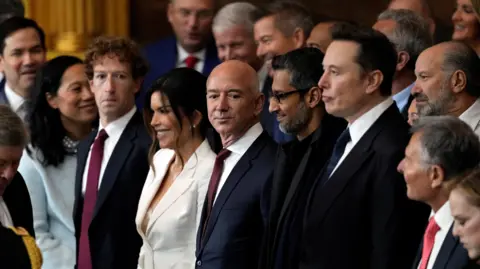
The man whose company built the AI that executives worldwide are now citing for mass layoffs has a pointed message for his peers: stop lying about it.
Sam Altman, CEO of OpenAI, broke from corporate consensus at the India AI Impact Summit in New Delhi, telling CNBC-TV18 that a detectable share of companies are invoking artificial intelligence to justify workforce reductions that have nothing to do with automation. He called the practice "AI washing," a deliberate echo of greenwashing, the tactic of overstating environmental responsibility to burnish a corporate image. "I don't know what the exact percentage is, but there's some AI washing where people are blaming AI for layoffs that they would otherwise do, and then there's some real displacement by AI of different kinds of jobs," Altman said. The distinction matters, he added, because it is "muddying the public's understanding of what the technology can actually do today."
The backdrop to that admission is striking. January 2026 saw 108,435 job cuts across the United States, the worst single-month tally since 2009, according to outplacement firm Challenger, Gray & Christmas. Yet how many of those cuts were genuinely driven by AI deployment, rather than pandemic-era overhiring, slowing consumer demand, or plain restructuring, remains fiercely contested.
The incentive to frame layoffs as AI-driven is not mysterious. Blaming automation positions a company as a forward-thinking technology disruptor rather than a business correcting its own strategic mistakes, and investors have historically rewarded that framing. Salesforce CEO Marc Benioff offered the most blunt version of this logic in September 2025, telling an interviewer he had cut his customer support headcount from 9,000 to 5,000: "I need less heads." Benioff attributed the reduction to his company's Agentforce AI product, a claim that drew scrutiny when subsequent reporting revealed the cuts also swept through marketing, product management, and data analytics teams, well outside any coherent AI-automation story. Duolingo made a similar move in April 2025, announcing it would stop hiring contractors and replace their functions with AI.

A National Bureau of Economic Research survey of C-suite executives across the United States, the United Kingdom, Germany, and Australia, published in February 2026, found that nearly 90 percent of respondents said AI had no measurable impact on employment at their companies over the preceding period. That figure sits in sharp tension with the volume of AI-attributed announcements flooding corporate earnings calls and press releases.
For workers, that confusion carries concrete consequences. Companies that attribute layoffs to AI inevitability rather than restructuring have little incentive to offer reskilling or retraining programs, since the narrative forecloses the question of employer responsibility. High-profile companies have already quietly walked back AI-centric explanations for cuts, revealing more conventional financial pressures underneath the headline.
The core accountability question Altman raised at the India summit is now one that investors, labor economists, and regulators will have to answer with specifics: when a CEO says AI required the layoffs, show the receipts.
This article was produced by Prism’s automated news system from verified source data, official records, and press releases, then run through automated quality and moderation checks before publishing. The system is built and supervised by the people who set the standards it runs under. Read our full AI policy.
Did this article answer your question?

