Tech transforms woodworking shops, boosting precision while reducing hazards
Automation is making woodworking shops cleaner and more precise, but the biggest safety gains still depend on controlling dust, not just adding machines.
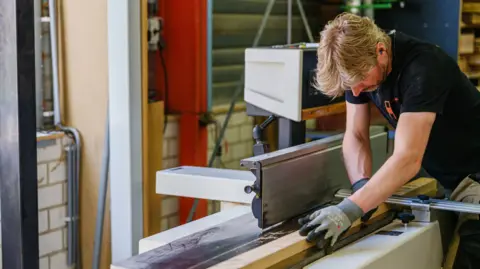
Tech is reshaping the shop floor, but safety still starts with dust control
Woodworking technology is changing the risk profile of the shop as much as the production line. CNC machines, sensors, and automated inspection systems are helping shops cut more accurately and catch defects sooner, yet the most serious health hazards have not disappeared, because wood dust, finishing chemicals, and contact injuries remain part of the work.
The Occupational Safety and Health Administration says wood dust and the chemicals used in finishing products can cause skin and respiratory diseases. It also lists common woodworking injuries as lacerations, amputations, severed fingers, and blindness. That combination explains why the modern safety conversation is no longer just about guarding saws and keeping hands away from cutters. It is about building a shop that can produce consistently while controlling the air workers breathe and the fire load that dust creates.
CNC is no longer one machine type, it is a production system
Industry coverage now describes CNC automation as a broad toolkit rather than a single class of equipment. Today’s systems range from hand-held units to massive factory-scale storage and retrieval systems, and the technology is used for routing, sorting, banding, dovetails, and more. That range matters because it shows how deeply automation has moved into woodworking, from one-off custom work to repetitive cabinet and component production.
The value proposition is straightforward: precision, speed, and efficiency. A CNC router can repeat a cut with far less drift than a manual process, which reduces waste and rework. In a small shop, that can mean tighter tolerances and more predictable labor planning. In a larger operation, it can mean higher throughput and steadier quality across batches that would otherwise depend on operator fatigue or shifting skill levels.
But the safety payoff is not automatic. CNC can reduce some direct hand-tool exposure and lower the chance of certain setup errors, yet it also introduces new points of risk around tooling, clamping, loading, maintenance, and programming. The technology changes the job, it does not remove the need for training.
Why sensors are becoming part of safety, not just quality control
The clearest sign that woodworking is becoming more data-driven is the growing use of sensors for defect detection and inspection. In one 2025 shop-floor pilot in Ontario, Canada, at Muskoka Cabinet Company with Panevo, an edgebanding defect-detection system reportedly achieved about 97% detection reliability. That is a production story on the surface, but it also has a safety angle: earlier defect detection means fewer retries, fewer manual interventions, and less temptation to rush a fix on moving equipment.
This is where the economics and the safety case converge. Every missed defect can trigger extra handling, more time at the machine, and more cleanup. A sensor system that catches problems quickly can reduce scrap and keep workers from repeatedly reaching into workflows that should already be finished. The technology does not eliminate hazards, but it can shrink the number of times a worker must intervene close to the machine.
Dust is still the central hazard, even in automated shops
The strongest message from regulators is that automation does not solve the dust problem by itself. OSHA says wood dust becomes a potential health problem when particles from sanding and cutting become airborne, and it recommends engineering controls such as exhaust ventilation to control exposure. OSHA also stresses that dust buildup is a key fire and explosion hazard in woodworking shops, which makes housekeeping and source capture a core operating issue, not an optional add-on.
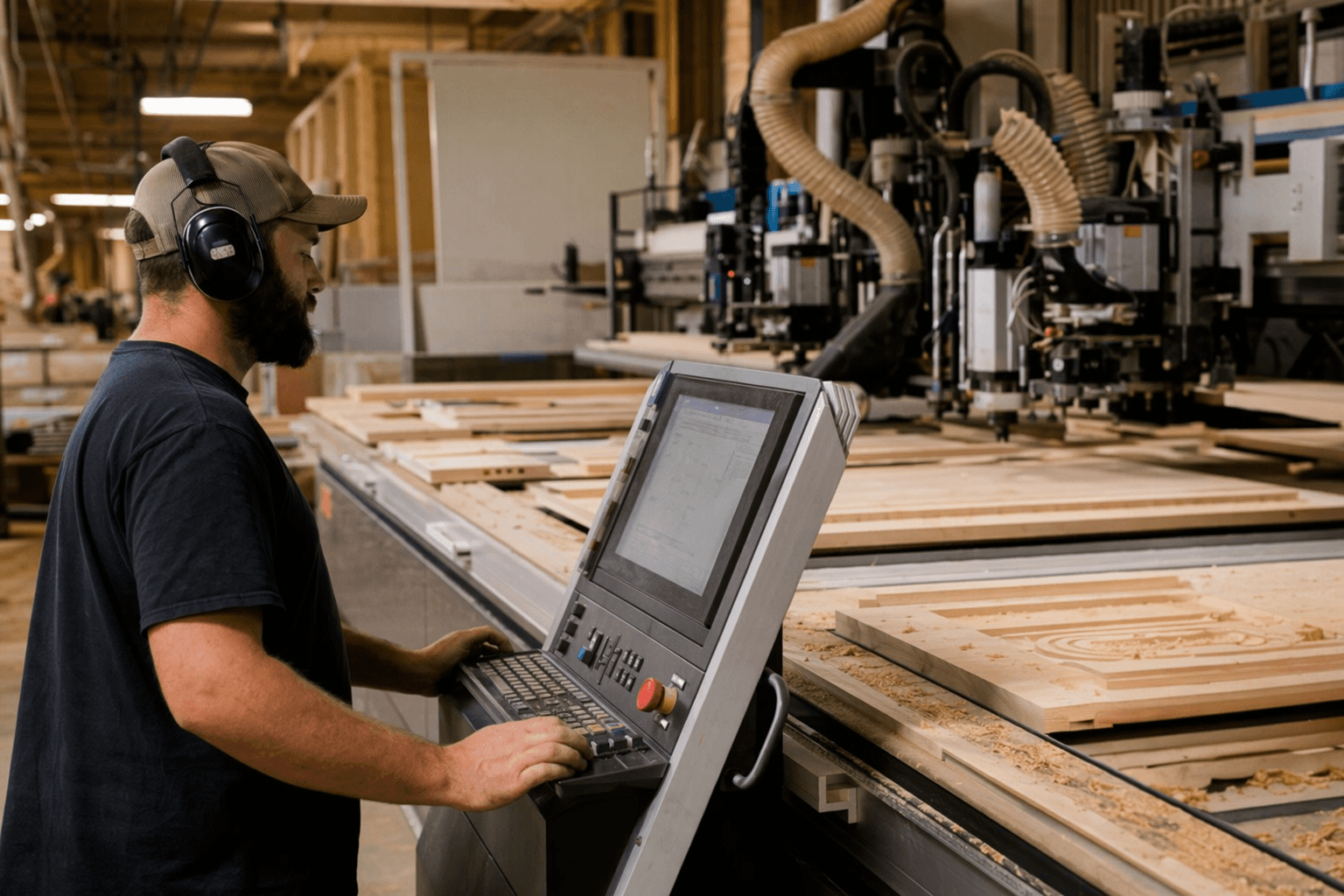
OSHA says duct velocity should be maintained at a minimum of 2,500 to 4,000 feet per minute to remove light, dry sawdust, heavy wood chips, and green shavings effectively. That detail matters because many shops underestimate how much airflow is needed to keep dust from lingering in the system. A machine that cuts more accurately is still creating debris, and if that debris is not captured at the source, the shop can end up more productive and less safe at the same time.
The National Institute for Occupational Safety and Health warned in a 1996 publication that automated routers can generate significant amounts of wood dust. NIOSH also linked wood-dust exposure to eye and skin irritation, allergy, reduced lung function, asthma, and nasal cancer. That makes automated cutting and routing a classic example of a technology that improves precision while also intensifying the need for engineering controls.
Training has to catch up with the machinery
As CNC systems spread from hand-held units to factory-scale platforms, the skill set required on the shop floor changes. Operators need to understand programming, feeds and speeds, machine setup, sensor readouts, maintenance schedules, and dust-extraction performance. The old assumption that a good craft worker can simply “figure it out” becomes less reliable when the machinery is integrated, automated, and capable of moving material at high speed.
That training burden is especially important for smaller shops. They may be attracted to CNC because it promises efficiency and consistency, but the machine only pays off if it is used enough to justify the investment and if workers are trained to use it safely. Without that, the shop can end up with faster production and the same old hazards, especially if dust collection is undersized or maintenance is inconsistent.
A practical safety approach looks like this:
- Put source capture at the machine, not just general room ventilation.
- Verify duct airflow, because inadequate velocity leaves dust behind.
- Train operators on setup, loading, and lockout-type maintenance habits.
- Treat sensor systems as an aid, not a substitute for inspection and supervision.
- Keep cleaning routines disciplined, because dust accumulation raises both health and fire risk.
The long-term trend is a hybrid shop, not a hands-off shop
The best woodworking shops are not becoming less human, they are becoming more deliberate about where human attention matters most. CNC handles the repetitive routing, sorting, banding, and dovetail work. Sensors help catch defects early. Dust-control systems protect air quality and reduce ignition risk. Workers then spend more time on oversight, fitting, troubleshooting, and quality control, where judgment matters.
That is the real economic shift. Technology is helping shops make more precise products, but the competitive advantage now includes cleaner air, fewer injuries, lower rework, and better control over fire hazards. In woodworking, automation does not replace safety discipline. It raises the standard for it.
This article was produced by Prism’s automated news system from verified source data, official records, and press releases, then run through automated quality and moderation checks before publishing. The system is built and supervised by the people who set the standards it runs under. Read our full AI policy.
Did this article answer your question?