Teenage boy dies in Battersea stabbing, police launch murder probe
A 17-year-old boy died after a stabbing on Glycena Road at 04:20, prompting a murder probe and a police appeal for footage.
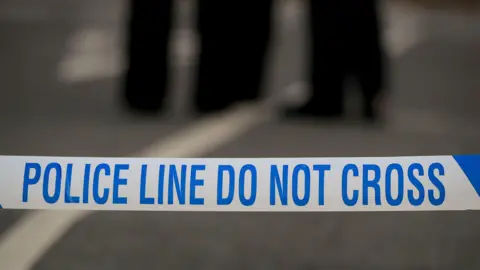
A 17-year-old boy died after a stabbing on Glycena Road in Battersea, where detectives sealed off a residential street near Lavender Hill and a few minutes’ walk from Battersea Arts Centre. Police said officers were called at about 04:20 on Saturday, 20 June, after reports of a stabbing following a possible altercation. London Ambulance Service crews and London’s Air Ambulance attended, but the boy was pronounced dead at the scene.
His next-of-kin have been informed and are being supported by specialist officers. No arrests had been made when police issued their statement, and a large crime scene remained in place with surrounding roads closed as detectives appealed for witnesses, images and footage. Investigators asked the public to contact police on 101 and quote CAD 1567/20JUN26, or to report anonymously through Crimestoppers.

The killing sits within a wider London pattern that has vexed police, city leaders and families for years. The Metropolitan Police said in January that teenage homicide in the capital had fallen to its joint lowest level in almost three decades, with eight teenage victims in 2025, down 73% from 2021, even as London recorded 97 homicides overall that year. National data show why youth violence remains such a focus: the Office for National Statistics said 16 to 24-year-olds were the most common homicide victims in the year to March 2024, and teenage victims were far more likely to be killed by a knife or sharp instrument than victims of all ages, 83% versus 46%.

Authorities say the drivers are not just policing failures but deeper social pressures. London’s Violence Reduction Unit says violence is shaped by poverty, deprivation, alienation and lack of opportunity, with added strain from cuts to public services, the Covid-19 pandemic and the cost-of-living crisis. Its response has centred on prevention and early intervention, including work in schools, diversionary activity and youth workers in hospitals and police custody. The Met says the unit has delivered more than 550,000 targeted interventions, while February funding secured £9.4 million to extend youth work in A&E departments and custody suites. The latest death in Battersea shows those efforts have delivered gains, but not yet enough to end the cycle.
This article was produced by Prism’s automated news system from verified source data, official records, and press releases, then run through automated quality and moderation checks before publishing. The system is built and supervised by the people who set the standards it runs under. Read our full AI policy.
Know something we missed? Have a correction or additional information?
Submit a Tip