Tencent hid an AI agent inside WeChat where a billion users chat daily
Tencent launched ClawBot, making an autonomous AI agent appear as a regular WeChat contact for over a billion users, as China's tech giants race to dominate AI agents.
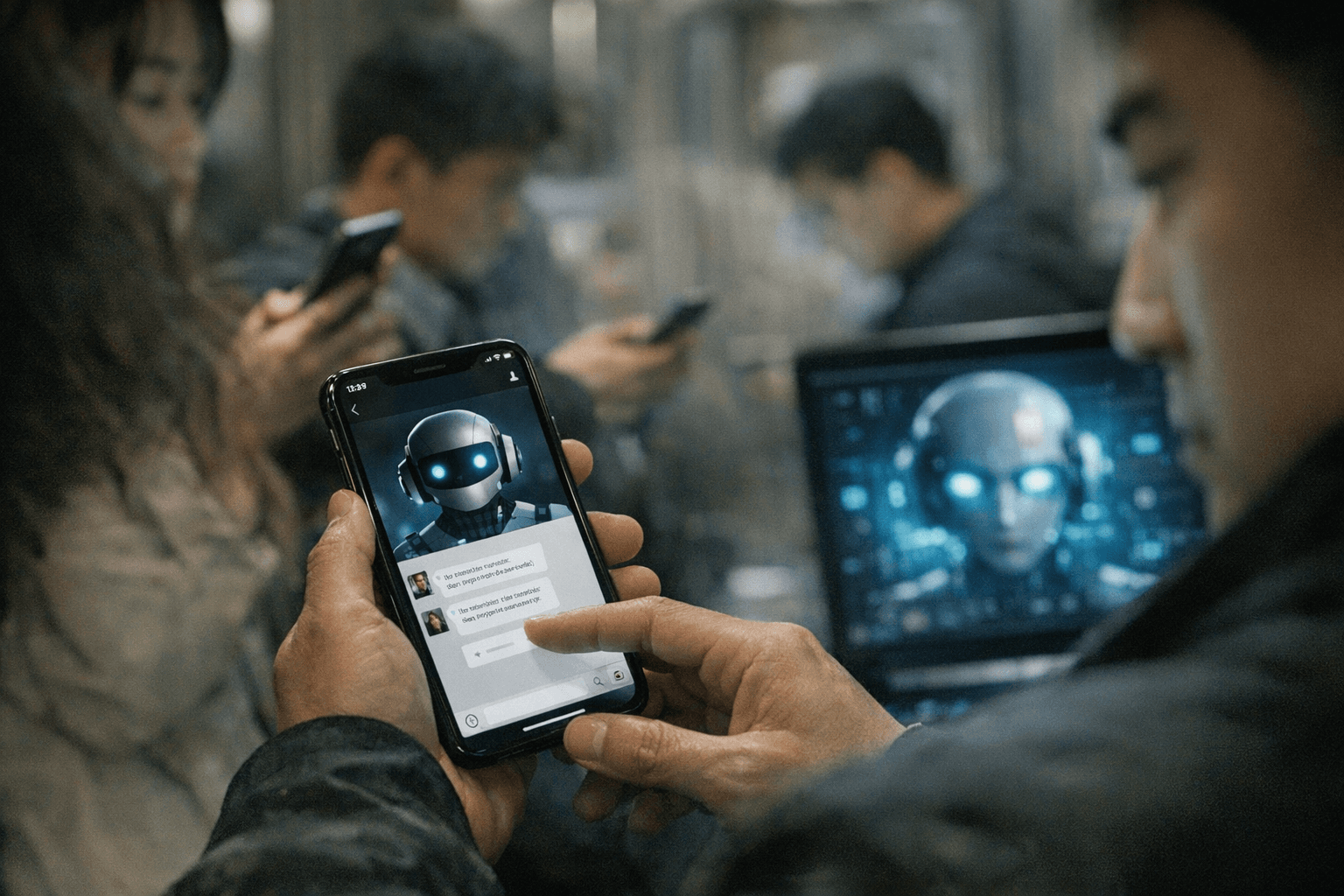
Tencent embedded an autonomous AI agent directly into WeChat on Sunday, disguising it as an ordinary contact that any of the app's more than one billion monthly users can message to transfer files, send emails, and execute tasks through plain language commands.
The tool, called ClawBot, links WeChat to OpenClaw, an open-source AI agent that has gained rapid traction in recent weeks. Rather than routing users to a separate app or interface, ClawBot surfaces inside the existing chat window. Users send it commands the same way they would text a friend, and the agent acts on those instructions autonomously, reported Reuters, citing Liam Mo and Ryan Woo.
The interface choice is a calculated distribution bet. WeChat is not just a messaging app in China; it is the connective tissue of daily digital life, hosting payments, government services, e-commerce, and social media inside a single application. Attaching an AI agent to that infrastructure as a contact, rather than as a standalone product, collapses the adoption barrier to near zero.
ClawBot arrived weeks after Tencent launched a broader AI agent suite in early March: QClaw for individual consumers, WorkBuddy for enterprise customers, and Lighthouse, a cloud service the company is positioning as the backbone developers need to run agent integrations reliably. Marketing materials reviewed by Ainvest describe Lighthouse as "simple, high performance, and cost-effective," designed to function as an always-on webhook service that keeps integrations stable under load. The framing signals that Tencent is not merely selling a consumer feature; it is building the cloud infrastructure it hopes enterprises will depend on to deploy agents at scale.
The launch lands inside a competitive sprint among China's largest technology companies. Alibaba rolled out Wukong last week, an enterprise platform that coordinates multiple AI agents simultaneously to handle document editing, meeting transcription, and other complex business workflows within a single interface. Baidu followed quickly with its own series of OpenClaw-based agents spanning desktop software, cloud services, mobile applications, and smart-home devices.
The speed of the market reflects how seriously Chinese tech giants view AI agents as the next major platform shift. Ainvest described the competitive dynamic bluntly: "Tencent's massive user base gives it a head start, but the integration must be flawless and the value proposition clear to convert that scale into sticky engagement."
That scale is considerable. Reaching even a fraction of WeChat's billion-plus users with an agent that can act on their behalf, not just answer questions, would represent a step change in how AI intersects with everyday tasks. But the rush to deploy also carries risk. Authorities have warned of security concerns as users experiment with agent products that can operate semi-autonomously, though no specific regulatory actions have been announced.
The critical unanswered question is whether users will trust an AI contact with the kind of permissions, sending emails, moving files, accessing accounts, that make it genuinely useful. Tencent's distribution advantage is real. Whether that translates into the deep behavioral integration the company is building toward depends on whether ClawBot works reliably enough, and safely enough, to become a habit rather than a novelty.
This article was produced by Prism’s automated news system from verified source data, official records, and press releases, then run through automated quality and moderation checks before publishing. The system is built and supervised by the people who set the standards it runs under. Read our full AI policy.
Know something we missed? Have a correction or additional information?
Submit a Tip