Tesla expands robotaxi service to Dallas and Houston in Texas rollout
Tesla pushed robotaxis into Dallas and Houston, but it left fleet size, pricing and public access unexplained as federal scrutiny over crashes continued.
Tesla widened its robotaxi footprint to Dallas and Houston, but the rollout immediately raised the questions that matter most to public safety: how many vehicles are operating, where they can go, who is responsible when something goes wrong, and how city officials can judge readiness before the service becomes routine on public streets.
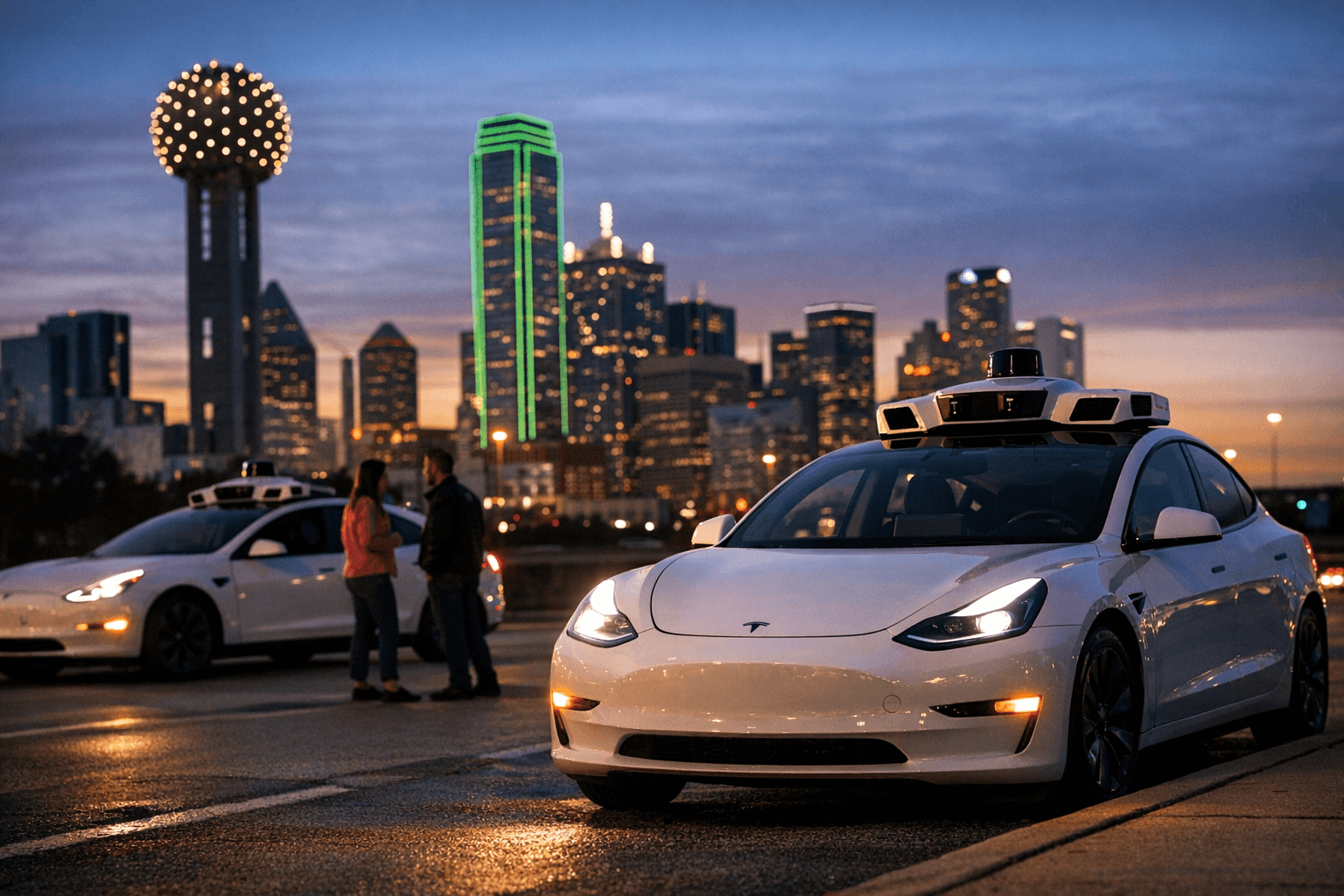
The company said in an X post that “Robotaxi is now rolling out in Dallas & Houston 🤠” and posted a 14-second video showing Tesla vehicles driving with no human monitor or driver in the front seat. Tesla’s robotaxi account also shared two map images outlining service boundaries, yet it did not disclose fleet size, pricing or when rides would be broadly available to the public. Elon Musk amplified the launch with a separate post: “Try Tesla Robotaxi in Dallas & Houston!”
The expansion put Tesla in three Texas cities, after the service began in Austin last year. Tesla also started offering robotaxi rides without safety drivers in January 2026, and the Austin fleet has already been involved in 14 crashes since launch, according to a February filing cited by TechCrunch. That crash record will loom over Dallas and Houston as riders, regulators and local officials look for signs that the system is maturing beyond promotional videos.
Federal oversight remains active. NHTSA has asked Tesla for more information about fleet size, the current and anticipated geofence, launch timing, in-vehicle operator responsibilities and remote operator authority. The agency’s Standing General Order requires crash reporting for vehicles equipped with automated driving systems and Level 2 advanced driver assistance systems, which means Tesla’s robotaxi operation enters the public record if certain crashes occur. NHTSA also has an open preliminary evaluation into Tesla’s Full Self-Driving system over reduced-visibility crashes, including incidents tied to sun glare, fog and airborne dust. The agency said one case involved a fatal pedestrian strike and another involved an injury.
Tesla’s move comes as autonomous-vehicle competitors Waymo and Zoox are also moving faster on expansion, underscoring how central robotaxis have become to the company’s growth story and to Elon Musk’s broader push toward artificial intelligence and robotics. For Dallas and Houston, the immediate test is not the announcement itself but whether the company can show clear operating limits, transparent incident reporting and enough real-world performance to justify a larger presence on city streets.
This article was produced by Prism’s automated news system from verified source data, official records, and press releases, then run through automated quality and moderation checks before publishing. The system is built and supervised by the people who set the standards it runs under. Read our full AI policy.
Did this article answer your question?