Tesla Introduces Supervised Full Self Driving Service in South Korea
Tesla began offering a supervised version of its Full Self Driving system in South Korea after the vehicle technology received Level 2 certification, a move that expands consumer access to assisted driving. Safety advocates and regulators warned drivers must not over rely on Level 2 features and urged stronger safeguards, local testing of imported vehicles, and clearer oversight to prevent misunderstandings about driver responsibility.

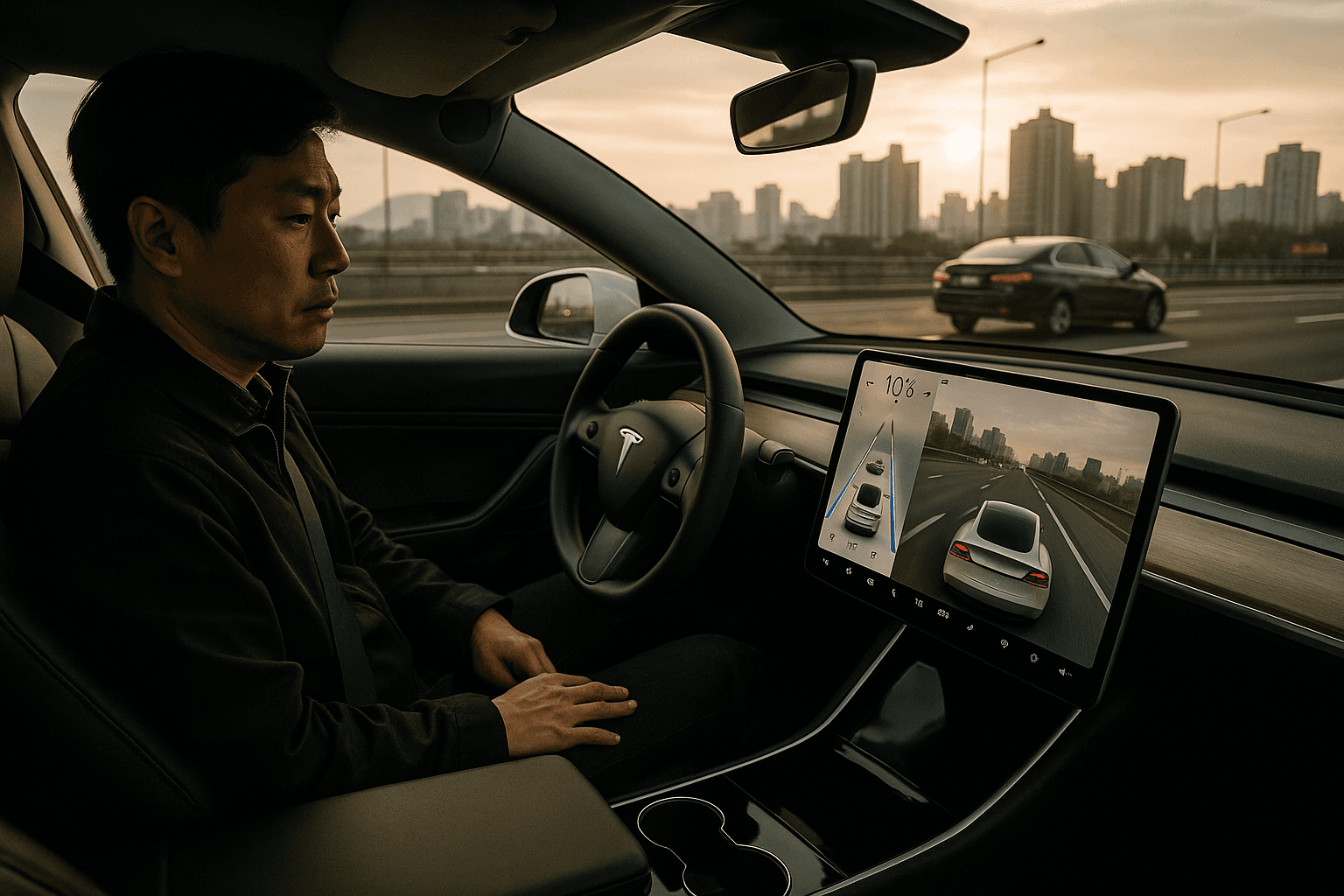
Tesla began offering a supervised version of its Full Self Driving system in South Korea on December 2, following approval under the country’s Level 2 certification rules. The system, as authorized by regulators, allows vehicles to perform automated steering and acceleration tasks while requiring drivers to remain attentive and ready to take control at all times. The rollout places South Korea among a growing number of markets where Tesla has sought to expand availability of its advanced driver assistance technology.
Government guidelines in South Korea make clear that Level 2 systems are not autonomous. Drivers must continuously monitor the driving environment and keep their hands on the wheel. Despite those stipulations, experts and safety advocates worry that broader commercial access could nonetheless encourage excessive reliance on automated features. They emphasize that users often misinterpret marketing or system names as signals of greater autonomy than the technology actually provides.
Local safety voices and regulators have called for more rigorous domestic testing of imported Tesla vehicles equipped with Full Self Driving to ensure the software behaves safely on Korean roads. They urged authorities to establish tighter rules around off boarding and training for owners and fleet operators so that drivers understand the limits of the system. Critics also called for enhanced mechanisms to monitor compliance with attentiveness requirements, citing the challenges of enforcing driver engagement in real time.
The South Korean rollout follows a global push by Tesla to expand the reach of its Full Self Driving suite amid ongoing debates over labeling, driver responsibilities and monitoring compliance. Those debates have been heightened by incidents in several countries where drivers over estimated system capabilities. Regulators in multiple jurisdictions have wrestled with how to require clearer disclosures, standardized testing and stronger oversight without stifling innovation in vehicle automation.
The current certification permits the supervised use of automation but leaves open a number of practical governance questions. How will authorities verify that drivers remain attentive while the system is engaged? What training or licensing requirements, if any, will be imposed on users of advanced driver assistance? How will imported vehicles be tested to reflect local road signage, lane markings and traffic behaviors? Advocates for public safety say answers to these questions will determine whether expanded availability reduces accidents or creates new risks.
For consumers, the immediate implication is a new option for assisted driving technology now available in showrooms and via software updates. For policymakers, the development underscores the need to pair technological approvals with robust institutional safeguards. The debate in South Korea mirrors a broader international conversation about how to integrate increasingly capable vehicle automation into existing traffic systems while protecting road users and clarifying the continuing responsibilities of human drivers.
This article was produced by Prism’s automated news system from verified source data, official records, and press releases, then run through automated quality and moderation checks before publishing. The system is built and supervised by the people who set the standards it runs under. Read our full AI policy.
Did this article answer your question?