Tesla pricing surge cements EV market lead in South Korea
Tesla's aggressive discounts doubled its Korean sales in 2025, pressuring rivals and reshaping the local EV market.
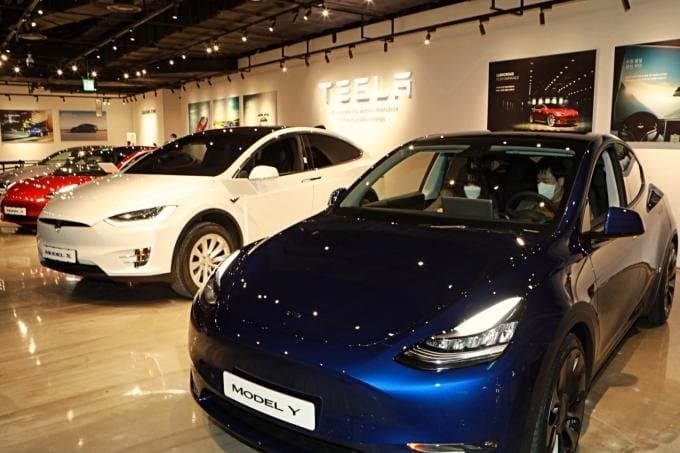
Tesla's steep price cuts on the Model 3 and Model Y propelled the company to a dominant position in South Korea's electric-vehicle market, roughly doubling deliveries in 2025 and forcing competitors to confront an unusually aggressive pricing environment.
Market trackers and industry registration data show Tesla sold roughly 60,000 vehicles in South Korea last year. CarIsYou reported 59,949 sales in 2025, a 101.5 percent increase from 2024, while registration figures compiled by the Korea Automobile & Mobility Association together with the Korea Automobile Importers & Distributors Association put passenger-car registrations at 59,916. That latter total corresponds to an estimated market share of about 19.5 percent and ranks Tesla third among imported brands behind BMW and Mercedes-Benz. The small discrepancy in totals reflects differing trackers and registration cutoffs and does not change the overall picture of rapid growth.
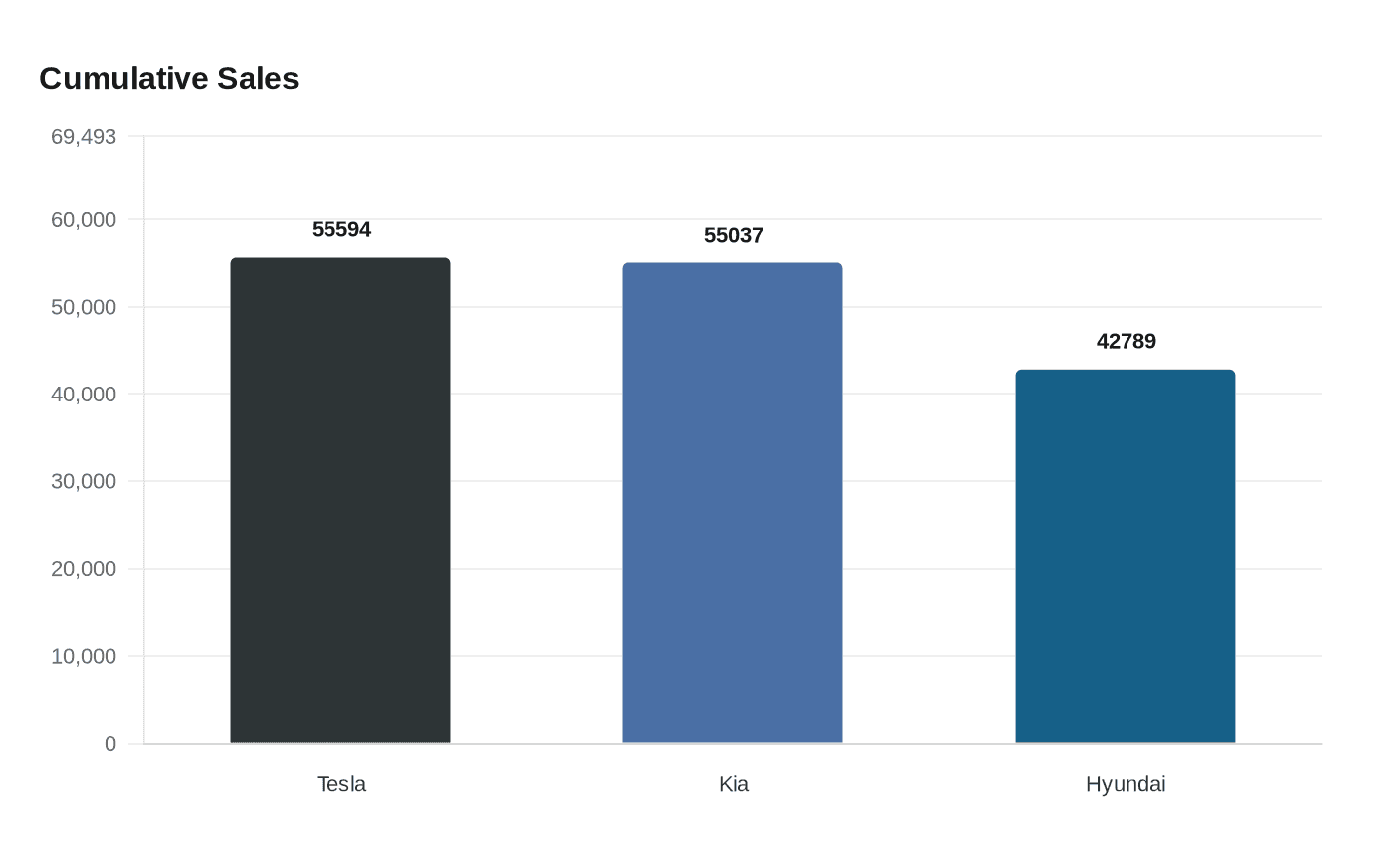
The surge was led by the Model Y, which CarIsYou credited with 50,405 sales in 2025, a 169.3 percent year-on-year rise that made the Model Y the top-selling imported model in Korea and vaulted it above long-time leaders in the imported-car rankings. Monthly performance also reflected the momentum: Tesla sold 7,632 vehicles in November 2025 and reclaimed the top spot in monthly imported-car sales after briefly falling behind BMW in October. On a cumulative basis from January through November 2025, combined registration figures show Tesla with 55,594 units, narrowly ahead of domestic makers Kia at 55,037 and Hyundai Motor at 42,789, an uncommon result in which an imported brand led cumulative sales over major Korean automakers.
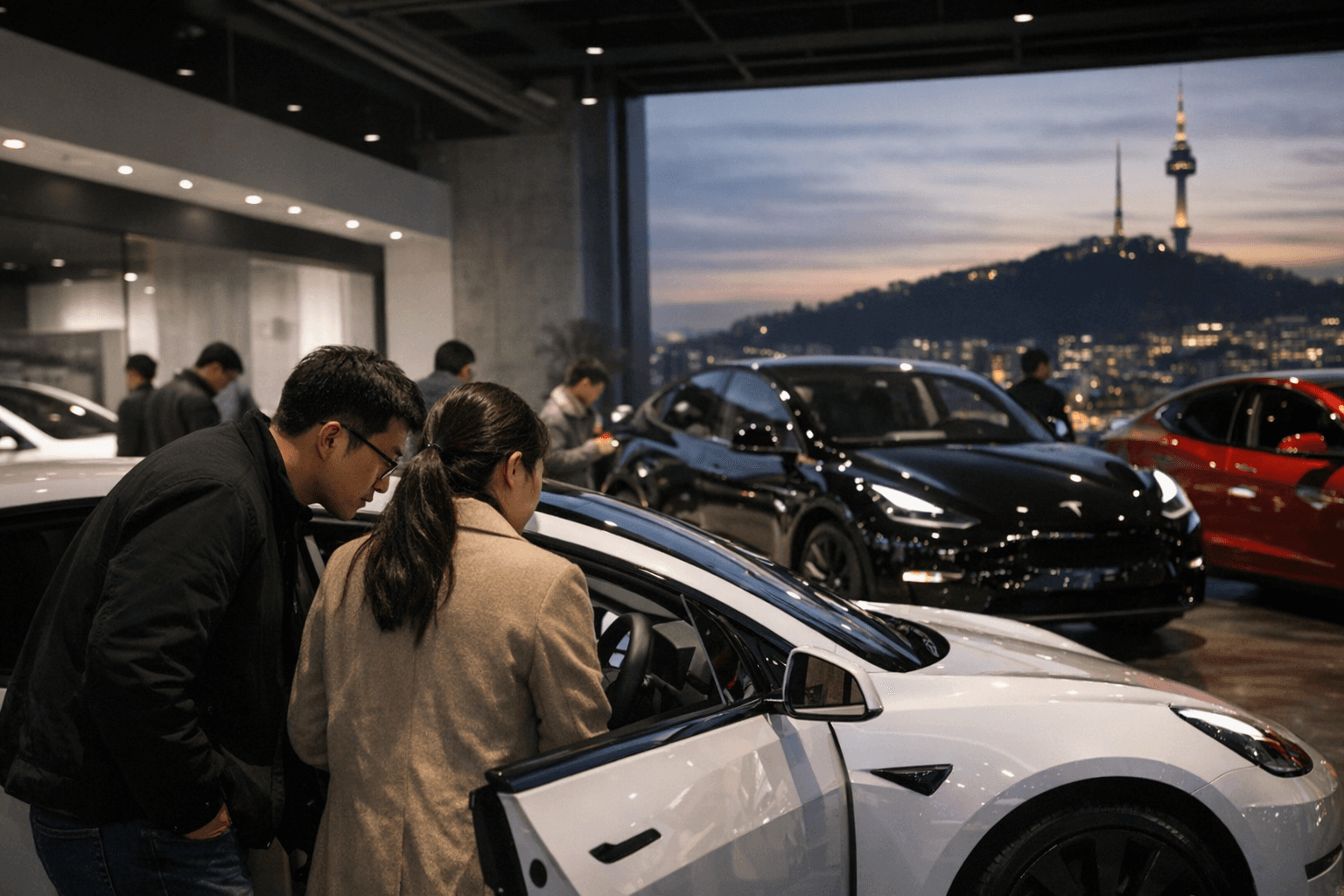
Central to the shift were targeted price cuts and existing subsidy frameworks. Tesla cut the domestic price of the Model 3 Standard RWD to 41.99 million won from 59.9 million won, while a Premium Long Range RWD was listed at 52.99 million won. National subsidies of 1.68 million won for the Standard RWD and 4.2 million won for the Long Range RWD, together with local government incentives and dealer offers, can push effective prices into the high-30 million won or low-30 million won range for some buyers. At the end of December 2025, Tesla intensified discounts, trimming prices on key models by as much as 9.4 million won in a campaign that carried into early January 2026.
Analysts say those moves repositioned Tesla well below the typical 40–50 million won band occupied by many domestic and luxury EVs from Hyundai Motor Group, BMW and Mercedes-Benz, tightening comparisons on cost and feature sets. Industry watchers warn that the strategy could trigger a wider price response from rivals, with some predicting a China-style EV price war in Korea as automakers weigh market share against margin erosion. Market commentary also notes Tesla's particular appeal to buyers in their 30s and 40s who value the brand and features such as Autopilot.
Looking ahead, market watchers expect Tesla Korea's momentum to persist in the near term, supported by aggressive pricing, subsidy frameworks and strong consumer demand for its technology package. At the same time, sustained discounting could compress industry profitability and prompt strategic adjustments from Hyundai, Kia and European luxury brands as they respond to a reshaped competitive landscape.
This article was produced by Prism’s automated news system from verified source data, official records, and press releases, then run through automated quality and moderation checks before publishing. The system is built and supervised by the people who set the standards it runs under. Read our full AI policy.
Did this article answer your question?