The Pitt captures ER chaos and the hidden scars of its doctors
The Pitt makes ER chaos feel ordinary, and that is exactly why it lands. Its doctors carry invisible wounds, mirroring a post-pandemic culture that recognizes burnout as part of the job.
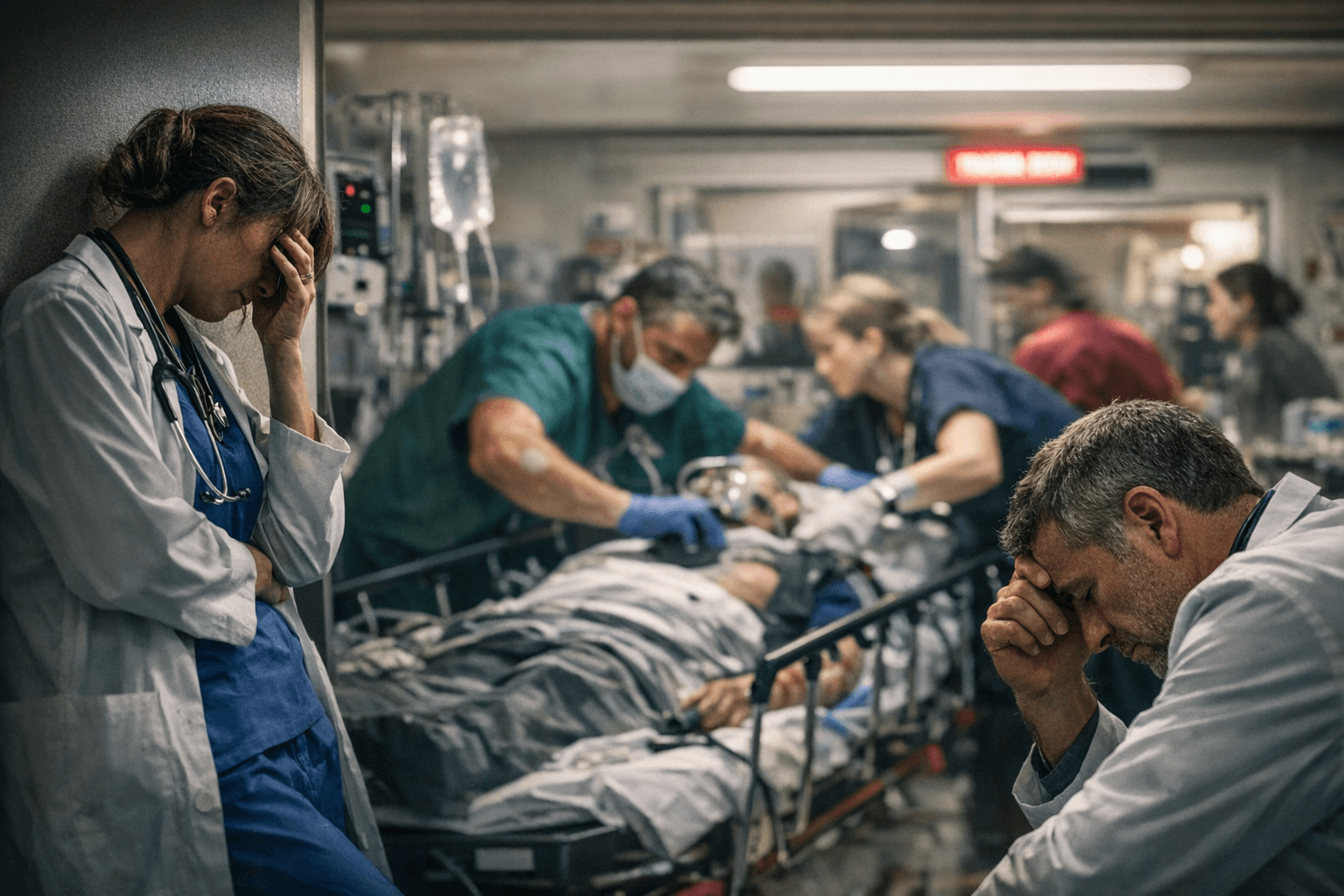
The hidden cost of keeping the ER moving
The first thing “The Pitt” understands is that emergency medicine is not just loud, fast and messy. It is repetitive, disorienting and emotionally draining, a place where the work never stops long enough for anyone to fully absorb what just happened. Set across a single 15-hour shift in the fictional Pittsburgh Trauma Medical Center, the series turns that pressure into the show’s central fact, not its special effect.
That choice explains much of its appeal. Instead of treating caregiver trauma as an extraordinary plot turn, the drama presents it as the background condition of emergency work. For viewers, that feels closer to the reality of modern health care, where exhaustion, grief and mental strain have become impossible to separate from the job itself.
A real-time structure that captures the pace of crisis
“The Pitt” premiered on Jan. 9, 2025, and each episode covers one hour of the same grueling shift. The format gives the show its urgency, but it also forces attention onto the rhythms of emergency medicine: the interruptions, the quick pivots between patients and the emotional aftershocks that never fully go away. Stanford emergency medicine professor Matthew Strehlow says ER physicians are interrupted, on average, once every 12 seconds, a detail that helps explain why the series feels so physically and mentally congested.
That congestion matters because it shapes how the characters function. In the ER, there is no clean separation between one case and the next, and no time to absorb a loss before another crisis arrives. Strehlow has noted that emotional switching after a patient dies remains a real challenge, even when teams try to process it in the moment. The show builds that reality into its pacing, making the audience feel the same jolt that the staff lives with all shift long.
Why the medicine looks and feels convincing
Part of the show’s credibility comes from the people behind the scenes who know emergency care from the inside. UCLA Health emergency physician Jacob Lentz has worked on “The Pitt” since its inception, helping create choreography for medical scenes, teaching actors suturing and advising the makeup department on how injuries and gore should look. That kind of ongoing input gives the series a practical texture that many medical dramas never reach.
The result is not just better-looking procedures. It is a clearer sense of how hospitals actually move, with hands, instruments and bodies in constant motion. When a show gets those details right, the emotional stakes land harder, because the audience believes the setting before it is asked to believe the pain inside it. That is one reason emergency physicians have praised the series for its authenticity, especially its constant interruptions and rapid patient switching.
Season 2 deepens the focus on the people carrying the burden
Season 2, which premiered on Jan. 8, 2026, pushes even more directly into the mental and personal strain carried by the staff. Dr. Michael “Robby” Robinavitch is dealing with worsening mental health and suicidal thoughts, a storyline that makes the cost of the work impossible to ignore. The show does not frame that struggle as a sudden breakdown. It reads as the accumulation of years of pressure, which is closer to how burnout often actually appears.
Dr. Mel King gives the series another angle on hidden strain. Taylor Dearden has said that Mel is neurodivergent and the primary caretaker for her sister, Becca, who has autism. Dearden has also said that Mel’s deeper backstory may never be shown on screen, and that choice matters. The role still carries that history, even if the audience never receives a tidy explanation, which mirrors how real caregivers often live with private responsibilities that shape every shift without ever becoming visible to coworkers or patients.
Together, Robby and Mel make the same argument in different ways: emergency medicine is not only about clinical skill. It is also about what happens to people who keep showing up while carrying their own grief, obligations and untreated stress.
Why the show resonates now
The broader response to “The Pitt” suggests that audiences are ready for a medical drama that treats burnout and moral injury as structural rather than exceptional. By April 2026, UCLA Health reported that the series had already won Emmy, Golden Globe, Writers Guild of America and Critics’ Choice Television awards for drama series. Variety also reported that Max said the show ranks among the top 3 most watched Max series in platform history.
That level of attention points to more than a strong cast or a clever format. The series arrives in a cultural moment shaped by post-pandemic understandings of emergency care, when viewers are more likely to recognize emotional exhaustion, suicide risk and institutional strain as part of the landscape. The show’s power lies in the way it makes that recognition feel unavoidable.
“The Pitt” is successful because it refuses to isolate suffering into a single dramatic episode. It shows how the work itself wears people down, and how the people inside the ER keep functioning anyway. In doing so, the series captures both the chaos of emergency medicine and the quieter, harder truth beneath it: the doctors are not just treating trauma. They are living inside it.
This article was produced by Prism’s automated news system from verified source data, official records, and press releases, then run through automated quality and moderation checks before publishing. The system is built and supervised by the people who set the standards it runs under. Read our full AI policy.
Did this article answer your question?