Tim Love's Lonesome Dove helped reshape Fort Worth dining scene
Lonesome Dove gave Fort Worth a bold culinary identity, and its 25-year run shows how one Stockyards restaurant helped turn a district into a destination.
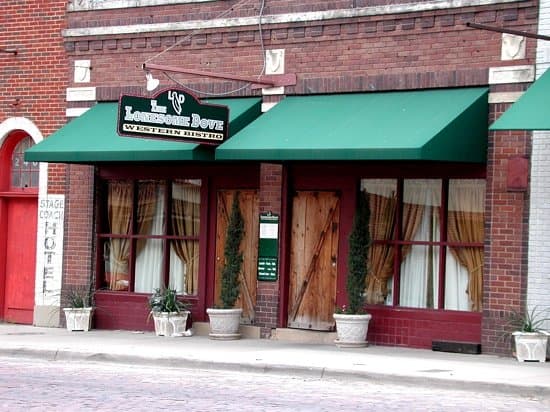
Tim Love did not just open a restaurant in Fort Worth’s Stockyards. With Lonesome Dove Western Bistro, he introduced a version of the city that could stand on its own, built around steaks, seafood, wild game, and a modern take on the American West.
That first room, opened in 2000, became a landmark in how Fort Worth was seen and tasted. When the city marked June 9, 2025, as Lonesome Dove Bistro Day for the restaurant’s 25th anniversary, it was recognizing a place that had become part of the city’s civic brand as much as its dining scene.
A restaurant that changed the Stockyards
Lonesome Dove opened in Fort Worth’s historic Stockyards when the district still carried far more grit than polish. Tim Love’s flagship brought a different kind of energy into that setting, one built around his self-described urban Western style, which combines modern technique with the bold flavors of the American West.
The menu mattered because it expanded what many diners expected from a Fort Worth steakhouse. Love’s concept centered on steaks, seafood, and wild game, and that mix helped introduce guests to ingredients they likely had not tried before. In a district long associated with cattle and commerce, the restaurant made novelty feel rooted in place.
That shift changed the way the Stockyards functioned. What had been a rough-and-tumble area gradually became a dining destination, with Lonesome Dove serving as one of the clearest signs that hospitality, not only history, could define the neighborhood’s next chapter.
Urban Western as a full dining identity
Love did not treat Lonesome Dove as a one-off experiment. The idea grew into a broader culinary language that he carried into later projects, and that language helped establish his name across Texas and beyond. A cookbook published in 2002, Tim Love on the Lonesome Dove Trail, helped set the stage for the urban Western approach, while the following year Love and his team rode American Paint Horses from Fort Worth to New York, sourcing local ingredients along the way.
That kind of theater was not separate from the food. It reinforced the idea that the restaurant was about region, craft, and movement, not only plates in a dining room. In Love’s hands, the Stockyards became a launch point for a broader story about how Texas ingredients and Western imagery could be reworked for contemporary diners.
The timing also mattered. Love opened Lonesome Dove in June 2000, and the restaurant’s longevity gave the concept room to evolve beyond a single menu or opening moment. The 25-year milestone in 2025 showed that the idea had outlasted the novelty phase and settled into Fort Worth’s long-term identity.
From one bistro to more than a dozen concepts
Lonesome Dove became the first in a much larger network. Love’s restaurant empire now includes more than a dozen concepts across Fort Worth, Austin, and Knoxville, Tennessee, extending the reach of the style he developed in the Stockyards.

Among the better-known names in that portfolio are:
- Woodshed Smokehouse
- Love Shack
- Gemelle
- Tannahill’s Tavern & Music Hall
- Love’s Barbecue & Oyster Bar
- Caterina’s
- Queenie’s Steakhouse
- Stewart’s Croquet & Cocktail Club
Several of those names carry family ties, which gives the brand a personal structure even as it has expanded into multiple cities. Anna Love, Ella Love, Tannahill Love, Caterina Love, Queenie Love, and Stewart Love each appear in the naming of different concepts, turning the restaurant group into a map of relationships as well as a business.
The spread across Fort Worth, Austin, and Knoxville shows how the original Stockyards idea traveled. What began as a single bistro built around a specific neighborhood now operates as a regional brand with a recognizable point of view.
Beyond restaurants, into festivals and public space
Love’s reach has also extended into music-festival dining for more than a decade. That work matters because it pushes his food into temporary, high-volume environments where the brand has to function outside the comfort of a permanent dining room.
Festival dining also fits the larger logic of Love’s career. The same blend of spectacle, mobility, and regional identity that made Lonesome Dove stand out in Fort Worth can translate to large events where diners want both energy and a sense of place. In that setting, the restaurant concept becomes part of the event itself, not just a vendor within it.
That broader activity helps explain why Love’s name has stayed visible even as Fort Worth’s dining landscape has diversified. The restaurants, the cookbook, the horse ride, and the festival work all point back to the same core idea: Western imagery can be more than décor when it is tied to serious cooking and a clear sense of place.
Fort Worth’s dining identity, in one address and beyond it
Lonesome Dove’s influence is easiest to see in the Stockyards, where a once-rough district took on new life as a food destination. It is equally visible in the larger arc of Fort Worth itself, where a restaurant opened in 2000 became a civic reference point by the time the city honored it in 2025.
That is the lasting story of Tim Love’s first Fort Worth restaurant. It helped make the case that the city’s identity could be expressed through food, not only through cattle history or skyline growth, and it gave the Stockyards a role in the city’s future that extended well beyond a single dining room.
This article was produced by Prism’s automated news system from verified source data, official records, and press releases, then run through automated quality and moderation checks before publishing. The system is built and supervised by the people who set the standards it runs under. Read our full AI policy.
Did this article answer your question?

