Tom Steyer’s $216 million governor bid ends in California primary loss
Tom Steyer spent about $216 million and still finished third in California’s primary, underscoring the limits of self-funding in a state he tried to buy into.
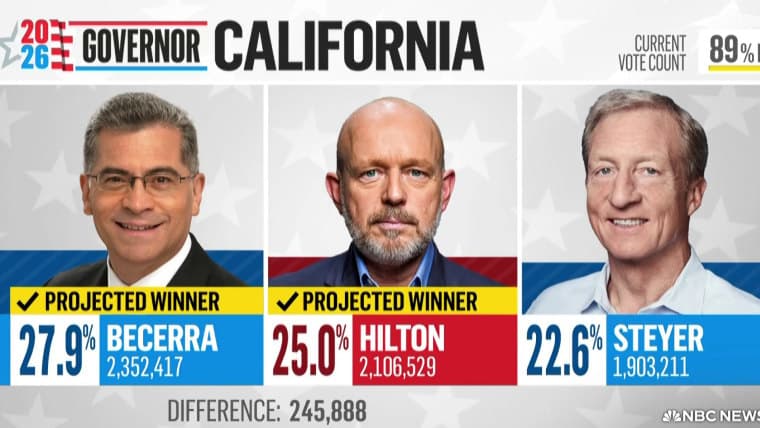
Tom Steyer’s $216 million bet on California governor ended with a third-place finish and no path to November, a blunt reminder that money can saturate a race without creating a constituency. The billionaire climate activist finished behind Democrat Xavier Becerra and Republican Steve Hilton in the June 2 all-party primary, failing to advance in his bid to succeed Gavin Newsom.
Steyer put more than $200 million of his own money into the campaign, and reports placed his personal spending at about $216 million. That fueled what observers described as the most expensive political advertising campaign in the country in 2026, a blitz that blanketed California while ultimately falling short of the basic task of translating visibility into votes.

The loss marked the second time Steyer had spent nine figures unsuccessfully on a race for public office. Federal Election Commission data show his 2020 presidential committee spent about $342 million, another huge financial effort that did not carry him to elected office. Taken together, the two campaigns showed the same problem: Steyer could finance reach, but not a durable political identity broad enough to win statewide or national office.
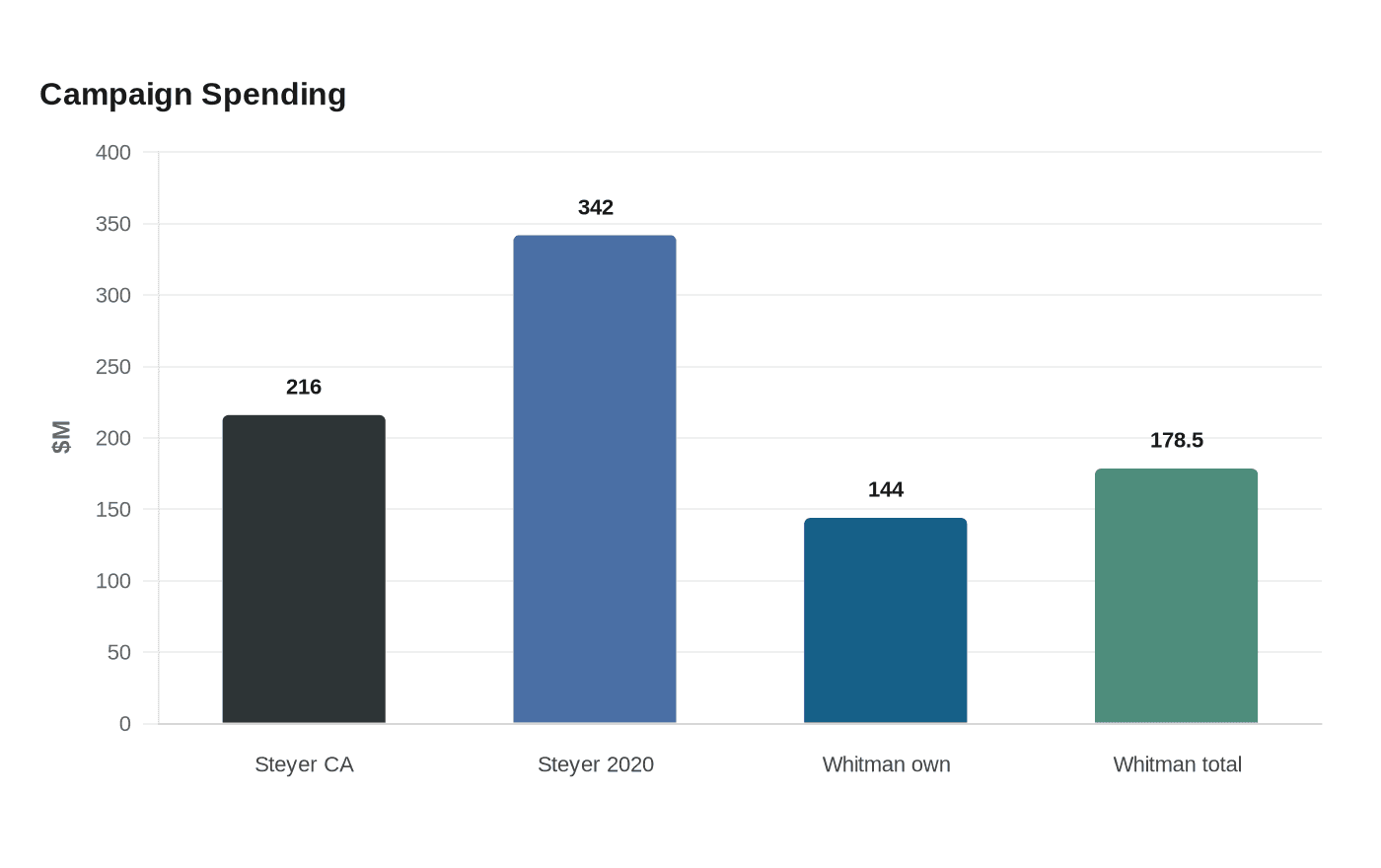
His California spending also reset the state’s record for self-funding and overall campaign outlays. Meg Whitman’s unsuccessful 2010 governor campaign, in which she spent about $144 million of her own money and about $178.5 million overall, had long stood as the benchmark for extravagance in California politics. Steyer pushed far beyond it, turning the race into a test case for whether a billionaire can parachute into a state contest and build legitimacy from the top down.
The answer from California voters appeared to be no. Steyer campaigned on breaking up the state’s electric monopolies, but independent spending against him included money from groups backed by Pacific Gas and Electric Co., real estate interests and others, a sign that the contest also carried the imprint of the state’s entrenched power structures. In the end, the race highlighted a larger political signal: saturation advertising can make a candidate unavoidable, but it cannot manufacture authenticity, issue ownership or the sense of a natural constituency that voters still demand.
This article was produced by Prism’s automated news system from verified source data, official records, and press releases, then run through automated quality and moderation checks before publishing. The system is built and supervised by the people who set the standards it runs under. Read our full AI policy.
Did this article answer your question?

