Top airbrush picks for miniatures - practical buying and setup advice
A practical roundup of recommended airbrushes for miniature painting and what each model does best. Includes pros, needle/nozzle size guidance, pressure ranges, and maintenance tips.
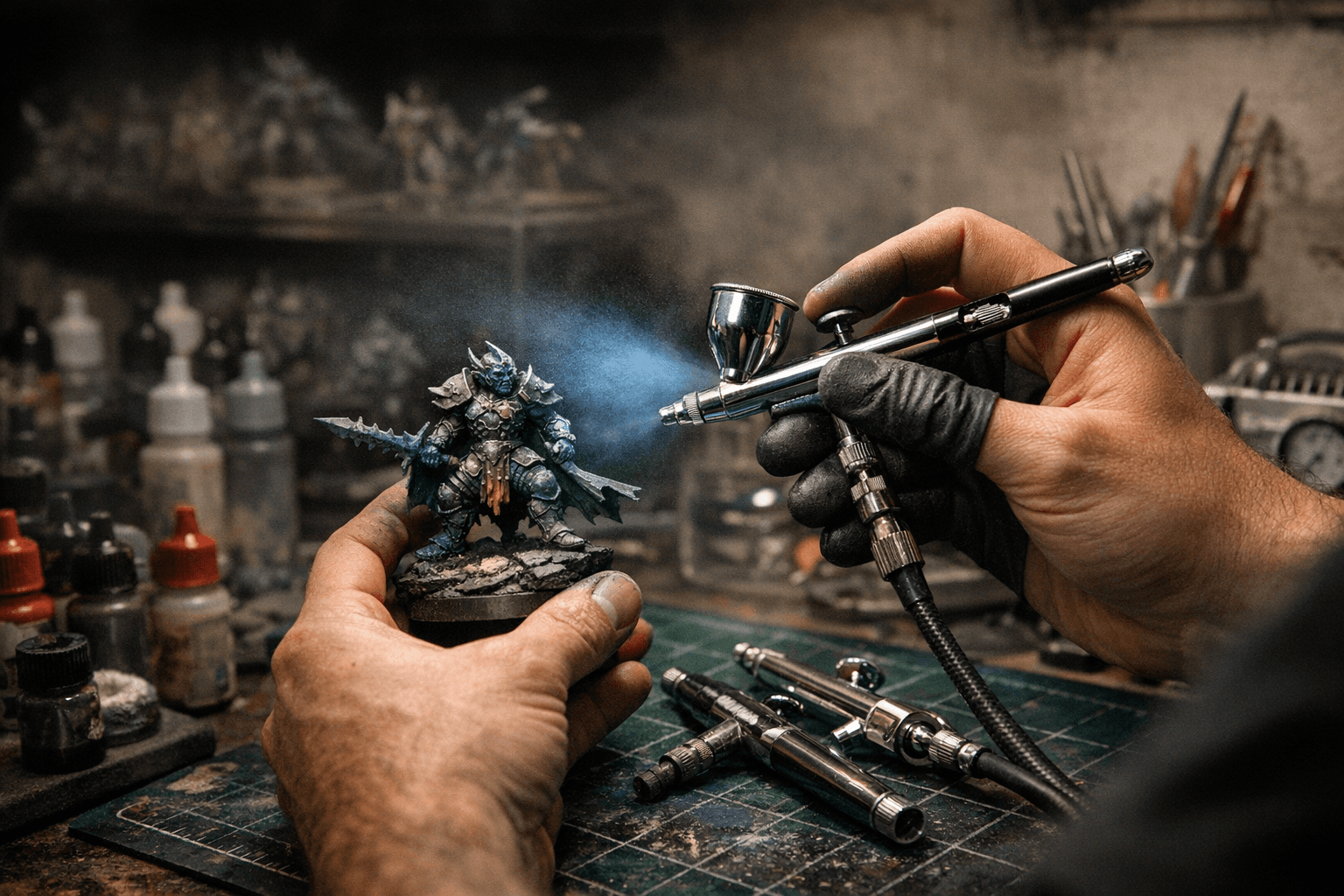
A concise list of airbrushes that cover precision detail and general-purpose work has emerged as a go-to starting point for painters building or upgrading an airbrush workflow. The roundup highlights Harder & Steenbeck Ultra 2024 as the top, budget-friendly choice for miniatures, the Evolution AL as a reliable daily driver, Monument Hobbies Pro-Air TG for those who prefer a pistol grip, several Iwata models for rock-solid reliability, and the Badger Sotar when the absolute finest line work matters. This piece was updated January 7, 2026.
The Harder & Steenbeck Ultra 2024 earns its spot for a combination of price and fine control that fits figure painting. Expect a responsive trigger and a needle/nozzle set that plays well with finely thinned colors. The Evolution AL sits above it as the everyday workhorse: simple servicing, consistent output, and durable construction make it an easy choice if you plan long painting sessions. Monument Hobbies Pro-Air TG brings comfort with its pistol grip and is easier on the wrist during long terrain or model builds, though the ergonomics trade a little in fingertip finesse for freehand detail. Iwata’s Eclipse family, including the HP-CS and HP-BCS, gets called out for mechanical reliability and predictable spray patterns, making them dependable in a studio rotation. The Badger Sotar still serves a niche for ultra-fine detail lines, think small freehand markings or micro-lining on faces and eyes, at the cost of a steeper setup and more careful maintenance.
Get practical with needle and pressure choices. For figure work aim for 0.15–0.2 mm needle/nozzle combinations and keep pressure low and steady, roughly 10–20 psi, to lay down thin, buildable layers and smooth fades. For terrain and larger surfaces consider 0.3–0.5 mm setups and pump pressures in the 20–40 psi range for faster coverage and thicker mediums. Favor gravity-feed for lower-volume, thin paints and faster color changes; choose siphon-feed when you need larger paint capacity and are working with heavier primers or varnishes.
Maintenance and workflow matter as much as the model. Flush after every color change, use proper airbrush cleaner, protect needles with caps, and check nozzle tips for dings, small damage ruins atomization. For priming and zenith highlights, use light passes at low pressure and multiple thin coats rather than one heavy coat to avoid losing detail. Smooth fades come from distance control and incremental opacity builds, not blasting pressure.
Our two cents? Match tool to task: grab a fine 0.15–0.2 mm airbrush if miniatures and faces are your focus, pick a 0.3 mm or larger for terrain, and invest in regular cleaning, the right technique and upkeep will extend any airbrush’s life and save nerves during finals.
Know something we missed? Have a correction or additional information?
Submit a Tip