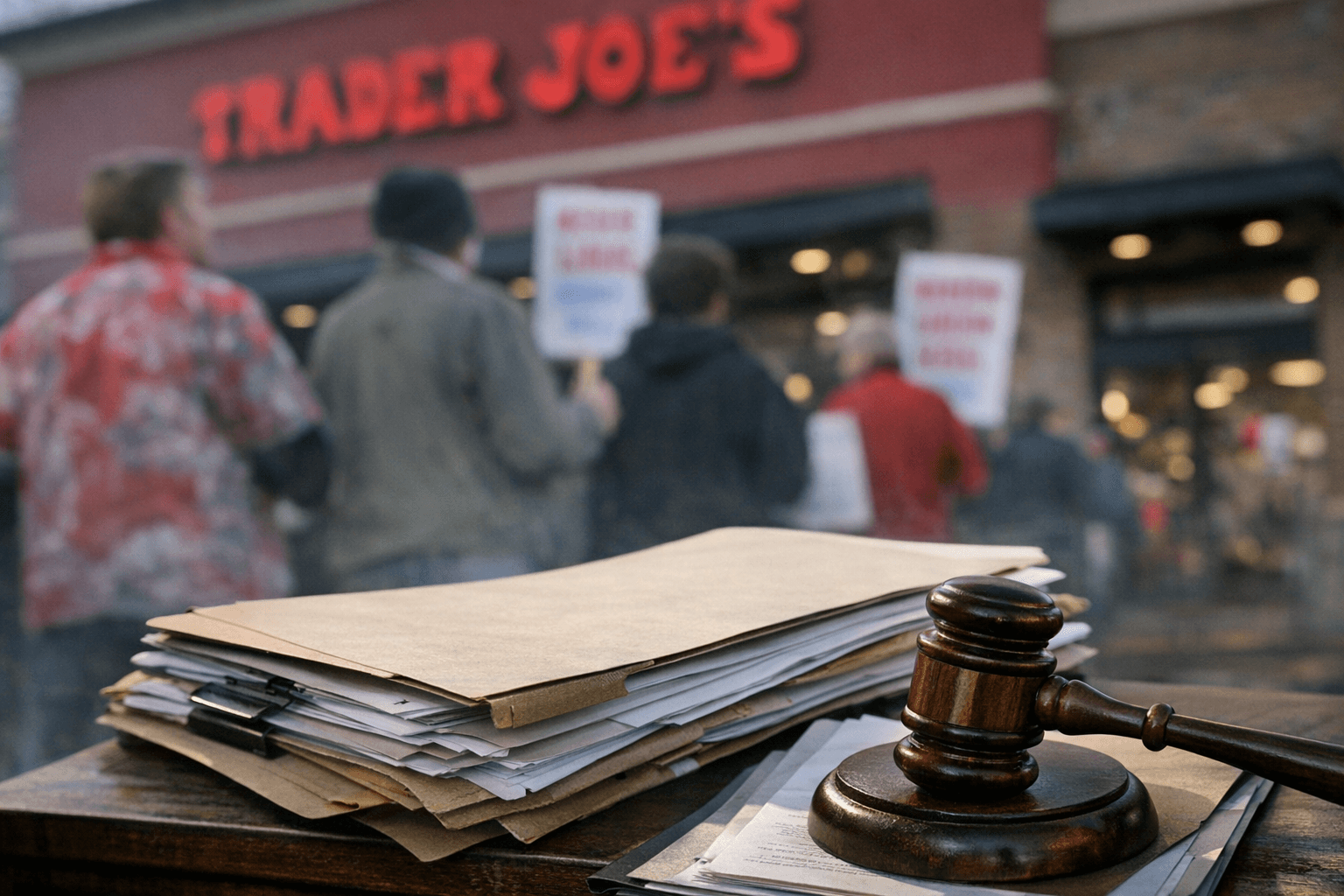
Trader Joe’s employees urged to invoke Weingarten rights in investigatory interviews
Labor advocates and union stewards are urging Trader Joe’s employees to invoke Weingarten rights to secure union representation during investigatory interviews that could lead to discipline.
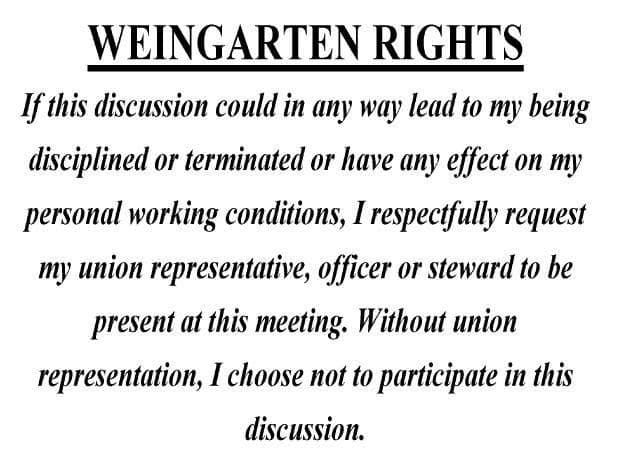
Union stewards and labor advocates are encouraging Trader Joe’s crew members to assert Weingarten rights when managers conduct investigatory interviews that could result in discipline. The protection, rooted in the U.S. Supreme Court case NLRB v. J. Weingarten, Inc., 420 U.S. 251 (1975), lets employees request union representation before or during questioning.
“Weingarten rights guarantee an employee the right to union representation whenever an employer’s investigatory interview could lead to discipline,” according to union legal guides. An investigatory interview is one in which a supervisor questions an employee to obtain information that could be used as a basis for discipline. Examples commonly cited include absenteeism, drinking, fighting, violation of safety rules, accidents, drugs, insubordination, falsification of records, lateness, theft, and alleged sabotage.
Employees bear the responsibility for asserting the right. “Management is not required to inform the employee of their Weingarten rights; it is the employee’s responsibility to know their rights and make the request,” human resources guidance states. Union materials underscore that workers must make a clear request for representation, and that an employee cannot be punished for doing so.
Once an employee requests a representative, employers have three options: stop questioning to wait for the union representative, reschedule the meeting, or inform the employee that the interview will proceed only if the employee voluntarily waives the right to representation. Institutional guidance offers practical benchmarks: UC Irvine HR suggests employers generally allow up to 30 minutes for a representative to arrive if a meeting is already under way, while UC Santa Barbara recommends arranging a mutually acceptable time within a reasonable period, typically 1–2 days, when the interview is yet to be scheduled. Both frameworks stress employers must not unreasonably postpone meetings because of unavailability of representation.
A union steward may speak privately with the employee before questioning and may request clarification of confusing questions, but may not obstruct the interview. “The representative may not interfere with or impede the interview and the employee, not the union representative, is expected to provide answers to the questions being asked,” HR guidance states. Unions also recognize an obligation to educate members about Weingarten rights before an occasion to use them arises.

The protections originate in federal labor law for private-sector employees, though some public-sector bodies have adopted similar rules; for example, the Massachusetts Department of Labor Relations applies Weingarten rules to public employees covered by M.G.L. c.150E.
For Trader Joe’s crew members, the practical takeaway is straightforward: if a manager begins an investigatory interview and you reasonably believe your answers could lead to discipline, request union representation immediately and insist on one of the employer’s three options. Stewards and labor advocates recommend preparing ahead of time so workers know how to make the request and understand what a representative can and cannot do.
What comes next will hinge on awareness and enforcement: if more workers assert Weingarten rights, store-level dynamics may shift toward clearer handoffs between management and union stewards during disciplinary inquiries, and unions may step up pre-emptive education so crew members know how to protect themselves when questions turn serious.
Know something we missed? Have a correction or additional information?
Submit a Tip