Trader Joe's Workers Entitled to NLRB Protections for Union and Concerted Activity
Trader Joe's workers are covered by the National Labor Relations Act, giving crew members rights to organize, engage in concerted activity, and file charges with the NLRB.
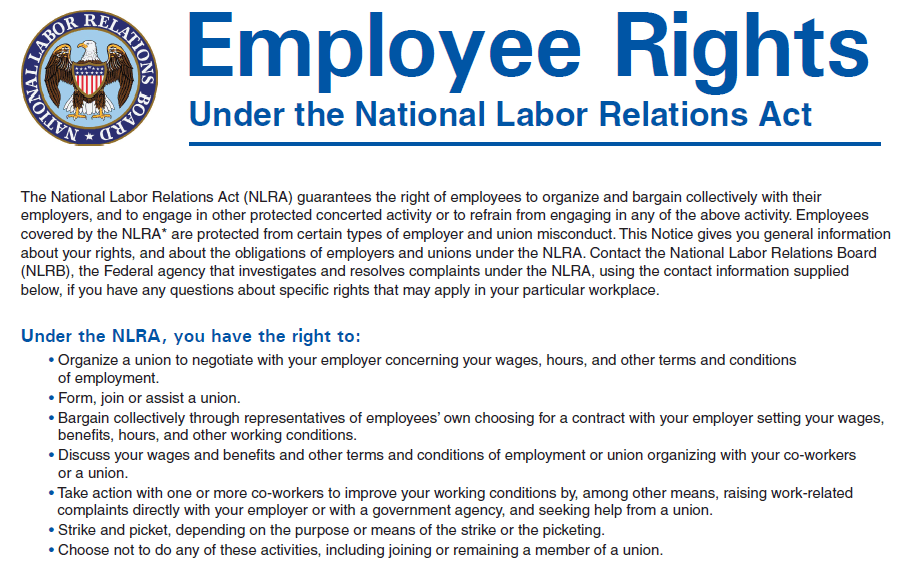
Trader Joe's crew members have explicit protections under federal labor law to organize, press for better pay and safety, and act together on workplace issues. The National Labor Relations Act protects employees who form or attempt to form a union, join a union whether the employer recognizes it or not, assist in organizing, or choose not to participate.
The law also safeguards activity outside formal union representation through the doctrine of concerted activity. Concerted activity covers actions by two or more employees taking steps for their mutual aid or protection about terms and conditions of employment. In some cases a single employee acting on behalf of co-workers or preparing for group action can be protected as well. Concrete examples include two or more employees addressing management to improve pay, discussing work-related safety issues with each other, or an employee speaking to management on behalf of co-workers about workplace conditions.
Most private-sector workers fall under these protections, which means the vast majority of Trader Joe's store-level crew are covered by the NLRA. There are statutory exclusions, however: federal, state and local government employees, agricultural laborers, domestic workers, certain family-employed workers, independent contractors, supervisors in most cases, and workers covered by the Railway Labor Act are not covered. These exclusions are narrowly defined and do not typically include retail crew positions.
Crew members who believe their rights have been violated can pursue remedies with the National Labor Relations Board. The agency provides FAQs, interactive explanations of protected rights, contact information for its Public Affairs Office and regional offices, and guidance on filing charges or petitions through an electronic filing application called E-File. Filing a charge can trigger an investigation into unfair labor practices such as unlawful retaliation for organizing or engaging in concerted activity.
For Trader Joe's stores, the NLRB framework affects workplace dynamics by clarifying what kinds of group advocacy are lawful. Store managers must avoid actions that chill protected organizing or concerted discussions about pay and safety, while employees gain legal backing when pushing for changes on issues from scheduling to backroom safety protocols. The protection for single-actor conduct in certain circumstances also means that speaking up on behalf of co-workers can carry legal protection.
For crew members, the practical next steps are to document incidents, seek information from the NLRB regional office or Public Affairs Office, and use the E-File system if they choose to file a charge. As organizing activity and discussions about labor conditions continue at retail chains, Trader Joe's employees now have a clear federal baseline of rights to rely on when they raise workplace concerns.
Know something we missed? Have a correction or additional information?
Submit a Tip