Trading Standards officers face threats as crime grips high streets
Nearly three-quarters of Trading Standards staff said they faced threats while policing high streets where organised crime may run half of some vape and convenience stores.
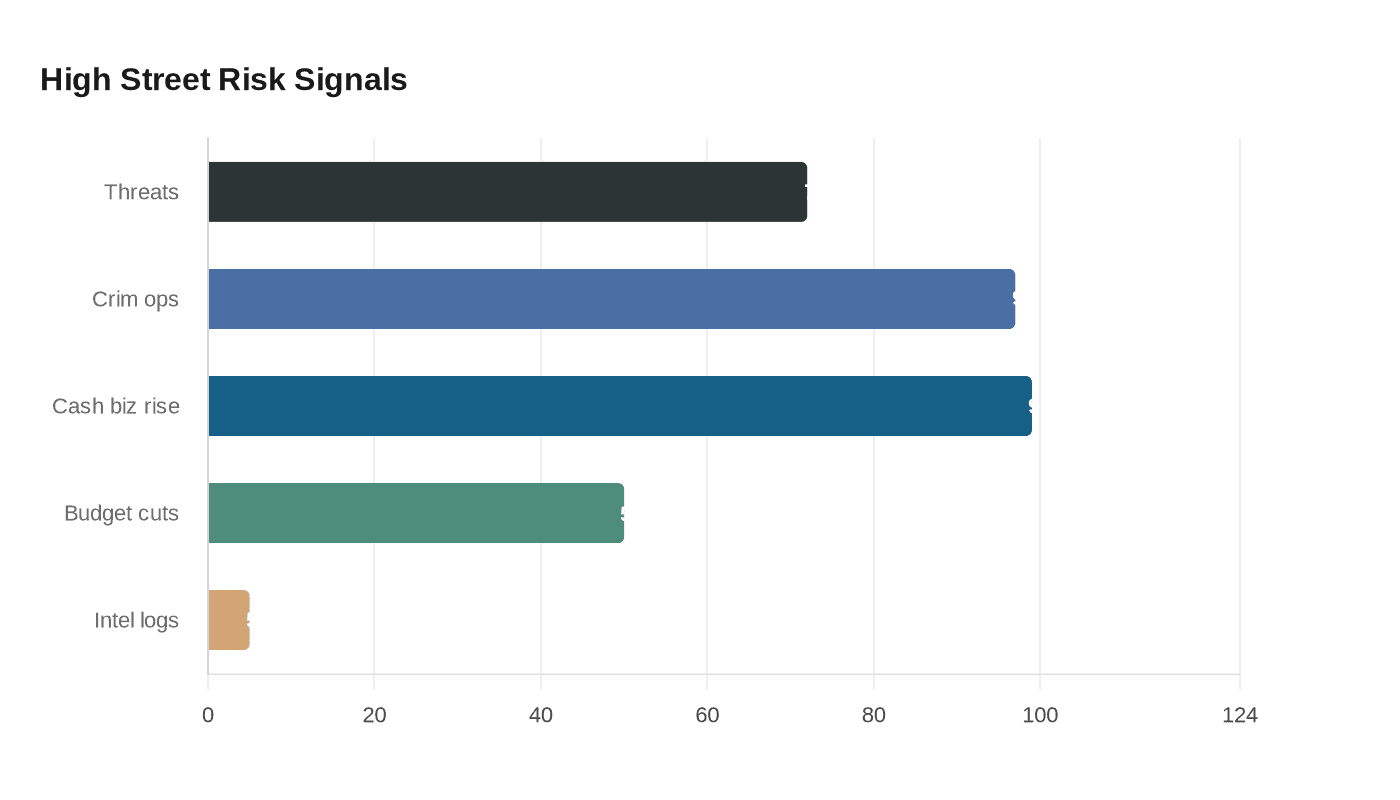
Trading Standards officers are being pushed back from the high street by intimidation, even as organised crime groups are suspected of using mini-marts, vape shops and other cash-heavy businesses as cover for illicit trade. A Chartered Trading Standards Institute report said 72% of professionals had faced threats or violence while on duty, with 97% aware of suspected criminal operations locally and 99% reporting a sharp rise in cash-intensive businesses opening since 2020.
The warning lands in a system already stretched thin. CTSI said local authority Trading Standards services have endured budget cuts of up to 50% over the past decade, leaving teams stripped to the minimum just as the problem has become more complex. The institute said organised crime on high streets is now the profession’s number one threat, and in some parts of the UK it believes criminal groups may be operating through as many as half of convenience stores and vape retailers, alongside significant shares of American candy stores and fast food takeaways.
National Trading Standards’ latest strategic assessment showed how the illicit economy is feeding that pressure. It recorded a 5% rise in intelligence logs driven by illicit tobacco and cigarettes, doorstep crime and cold calling, while local teams removed nearly 1.2 million illegal vapes and £11.8 million worth of illicit tobacco from sale. That is public health enforcement as frontline state capacity: every counterfeit vape, every pack of untaxed cigarettes and every shop selling to children depends on an inspection regime strong enough to find it.
The scale of criminal money behind the model has also widened the stakes for councils and police. The National Crime Agency said cash-intensive businesses, including barbershops, vape shops, nail bars, American-themed sweet shops and car washes, are often used to hide dirty money, estimating that £12 billion in criminal cash is generated in the UK each year. In Operation Machinize, officers visited 380 premises, executed 84 warrants and made 35 arrests, while seizing more than 8,000 illegal vapes, 200,000 cigarettes, 7,000 packs of tobacco and more than £40,000 in cash.
The government has moved to bolster enforcement, announcing a £10 million boost for Trading Standards on 23 March 2025 to fund around 80 additional apprentice enforcement officers. A new vaping duty due in 2026 is meant to give Trading Standards civil and criminal powers and more than 200 compliance staff, while the Tobacco and Vapes Bill would create the world’s first smoke-free generation by ending tobacco sales to people born on or after 1 January 2009. But with officers facing threats on the ground, the central question remains whether councils and police can match an illicit market that is already embedded in the daily life of the high street.
This article was produced by Prism’s automated news system from verified source data, official records, and press releases, then run through automated quality and moderation checks before publishing. The system is built and supervised by the people who set the standards it runs under. Read our full AI policy.
Did this article answer your question?


