Traverse City Commission Considers Adopting Revised OKRs With 1-3 Year Timeline
City commission reviewed revised OKRs to guide decision-making and budgets over a 1-3 year timeline; adoption will be considered Jan. 20 and could shape local planning and services.
.webp&w=1920&q=75)
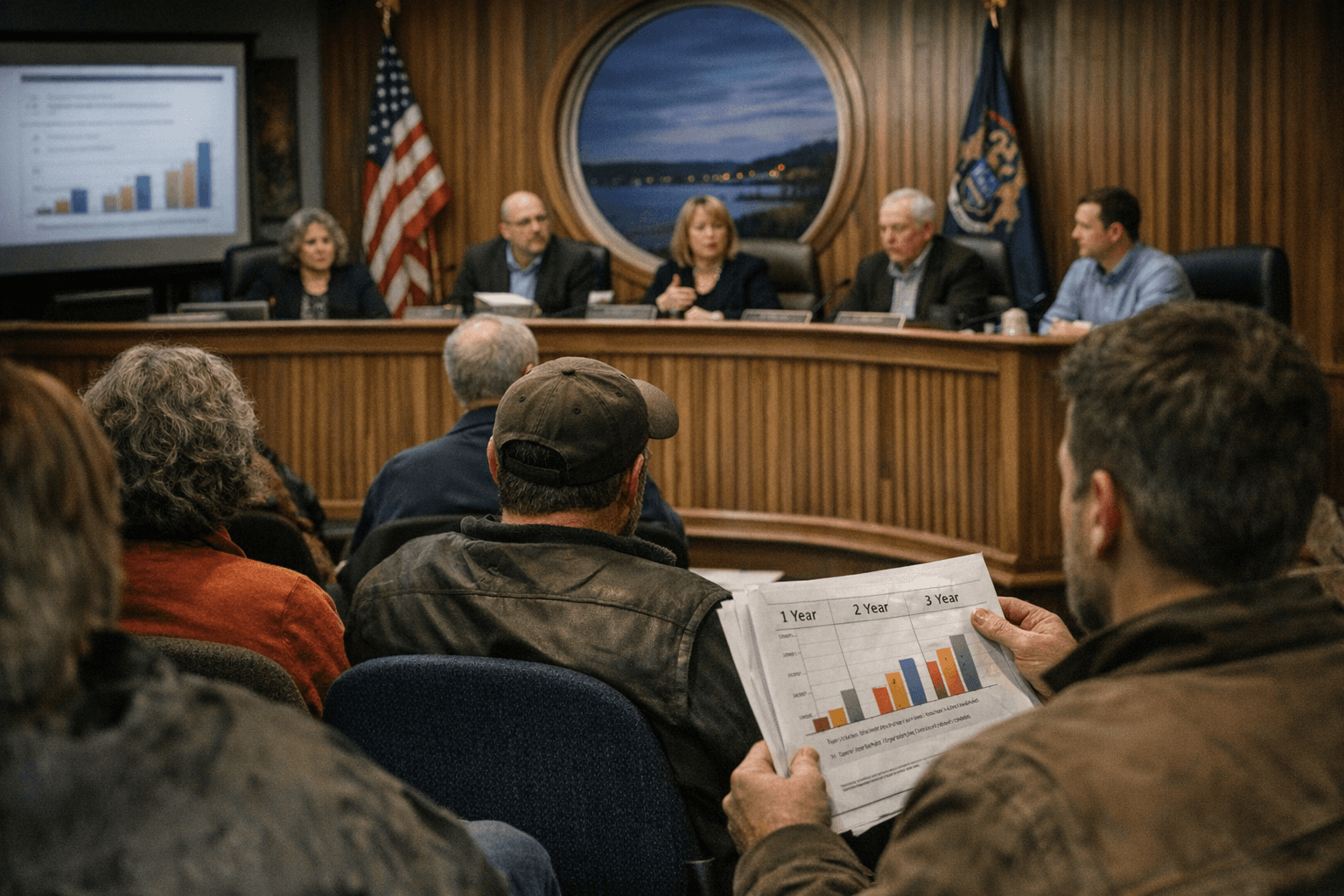
The Traverse City Commission reviewed a revised set of Objectives and Key Results (OKRs) on Jan. 12 intended to translate the city’s Strategic Action Plan into measurable outcomes. David Beurle of Future iQ presented the changes, including an adjusted implementation timetable that lengthens the horizon from 1-2 years to a more achievable 1-3 years. Commissioners will consider adopting the revision at their upcoming meeting on Tuesday, Jan. 20.
The OKRs are designed to clarify priorities for city decision-making and resource allocation and to make organizational performance easier to measure. The draft recommends the Commission concur with the proposed OKRs and direct the City Manager to develop budget recommendations tied to those objectives. If adopted, the OKRs will be vetted across departments for feasibility and alignment; an update on progress and budget work is expected by the end of February 2026.
The Strategic Action Plan behind the OKRs lays out six core pillars that will guide city work. The first calls for proactive urban design to protect local character and community feel, including collaboration with Grand Traverse County and nearby townships on planning of entry corridors and a broader mix of housing options. The second emphasizes strengthening downtown and neighborhood character through more social gathering spaces, tactical urbanism projects, a fund to support community-driven initiatives, and cooperation with the Downtown Development Authority to encourage a live/work environment.
The third pillar seeks a regional, collaborative approach to managing resources, utilities and climate adaptation by actively soliciting participation on regional bodies such as the airport board and by convening leadership groups to address issues like the housing crisis and childcare. Pillar four focuses on creating a more complete community with demographic balance by encouraging more full-time residents in core neighborhoods, acknowledging policy limits, re-establishing the summer camp at Hickory Hills in 2026 and piloting new childcare options.
The fifth pillar commits the city to environmental sustainability that supports a thriving ecosystem and encourages businesses and tourism to adopt sustainable practices. The sixth aims to build a year-round economy by expanding business diversity and innovation, working with Traverse City Tourism to explore tourism models that reduce negative local impacts and deepen partnerships with groups like Traverse Connect and Michigan Works to diversify the economy and elevate local jobs and wages.
For residents, the proposed OKRs signal a shift toward measurable, accountable planning that touches everyday life, from housing and childcare to downtown vibrancy and summer programs at Hickory Hills. The City Commission meets Tuesday, Jan. 20 at 7:00 p.m. in the Commission Chambers of the Governmental Center, 400 Boardman Avenue, where the body may vote to adopt the OKRs and set in motion the city budget planning tied to these goals.
Sources:
Know something we missed? Have a correction or additional information?
Submit a Tip