Treasury Reorients FSOC Toward Growth, Creates New Working Groups
Treasury Secretary Scott K. H. Bessent told the Financial Stability Oversight Council he would refocus the panel to weigh economic growth and regulatory burdens alongside traditional stability concerns. The shift, formalized in a Dec. 11 meeting and described in media reports as deregulatory in tone, could reshape how regulators assess risks from nonbank finance and emerging technologies such as artificial intelligence.
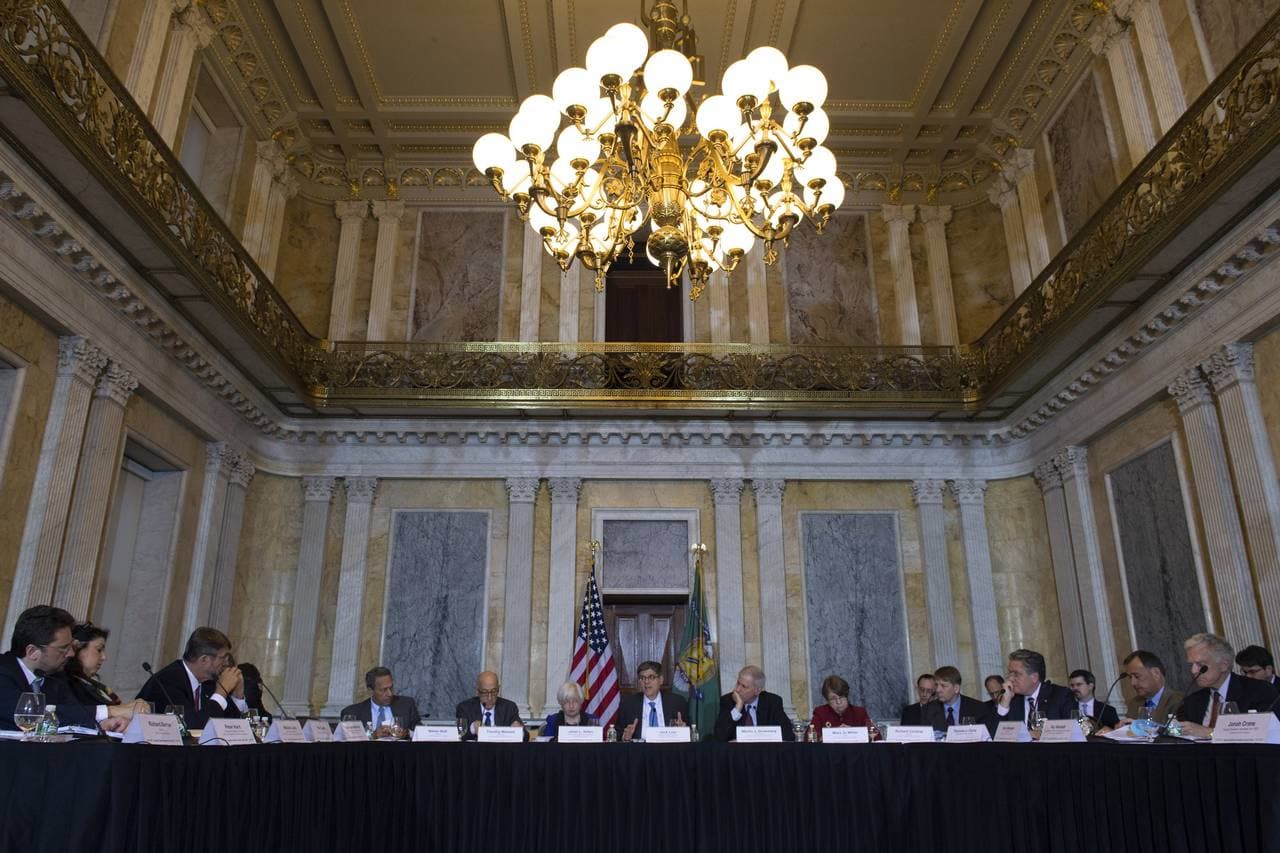
Secretary Scott K. H. Bessent convened the Financial Stability Oversight Council at the Treasury on December 11 and outlined a reorientation of the panel toward assessing how regulation affects economic growth as well as financial stability. The Treasury readout of the meeting recorded unanimous approval of FSOC’s 2025 annual report and said officials briefed the council on a slate of operational priorities including an Artificial Intelligence Working Group, a Household Resilience Working Group, a Market Resilience Working Group, and a crisis preparedness workstream.
The readout is the formal record of what was presented and approved in open and executive sessions at Treasury. It also said staff briefed members on possible revisions to the Council’s interpretive guidance for nonbank financial company determinations and on the council’s analytic framework for identifying, assessing and responding to systemic risk. Those items signal an emphasis on process and tools, not just rhetoric, and could influence how FSOC evaluates large asset managers, shadow banking entities and fintech firms that fall outside traditional bank supervision.
Media coverage added political framing to the Treasury’s operational account. CNBC reported that a letter Bessent planned to release would urge the council to “push for looser regulation and a freer approach,” and to work with member agencies to examine “whether aspects of the U.S. financial regulatory framework impose undue burdens and negatively impact economic growth, thereby undermining financial stability.” Boston25News reported the same theme and quoted Bessent saying the council will consider “where aspects of the U.S. financial regulatory framework impose undue burdens, and where they harm economic growth, thereby undermining financial stability,” and that “too often in the past, efforts to safeguard the financial system have resulted in burdensome and often duplicative regulations.”
Those formulations were described by other outlets as a pivot away from prophylactic policies toward a more deregulatory posture. Reuters noted CNBC’s account but said it could not immediately confirm the letter. The contrast between the Treasury’s operational readout and the media summaries highlights both the substance of the council’s agenda and the political interpretation of its intent.

The practical stakes are significant. FSOC was created after the 2008 crisis to coordinate regulatory policy across agencies and to flag systemically important nonbank firms for heightened supervision. Changes in how FSOC evaluates regulatory burden could alter the pipeline for designation, affect supervisory priorities at agencies such as the Federal Reserve and the Securities and Exchange Commission, and influence compliance costs for firms that account for an increasing share of credit intermediation outside the banking system.
Market participants will watch the detailed language of any formal guidance or letter, because shifts in supervisory emphasis can change capital allocation decisions and risk premia. Consumer and investor advocates will likewise be attentive to how household resilience and crisis preparedness are defined in practice, given the council’s new working group labels.
For now the authoritative record is the Treasury readout, which documents the meeting format, the unanimous vote on the annual report and the working group names. The extent to which the council’s stated growth focus translates into revised rules or lighter supervision will depend on interagency debate and the content of any formal guidance that follows.
This article was produced by Prism’s automated news system from verified source data, official records, and press releases, then run through automated quality and moderation checks before publishing. The system is built and supervised by the people who set the standards it runs under. Read our full AI policy.
Did this article answer your question?