Treasury yields mixed as strong jobs data revives Fed hike bets
A 172,000-job gain and a 4.3% unemployment rate pushed traders to price a 70% chance of a Fed hike by December, lifting borrowing-cost worries.
Stronger-than-expected hiring jolted Treasury markets and revived a harder question for households: if the economy is still adding jobs at this pace, how soon can the Federal Reserve justify cutting borrowing costs. The May employment report showed U.S. payrolls rose by 172,000, far above the 80,000 economists had expected, while the unemployment rate held at 4.3%. That combination sent Treasury yields in different directions and pushed traders to price a 70% chance of a Fed hike by December.
The move matters far beyond Wall Street. When markets start talking again about higher rates, the pain can show up in the kitchen-table items Americans feel most directly: mortgage rates, credit card bills and the cost of business loans. A stronger labor market can be good news for workers and wages, but it also gives the Fed less reason to hurry into relief. The May report added to that tension with upward revisions to March and April payrolls, reinforcing the view that the labor market is firmer than many forecasters had assumed.
The bond market reflected that push and pull. The benchmark 10-year Treasury yield traded around 4.54%, while the 30-year yield was near 5.01%, with the 2s-10s curve about 40 basis points. Two-year yields, which are especially sensitive to expectations for Fed policy, slipped from a 15-month high reached on Friday even as longer-dated debt moved differently. Inflation worries also stayed alive as oil prices rose on supply disruptions tied to the Iran conflict, adding another layer of pressure to an already uneasy rate outlook.
The report from the Bureau of Labor Statistics showed job gains in leisure and hospitality, local government and health care, while financial activities declined. Jefferies economist Thomas Simons said energy inflation was lifting headline numbers, but he expects consumer inflation to eventually fall back below 2% within a year as comparisons normalize. Markets now turn to Wednesday’s consumer price index reading, scheduled for 8:30 a.m. ET on June 10, 2026, with economists expecting core prices to rise 0.3% from April and 2.9% from a year earlier.
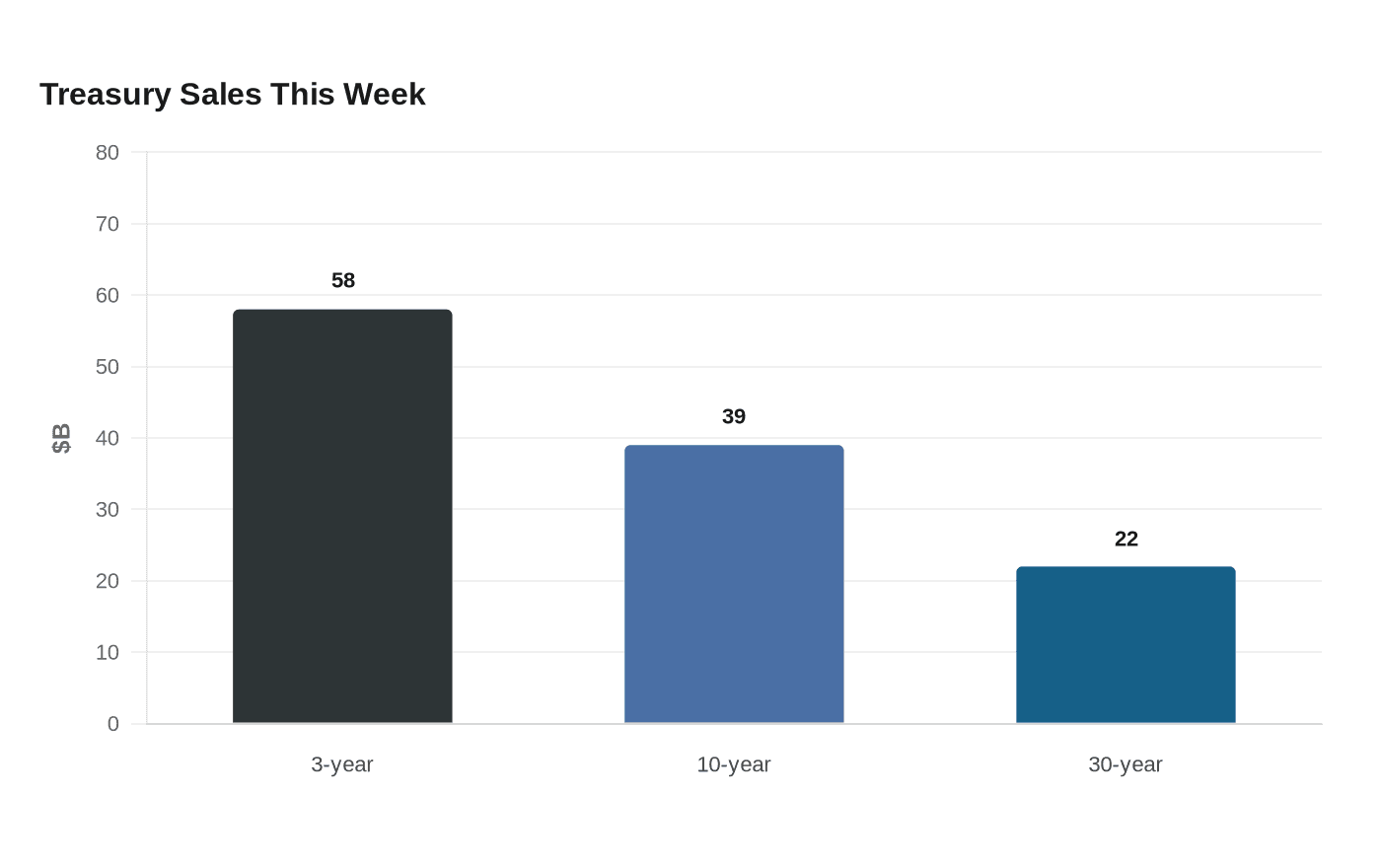
Treasury supply could keep pressure on yields even if the inflation data cools nerves. The U.S. Treasury is set to sell $119 billion in coupon-bearing debt this week, including $58 billion in three-year notes on Tuesday, $39 billion in 10-year notes on Wednesday and $22 billion in 30-year bonds on Thursday. For the Fed, the message from the jobs report is clear: good labor news may be bad news for anyone waiting for cheaper borrowing.
This article was produced by Prism’s automated news system from verified source data, official records, and press releases, then run through automated quality and moderation checks before publishing. The system is built and supervised by the people who set the standards it runs under. Read our full AI policy.
Know something we missed? Have a correction or additional information?
Submit a Tip