Trump administration agrees to restore Pride flag at Stonewall National Monument
The government has agreed to restore the Pride flag at Stonewall, reopening a fight over who gets visible in a monument tied to the birth of modern gay rights.
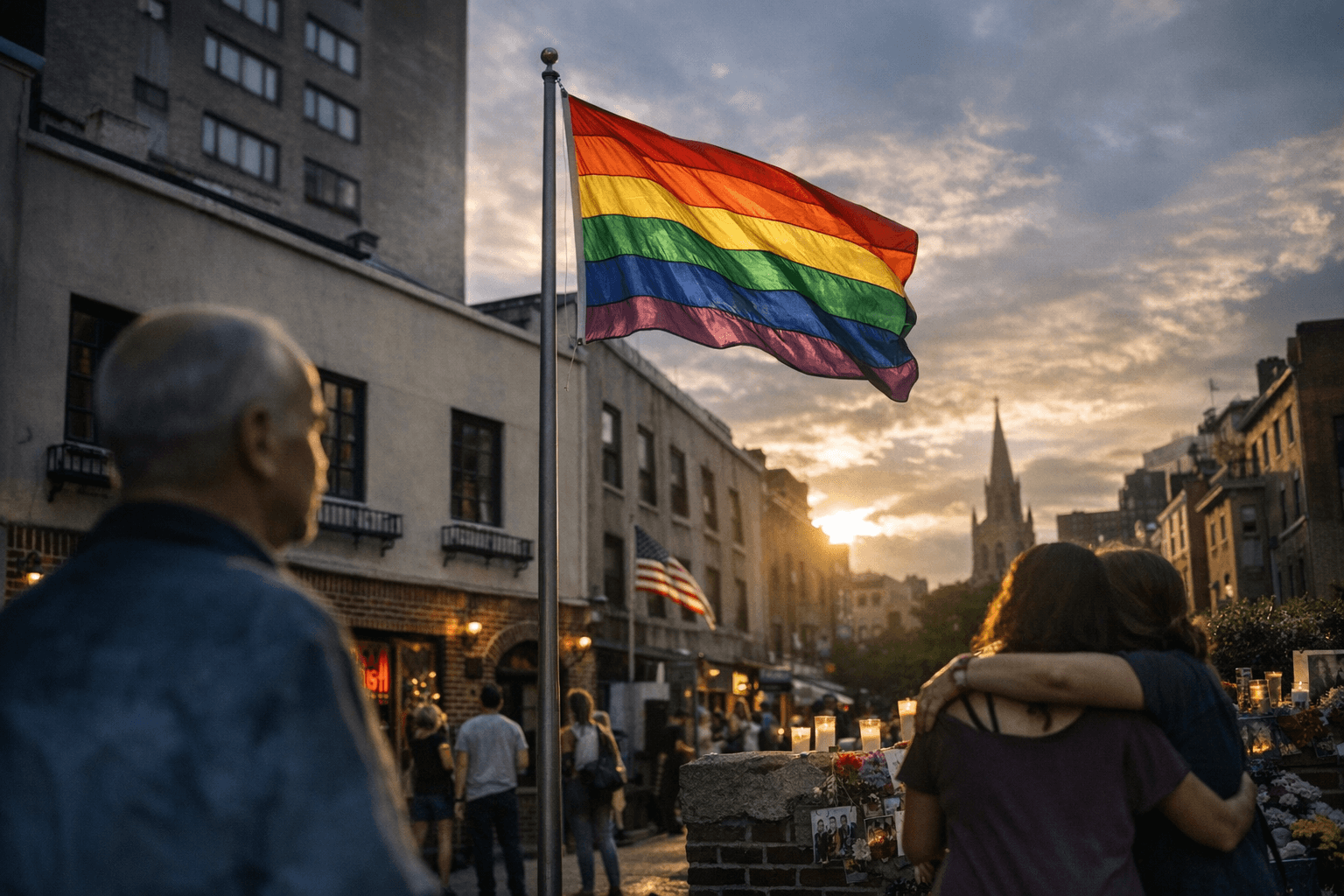
The Trump administration has agreed to keep flying the Pride flag at Stonewall National Monument, restoring a symbol that activists say is inseparable from the site’s meaning as the birthplace of the modern U.S. gay rights movement.
The settlement, filed in court on April 13, 2026, came after the National Park Service removed the banner in February, citing federal guidance that generally limits National Park Service-managed flagpoles to the U.S. flag and other authorized flags. A judge still must approve the agreement, but the reversal marks a sharp turn in a dispute that quickly grew beyond one flag and into a contest over public memory, visibility and federal control of LGBTQ+ history.
Stonewall National Monument covers 7.7 acres in Greenwich Village and was established by presidential proclamation on June 24, 2016. The site includes Christopher Park, a 0.12-acre stretch of public land, as well as the privately owned Stonewall Inn and part of the New York City street network. It was there, in the early hours of June 28, 1969, after a police raid on the Stonewall Inn, that a spontaneous uprising erupted into several nights of protest across Christopher Park and the surrounding neighborhood.
The National Park Service has described Stonewall as a milestone for gay and lesbian civil rights and one of the most important landmarks in U.S. LGBTQ+ history. Park officials had also said the Pride display was part of the government’s commitment to telling the complex and diverse histories of all Americans. The flag at issue is the modern rainbow Pride banner, which first debuted with eight colors in 1978 and was formally installed at Stonewall in 2022 during President Joe Biden’s administration.
Its removal in February 2026 prompted immediate backlash. According to the lawsuit filed by LGBTQ+ and historic preservation groups, the flag came down on or about February 9. New York officials and activists raised a Pride flag again at Stonewall on February 12 in public protest, underscoring how quickly the issue became a test of federal respect for a civil-rights landmark in Lower Manhattan.
The agreement to restore the banner settles one fight, but it also highlights how administrative reversals can quietly reshape the meaning of nationally significant sites. At Stonewall, where the 1969 uprising helped ignite a movement, the flag’s return signals that the struggle over who is seen in public history is still unfolding.
This article was produced by Prism’s automated news system from verified source data, official records, and press releases, then run through automated quality and moderation checks before publishing. The system is built and supervised by the people who set the standards it runs under. Read our full AI policy.
Did this article answer your question?