Trump Administration and Vatican Downplay Tensions Despite Ongoing Friction
A secret January Pentagon meeting between a top Vatican envoy and U.S. defense officials has exposed deep fractures between the Trump White House and Catholic leadership.
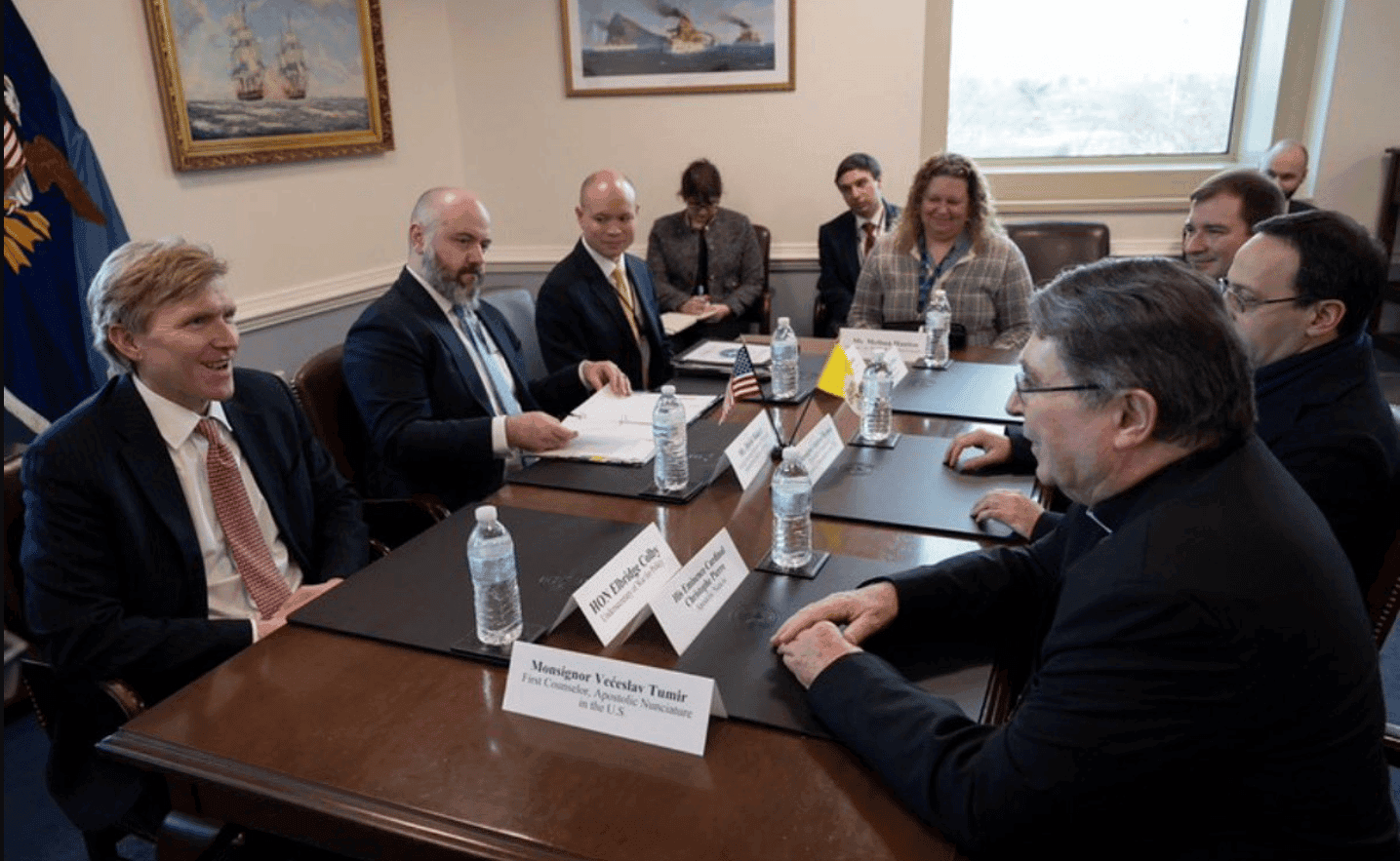
There is no public record of any Vatican diplomat ever meeting at the Pentagon. That made the closed-door January session between Undersecretary of Defense for Policy Elbridge Colby and Cardinal Christophe Pierre, the Holy See's ambassador to Washington, an anomaly from the start. When details of that meeting surfaced in early April, both the Defense Department and the Vatican moved quickly to deny its most inflammatory characterizations, but neither could fully contain the damage.
The Free Press reported April 6 that Colby summoned Pierre to the Pentagon days after Pope Leo XIV's annual State of the World address and delivered what sources briefed on the meeting described as a "bitter lecture." According to the report, Colby told Pierre that "the United States has the military power to do whatever it wants in the world," adding that "the Catholic Church had better take its side." One U.S. official in the room reportedly invoked the Avignon papacy, a reference to the 14th-century period when French kings held effective control over the papacy, which some Vatican officials interpreted as a veiled threat.
The Pentagon flatly rejected that framing. "The meeting between Pentagon and Vatican officials was a respectful and reasonable discussion," a Defense Department spokesperson said. "We have nothing but the highest regard, and welcome continued dialogue with the Holy See." A Vatican official independently described the session as "tense" at points with some "aggressive" exchanges, but confirmed there was "no question of anyone threatening anyone."
What is not in dispute is why the meeting took place. Leo's January address had included a pointed warning: "a diplomacy that promotes dialogue and seeks consensus among all parties is being replaced by a diplomacy based on force." Senior U.S. officials read the line as a frontal attack on the administration's foreign policy posture, including what has been characterized internally as a revived Monroe Doctrine and the ongoing war in Iran. The pope has since intensified his rhetoric, calling Trump's threat to destroy an Iranian civilization "truly unacceptable" and urging American citizens to contact their elected leaders.
The Iran war is only one axis of friction. Leo has actively supported U.S. Catholic bishops in their sustained opposition to the Trump-Vance mass deportation agenda, a position that has put the institutional church in direct conflict with the administration's signature domestic policy. The Vatican confirmed in February that Leo would not visit the United States in 2026, declining an invitation Trump extended through Vice President JD Vance shortly after Leo's election in May 2025. Rather than appear at American Independence Day celebrations, Leo is scheduled to spend July 4 on Lampedusa, the Italian island that has become a symbol of Mediterranean migration.
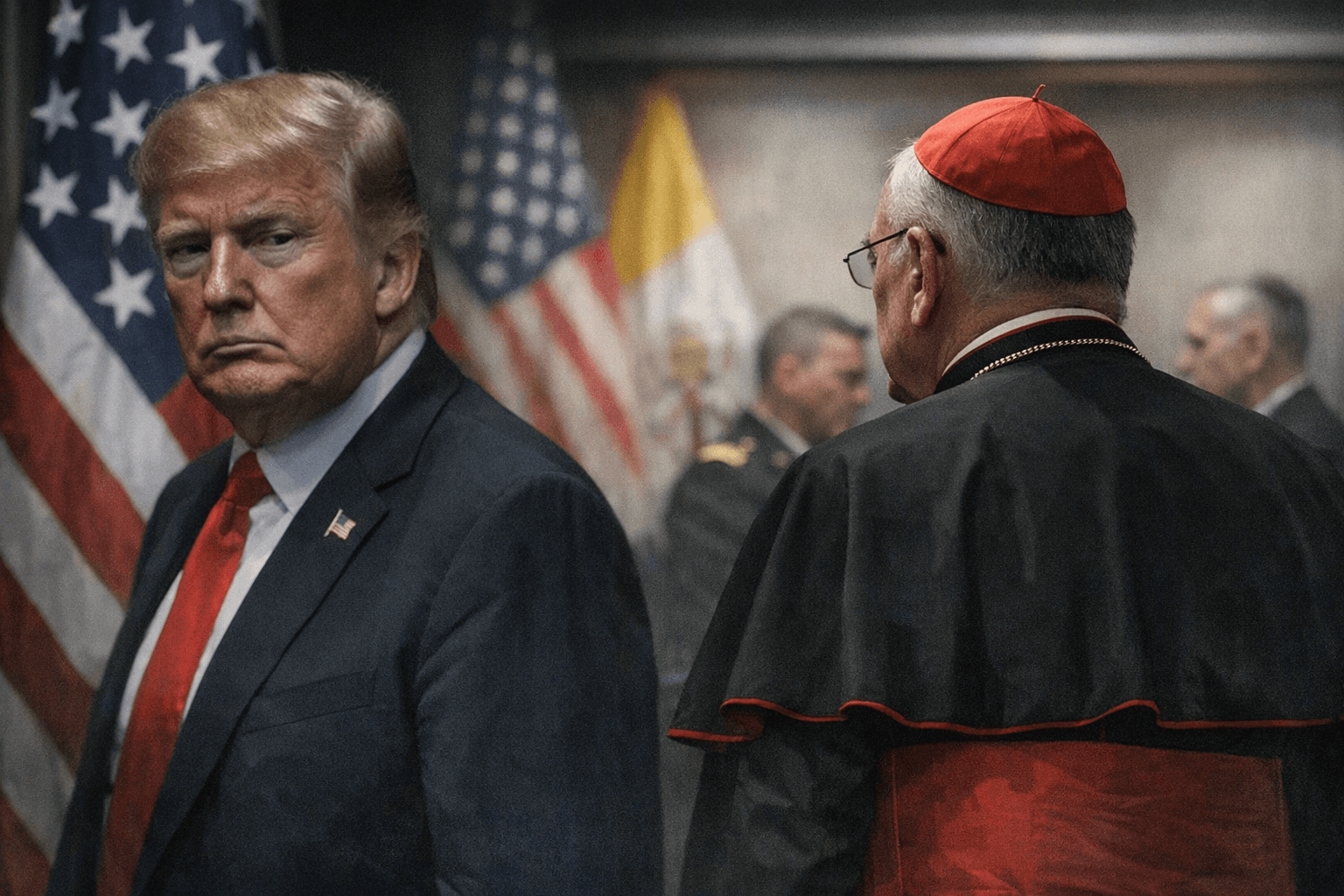
According to reporting by The Free Press, the Holy See postponed the visit indefinitely over three concerns: the foreign policy disagreements, the American bishops' resistance to mass deportation, and a refusal to become a partisan showcase before the 2026 midterms. One Vatican official told the outlet: "The administration tried every possible way to have the Pope in the U.S. in 2026."
The political consequences for Trump are already measurable. An NBC survey of 1,000 registered voters conducted in January found Pope Leo holding a net favorability of plus 34, compared to Trump's net negative of 12. A more recent Newsweek survey taken March 20-23 found 52 percent of Catholic respondents disapproving of Trump's job performance, against 48 percent who approved, putting him underwater with a voting bloc that has historically leaned his direction.
Vance, the highest-ranking Catholic in the U.S. government, was caught flat-footed when reporters asked him about the Pierre meeting on April 8 while he stood outside Air Force Two in Budapest. He initially said he did not know who Cardinal Pierre was; once reminded, he called the reporting "uncorroborated." That answer did little to quiet the controversy, and less to explain why, for the first time in modern memory, a Vatican diplomat had been called to the Pentagon at all.
This article was produced by Prism’s automated news system from verified source data, official records, and press releases, then run through automated quality and moderation checks before publishing. The system is built and supervised by the people who set the standards it runs under. Read our full AI policy.
Did this article answer your question?