Trump administration drafts ban on foreign solar inverters over security fears
Washington is weighing a ban on foreign solar inverters, the hardware that links panels and batteries to the grid. The move could slow projects and raise costs.

The Trump administration is drafting a ban on imports of foreign-made solar inverters, the devices that connect solar projects and battery systems to the power grid, over fears that China could use them to disrupt electricity supplies. The proposal, being prepared by the Federal Communications Commission, would target new foreign inverter models and could still be changed or shelved before it becomes official, but even the draft signals a sharper federal push to treat energy hardware as a security risk.
Inverters sit at the center of the modern clean-energy system. They convert power from solar arrays and batteries into electricity that the grid can use, which means any import ban could ripple through solar deployment, battery storage projects and utility-scale planning. Developers and installers would have to rework sourcing for equipment that is embedded across the sector, a change that could raise costs and stretch schedules at a time when utilities are already trying to add more distributed generation.
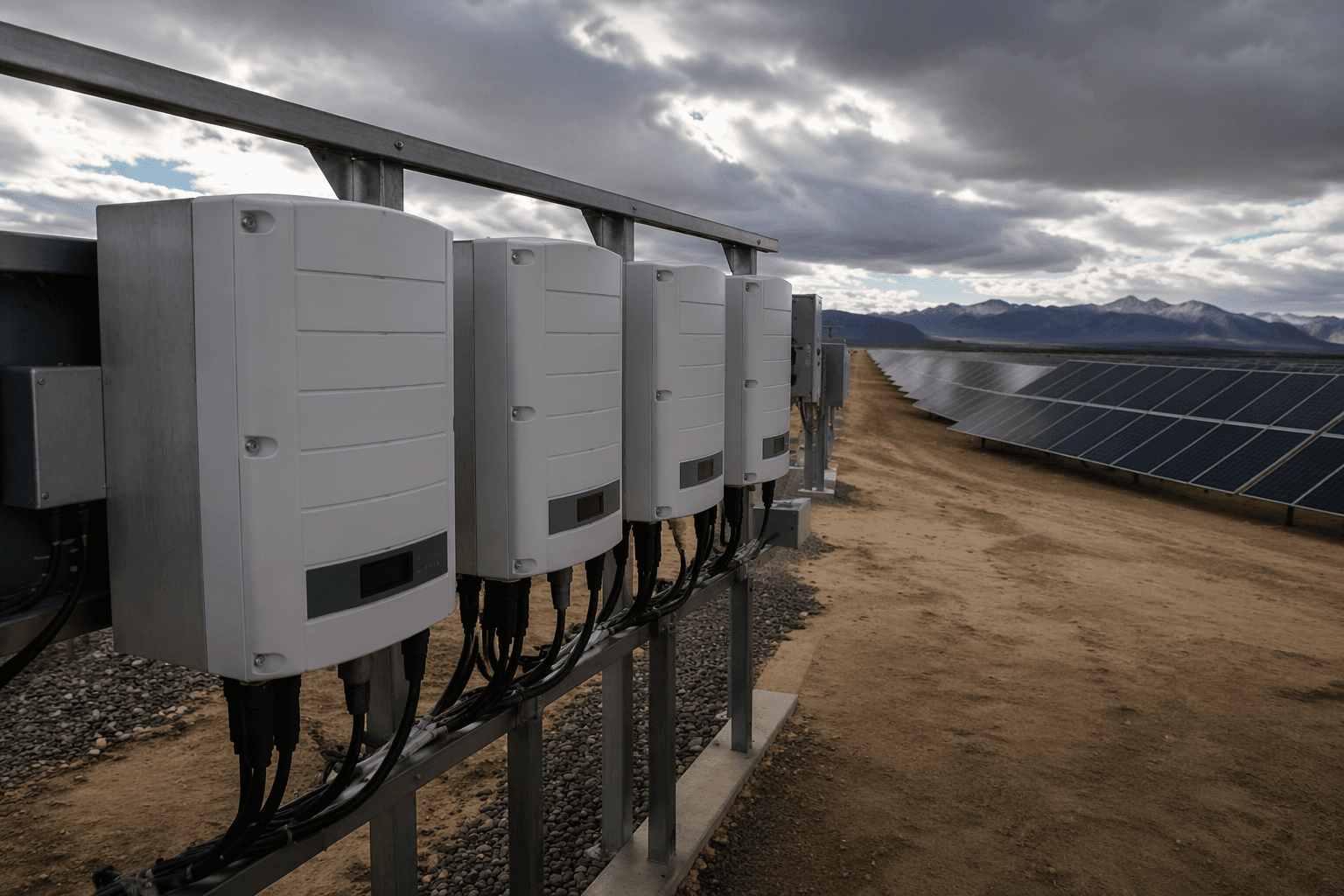
The national-security case mirrors a broader federal concern about connected energy equipment. The Department of Energy says solar systems and other distributed energy resources can create vulnerabilities when they are connected to the internet for monitoring and control, and its Office of Cybersecurity, Energy Security, and Emergency Response leads federal efforts to strengthen the resilience of U.S. energy infrastructure against threats and hazards. The National Institute of Standards and Technology added to that push in December 2024 with cybersecurity guidance for smart inverters used in homes and small businesses.
At the same time, the United States has been building technical defenses rather than relying only on trade restrictions. The DOE-funded unifi consortium is working on grid-forming inverter technology, with the Electric Power Research Institute, the National Laboratory of the Rockies and the University of Texas at Austin involved in the effort. Pacific Northwest National Laboratory has also developed inverter models that were approved by the Western Electricity Coordinating Council, giving utilities a tool to plan for grid stability as inverter-based resources take on a larger share of the power mix.
The European Union has moved in a similar direction. Reports in April and May 2026 said the European Commission restricted EU funding for some energy projects using inverters from high-risk countries, including China, Russia, Iran and North Korea. The policy was described as affecting solar, wind and battery-storage projects backed by institutions such as the European Investment Bank and the European Investment Fund. Beijing criticized the move, saying it could hurt trade ties, supply chains and Europe’s energy transition.
The U.S. proposal now puts the same question in sharper relief: whether domestic manufacturers, or allied suppliers, can provide inverters at the scale needed for a faster grid build-out without slowing the clean-energy projects meant to secure it.
This article was produced by Prism’s automated news system from verified source data, official records, and press releases, then run through automated quality and moderation checks before publishing. The system is built and supervised by the people who set the standards it runs under. Read our full AI policy.
Did this article answer your question?

