Trump aide sought to ban voting machines, Reuters reports
Kurt Olsen explored using Commerce to brand Dominion voting parts a national-security risk, a move that could have reached machines in more than half the states.

A Trump election-security aide explored a route that could have reached voting machines used in more than half the country, asking whether the Commerce Department could label Dominion Voting Systems components a national-security risk. The plan advanced far enough that Commerce officials began looking for a legal basis, but it collapsed when Olsen and others failed to produce evidence to support the move.
The episode shows how close a conspiracy-driven idea came to touching actual election administration. Olsen was working inside a broader push to validate Donald Trump’s repeatedly rejected fraud claims, and he reportedly favored a national switch to hand-counted paper ballots. Election experts have long warned that such a shift would be slower, costlier and less accurate than machine tabulation, especially in large states and counties that process millions of ballots.
The existing system is built around safeguards that were designed to catch errors without abandoning machine counts. The Brennan Center for Justice says nearly all U.S. election jurisdictions use voting machines because they are more accurate, faster and cheaper than hand-counting ballots. All voting machines certified by the U.S. Election Assistance Commission must pass tests requiring them to accurately count at least 10 million votes. The Brennan Center also says 48 states require some form of postelection audit, and every swing state uses voting systems with paper records that can be checked against electronic totals.
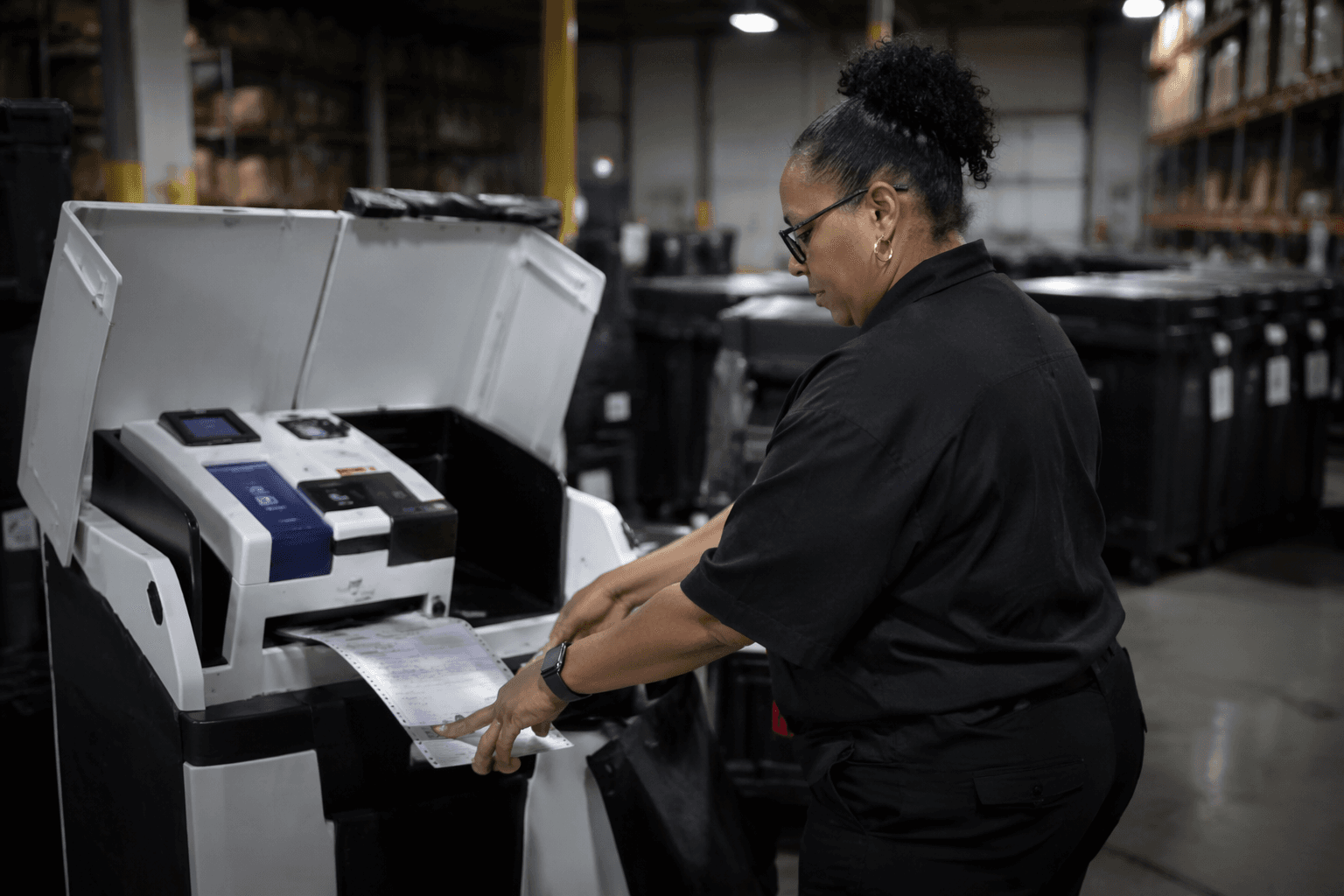
The push against Dominion also matters because that company was central to the post-2020 machine-fraud conspiracy theories that rippled through statehouses, courts and local election offices. Those claims were rejected in court and by bipartisan reviews, yet they remained potent enough to shape federal discussions about whether a private election vendor could be treated as a national-security problem.
The attempt did not unfold in isolation. A separate Reuters investigation earlier this month said officials and investigators in at least eight states sought confidential records, pressed for access to voting equipment and revived fraud claims that had already been dismissed. The Brennan Center says the federal government has also demanded election-related records from nearly every state and Washington, D.C., and has sued 30 states and the capital for not complying.

The political backlash sharpened on May 18 and May 20, when Democratic senators including Alex Padilla, Chris Van Hollen, Ron Wyden, Jeff Merkley and Mark Warner called for Olsen’s removal. They said he had exceeded the 130-day legal limit for a special government employee and said his role as Director of Election Security and Integrity at the White House made the violation more serious. Olsen is also working closely with the Office of the Director of National Intelligence, adding another layer of federal influence to a dispute that has already drawn state governments, Congress and election administrators into a widening fight over who controls American elections.
This article was produced by Prism’s automated news system from verified source data, official records, and press releases, then run through automated quality and moderation checks before publishing. The system is built and supervised by the people who set the standards it runs under. Read our full AI policy.
Did this article answer your question?

