Trump and Iran trade threats as Gulf allies intercept drones
Gulf air defenses intercepted Iranian drones and missiles as U.S. strikes widened the fight over the Strait of Hormuz, raising the risk of a broader regional war.
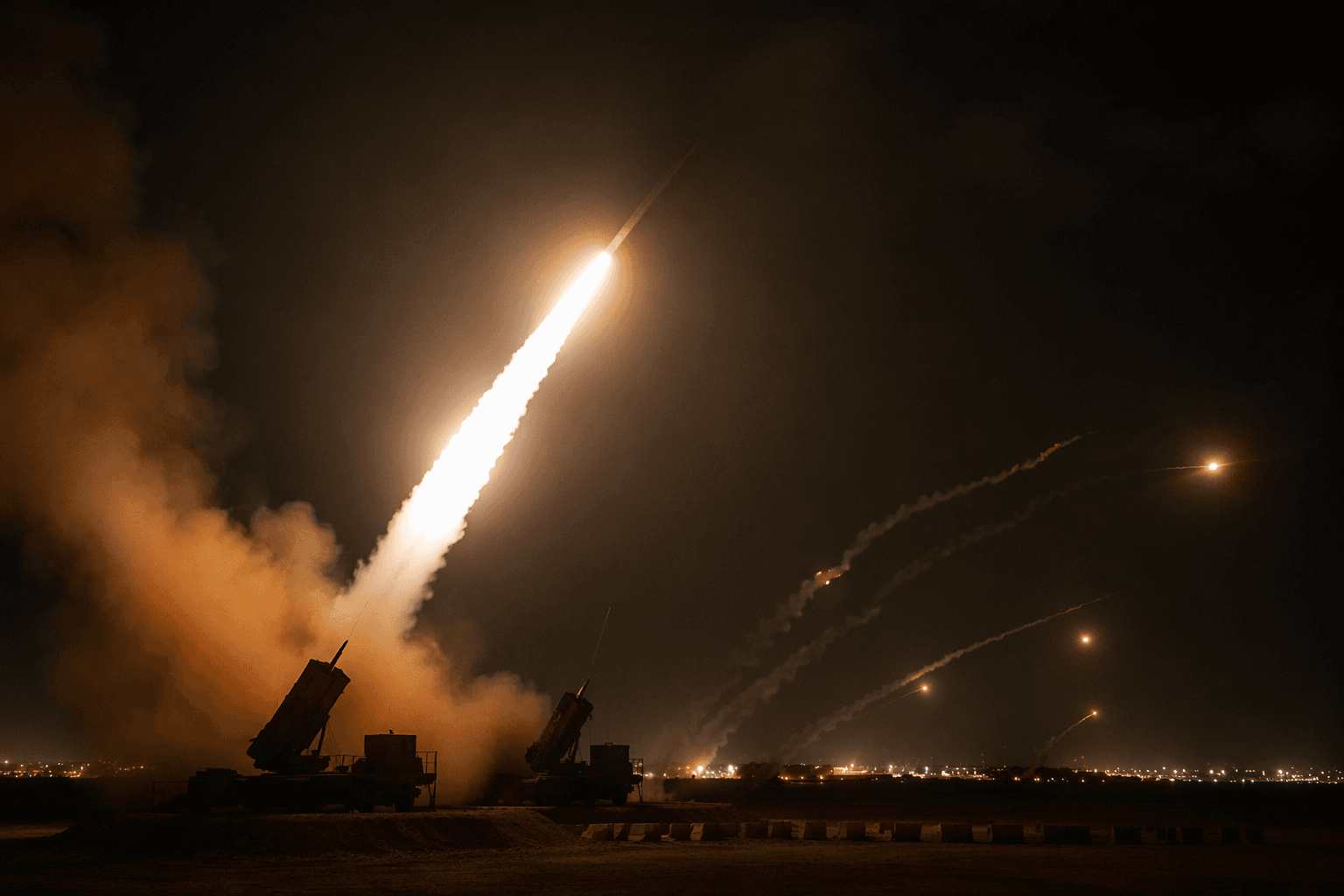
Trump and Iran’s Revolutionary Guards traded threats as Gulf allies intercepted drones and missiles, with hostilities entering a fourth day and the confrontation spreading across the Strait of Hormuz. The latest exchange followed fresh U.S. strikes on Iranian military targets and Iranian launches toward Bahrain and Kuwait, pushing an already fragile interim ceasefire and stalled diplomacy closer to collapse.
The U.S. military said its newest strikes hit Iranian missile and drone storage locations and coastal radar sites. U.S. Central Command said the attacks were meant to respond to continued Iranian aggression against commercial shipping, after an earlier attack on a commercial vessel in the Strait of Hormuz, the world’s most important energy shipping route. The latest strikes came after earlier violence had already driven oil prices sharply higher.
Iran said its Revolutionary Guard launched drone and missile attacks toward Bahrain and Kuwait in response to the U.S. airstrikes. The Guard also threatened a “complete halt” to talks, underscoring how quickly the military exchange was overtaking whatever remained of nuclear diplomacy.
Bahrain said its air defenses intercepted incoming Iranian missiles and drones, and air-raid sirens sounded across the kingdom. Kuwait’s military said its air defenses engaged hostile missiles and drones and reported no immediate injuries or major damage. The interceptions showed how closely the fighting had moved to key Gulf states that host U.S. forces and sit near the region’s main energy lanes.
The escalation has sharpened fears that symbolic retaliation could give way to strikes that would materially endanger U.S. forces, allies and energy flows. Attacks on radar sites and storage depots can be absorbed more easily than hits on ports, shipping lanes, air bases or oil infrastructure, but the repeated exchanges around Bahrain, Kuwait and the Strait of Hormuz have kept every side under pressure to decide how far it is willing to go. The conflict’s next threshold is no longer whether threats are exchanged, but whether either side chooses a target that drags the Gulf into a wider war.
This article was produced by Prism’s automated news system from verified source data, official records, and press releases, then run through automated quality and moderation checks before publishing. The system is built and supervised by the people who set the standards it runs under. Read our full AI policy.
Did this article answer your question?