Trump Consults Top Advisers on Venezuela as Pressure Intensifies
President Trump convened senior national security and foreign policy advisers on December 1 to weigh a sharper U.S. posture toward Venezuela, as the administration ramps up maritime operations and limited strikes in the Caribbean. The meeting signals possible escalation with broad regional and economic implications for energy markets, shipping costs, and diplomatic relations across the Americas.
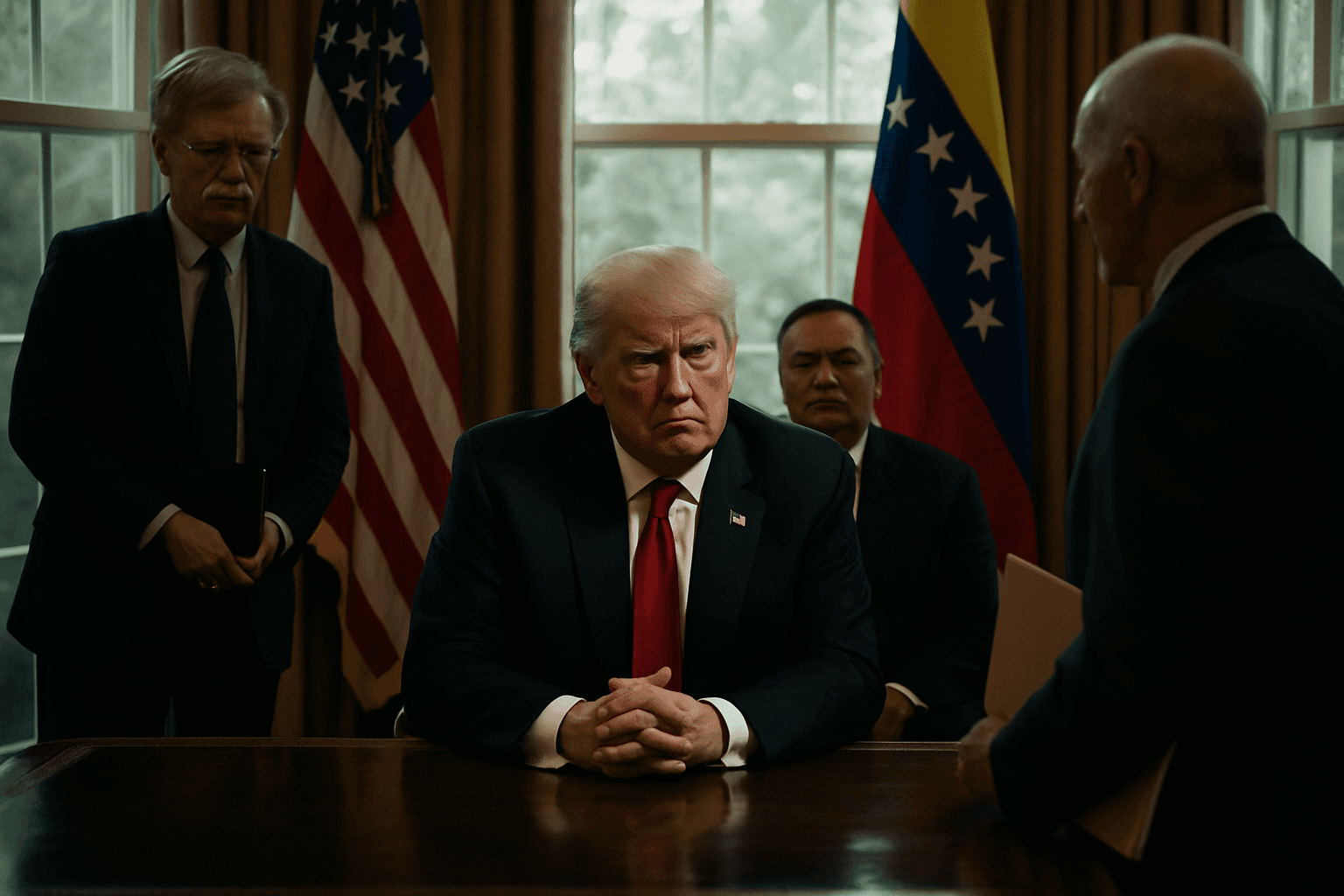
President Trump met on December 1 with senior national security and foreign policy advisers to review a campaign of intensified pressure on the government in Caracas, administration officials said, in a session that included Secretary of State Marco Rubio and Defense Secretary Pete Hegseth. The meeting came after Mr. Trump stated that airspace around Venezuela should be considered "closed in its entirety" and follows a recent increase in U.S. counter narcotics operations in the Caribbean.
The administration has publicly accused the Maduro government of participating in drug trafficking and has ordered multiple strikes against suspected drug transport vessels in recent months. Officials have offered limited public detail on the plans, saying actions are aimed at disrupting maritime drug shipments. Those steps have prompted demands from members of Congress for classified briefings and heightened diplomatic tensions with regional governments that worry about escalation and the legal basis for strikes or restrictions on airspace.
The White House session brought national security calculations into closer alignment with political and economic considerations. Senior advisers discussed options that range from stepped up interdiction and intelligence sharing to expanded sanctions, and possibly tighter restrictions on commercial movement in and around Venezuelan territorial waters and air corridors. Administration officials emphasized the focus on disrupting illicit narcotics flows, but the measures under discussion carry broader consequences for regional commerce and investor sentiment.
Economists and market participants caution that moves perceived as military or quasi military interventions can quickly ripple through energy and shipping markets. The Caribbean and Gulf of Mexico remain important transit routes for refined fuels and crude shipments bound for U.S. Gulf coast refineries. Even targeted operations can raise shipping insurance premiums and freight rates, increasing costs for carriers and importers. Traders watch geopolitical risk closely and may reassess regional exposure for energy shipments and for firms with trade links to Colombia, Guyana, and the Caribbean.
The growing U.S. campaign also raises legal and diplomatic questions. International law scholars note there is a high threshold for states to declare foreign airspace effectively closed, and unilateral steps that affect third party commercial flights or shipping lanes would prompt scrutiny from allies and neighbors. Latin American governments have varied responses, with some opposition capitals publicly critical of any approach that risks wider confrontation, while others have supported tougher action against trafficking networks.
Longer term, the episode underscores an enduring trend toward securitization of drug policy and the maritimeization of interdiction efforts, as technology and naval assets are deployed to disrupt flows at sea. For Venezuela, where state revenues remain strained and oil exports are a central economic lifeline, further sanctions or disruptions to shipping could deepen the country’s economic isolation and complicate regional humanitarian dynamics.
Washington faces a strategic balancing act. Officials in the Dec. 1 meeting weighed the immediate goal of disrupting drug shipments against the risks of escalation that could unsettle markets, strain alliances, and entangle the United States more deeply in Venezuelan domestic politics. Congress and regional partners are likely to press for clear legal rationales and operational transparency as the administration moves from rhetoric to action.
This article was produced by Prism’s automated news system from verified source data, official records, and press releases, then run through automated quality and moderation checks before publishing. The system is built and supervised by the people who set the standards it runs under. Read our full AI policy.
Did this article answer your question?

