Trump credits tariffs with 78% cut in US trade deficit
Trump says tariffs cut the U.S. trade deficit by 78% and predicts a surplus this year; data and economists warn volatility and selective metrics complicate the claim.
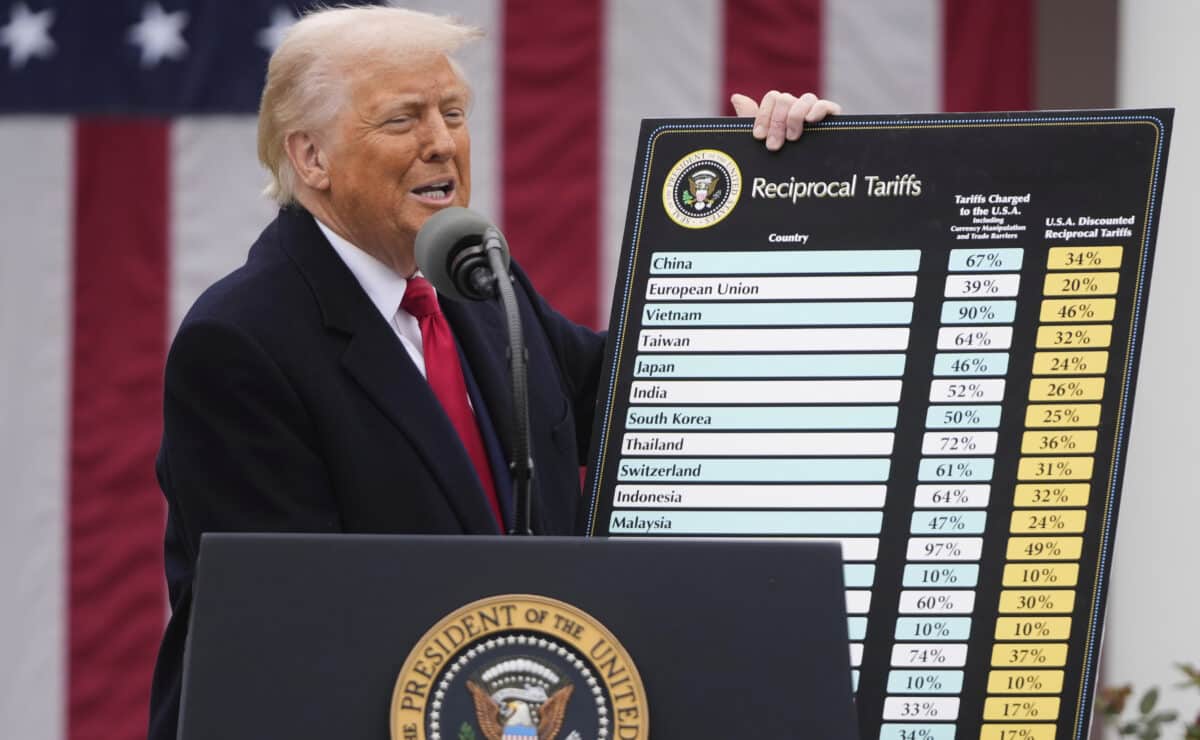
President Donald Trump posted on Truth Social that tariffs imposed by his administration had slashed the United States trade deficit by 78 percent and that the country would record a surplus this year. In his post he wrote: “The United States trade deficit has been reduced by 78% because of the tariffs being charged to other companies and countries. It will go into positive territory during this year, for the first time in many decades. Thank you for your attention to this matter!”
The claim arrived just ahead of official December trade figures that were due for release this week and on the heels of third-party projections that showed unusual month-to-month swings. Government data cited by market trackers show the goods and services deficit surged to a record $140.5 billion in March 2025, then fell to $27.62 billion in October before widening again to about $56.8 billion in November. Investing.com projected a roughly $55.5 billion monthly trade surplus for December; if confirmed, that would be the first monthly surplus since 1975.
The administration’s so-called “Liberation Day” reciprocal tariffs, launched April 2, 2025, applied duties reported to range from roughly 10 percent to 50 percent and were described internally as a declaration of economic independence. Sources have said the measures targeted more than 100 countries, with some reports describing the list more broadly as reaching into the hundreds. The White House has not released a line-by-line calculation showing how it arrived at the 78 percent figure or the precise timeframe underlying that percentage.
Economists and trade analysts have cautioned that the headline swings reflect volatile monthly flows and temporary behaviors as much as policy effects. Much of 2025’s annual deficit was driven by a surge in imports in the first quarter as U.S. companies stockpiled goods ahead of the April tariffs, a pattern that can produce sharp, short-lived reversals in monthly balance sheets. Several analysts have flagged that an isolated monthly surplus, even if posted for December, would not necessarily indicate a sustained structural improvement in the annual trade position: the United States is still expected to record a trade deficit above $800 billion for 2025, down from an estimated $1.2 trillion in 2024, while the goods deficit alone remains near record levels.

The tariffs have had uneven bilateral effects. Indonesia’s statistics agency BPS reports that its surplus with the United States rose from $14.52 billion in 2024 to $18.11 billion in 2025, and officials there say a threatened 32 percent tariff on some Indonesian goods was reduced to 19 percent after direct diplomacy between the two leaders. Those developments underscore how tariff threats and carve-outs play out in real time and complicate claims of uniform wins for U.S. exporters.
Beyond headline economics, public health and community advocates warn that broad duties on goods can raise costs for hospitals, insurers and households. Higher import costs for medical supplies, equipment and prescription components risk increasing health-care spending and worsening access for low-income communities already strained by inflation. Policymakers face a choice between short-term political claims of victory and the harder work of demonstrating durable, equitable gains in trade, prices and supply chains.
This article was produced by Prism’s automated news system from verified source data, official records, and press releases, then run through automated quality and moderation checks before publishing. The system is built and supervised by the people who set the standards it runs under. Read our full AI policy.
Did this article answer your question?

