Trump deletes AI image after backlash over Christ-like portrayal, defends it as doctor
Trump pulled an AI image after Christians called it blasphemous, then said it was just him as a doctor "making people better."
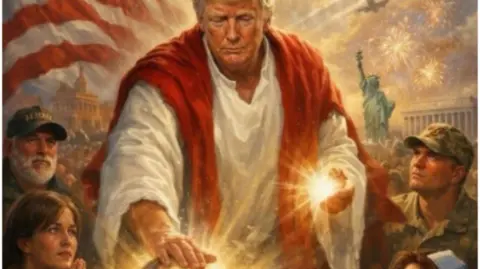
Donald Trump deleted an apparently AI-generated Truth Social image after backlash from Christian commentators and some of his own supporters, then defended the post as a doctor-like image rather than a depiction of Jesus.
The image, posted Sunday night and gone by Monday morning, showed Trump in a white robe and red sash, one hand extended over a man in a hospital bed while a glowing light shone from the other hand. Many viewers read it as a Christ-like or Jesus portrayal, a reading that sparked immediate criticism from religious conservatives who said the post crossed a line into blasphemy.
Trump later told reporters the image was meant to show him as a doctor, saying it was about "making people better." That explanation came after the post had already been removed from his account, underscoring how quickly provocative visual content can move from campaign-style bravado to cleanup mode once it collides with religious symbolism and presidential authority.
The controversy landed after Trump had publicly attacked Pope Leo XIV over the pope’s condemnation of war and his criticism of U.S. military actions in Iran and Venezuela. Leo had recently issued a sweeping denunciation of war, saying "God does not bless any conflict," and had earlier called Trump’s threat to wipe out Iran’s civilization "truly unacceptable." The pope’s remarks sharpened the tension between the White House and Vatican City just as Trump’s image ricocheted across social media.

The picture also appeared to be a slightly altered version of one previously posted by right-wing influencer Nick Adams, who framed Trump as healing a "sick" America. That provenance matters because it shows how AI-era political imagery now circulates through an ecosystem of grievance, devotion and performative strength, where a single post can read as satire, worship or official messaging depending on the viewer.
For Trump, the episode became a familiar damage-control exercise with an unfamiliar medium. The image was not just about one post on Truth Social. It showed the risks of using AI-generated visuals to project power in a public office that still depends on clear lines between propaganda, symbolism and reality. In this case, those lines blurred fast, and the backlash forced the cleanup almost as quickly as the post itself appeared.
Know something we missed? Have a correction or additional information?
Submit a Tip