Trump Designates Illicit Fentanyl, Precursors as Weapons of Mass Destruction
President Trump signed an Executive Order formally classifying illicit fentanyl and its core precursor chemicals as Weapons of Mass Destruction, a move the White House says will marshal national security tools against the opioid crisis. Public health experts and drug policy analysts expressed skepticism about the weaponization claim, warning the classification could shift attention away from treatment and harm reduction for vulnerable communities.

On December 15, 2025, President Donald J. Trump signed an Executive Order that formally designates illicit fentanyl and its core precursor chemicals as Weapons of Mass Destruction. The White House fact sheet framed the action as an effort to “defend America from a chemical weapon” and said the designation is intended to “ensure the full weight of the Federal government is focused, coordinated, and mobilized to confront fentanyl as the deadly chemical weapon it is.”
The administration said the order elevates the federal response by enabling a broader deployment of national security, intelligence, and law enforcement tools against the cartels and networks that traffic synthetic opioids. The executive text, published in the Presidency archive and signed “DONALD J. TRUMP,” repeats the President’s broader framing, writing “As President of the United States, my highest duty is the defense of the country and its citizens. Accordingly, I hereby designate illicit fentanyl and its core precursor chemicals as Weapons of Mass Destruction (WMD).”
The White House tied the move to prior policy steps this year, noting that the President had signed the HALT Fentanyl Act into law, which the administration says permanently classified fentanyl related substances as Schedule I under the Controlled Substances Act. The executive action follows a series of other measures in 2025, including an amendment to duties addressing the flow of illicit drugs across the northern border and a national emergency order that imposed ad valorem duties on certain Canadian products, with tariffs raised to 35 percent effective August 1, 2025.
Legal boilerplate in the order underscores narrow administrative scope. The text states, “is not intended to, and does not, create any right or benefit, substantive or procedural, enforceable at law or equity by any party against the United States, its departments, agencies, or entities, its officers, employees, or agents, or any other person.” The order also specifies that the costs for publication shall be borne by the Department of Justice.
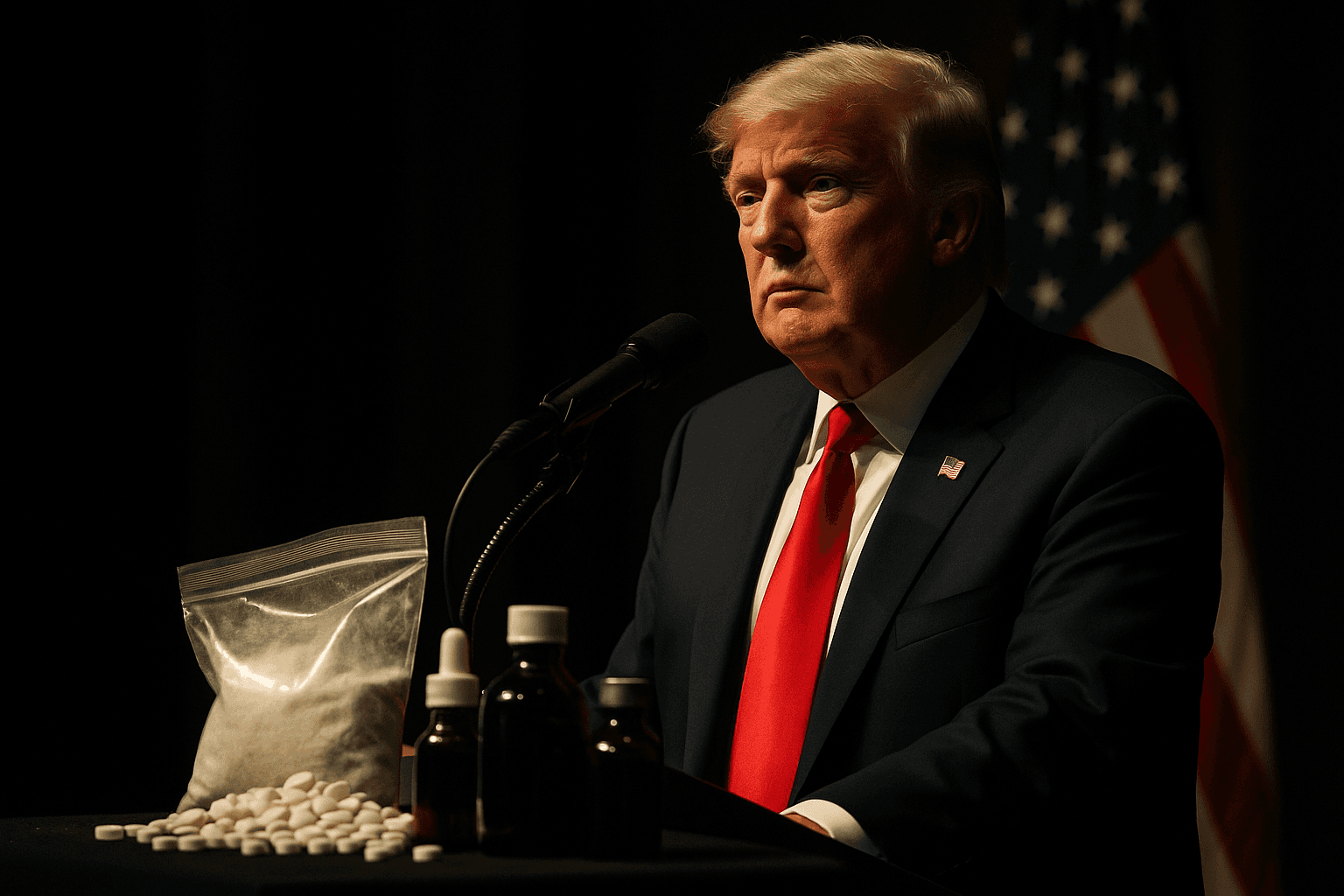
Public health leaders and drug policy experts have raised alarms about the implications of recasting a public health emergency as primarily a national security threat. Many noted the summary claim that fentanyl could be weaponized lacks independent evidence, and they cautioned that the designation risks accelerating punitive enforcement at the expense of treatment, harm reduction, and overdose prevention programs in communities already bearing the brunt of the crisis. The President has characterized fentanyl as “closer to a chemical weapon than a narcotic,” language that critics say could intensify stigma against people who use drugs and justify expanded law enforcement responses.
Analysts also pointed to a gap between rhetoric and operational detail. The published order and fact sheet do not enumerate new statutory authorities, budget allocations, or a comprehensive set of agencies that will be mobilized beyond general categories. Some law enforcement and military experts have questioned whether recent hard edged tactics at sea and at the border were primarily aimed at fentanyl flows to North America, or at cocaine trafficking to other markets.
For communities confronting rising overdose risk, advocates said the designation could change how resources are deployed at the local level, with consequences for access to treatment and for the health equity concerns that have made the opioid crisis also a crisis of social justice.
This article was produced by Prism’s automated news system from verified source data, official records, and press releases, then run through automated quality and moderation checks before publishing. The system is built and supervised by the people who set the standards it runs under. Read our full AI policy.
Did this article answer your question?