Trump envoy urges FIFA to replace Iran with Italy in World Cup
A Trump envoy’s push to swap qualified Iran for unqualified Italy would test FIFA’s neutrality and could set a precedent for political interference.
A push by a Trump envoy to replace Iran with Italy in the World Cup has dragged FIFA into a dispute that goes well beyond sport. Paolo Zampolli urged Donald Trump and FIFA president Gianni Infantino to consider the swap, even though Iran has already qualified and Italy did not. The idea cuts directly against FIFA’s claim that tournament places are decided on the field, not through diplomacy.
The stakes are high because the 2026 World Cup is not a small event with room for improvisation. It runs from June 11 to July 19 across 16 host cities in Canada, Mexico and the United States, with 48 teams and 104 matches. Iran is scheduled to play all three of its group-stage matches in the United States, facing New Zealand in Los Angeles on June 15, Belgium in Los Angeles on June 21 and Egypt in Seattle on June 26. FIFA had already rejected Iran’s request to move those matches from the United States to Mexico, after Mexican President Claudia Sheinbaum said the change would be too logistically complicated.
Infantino tried to keep the line between politics and football intact when he said on April 15 that Iran would “for sure” be at the World Cup. He said sports should be outside politics and added that the Iranian players want to play and “represent their people.” That message now sits uneasily beside a proposal to knock out a qualified team and hand its place to a nation that failed to make it through qualifying.
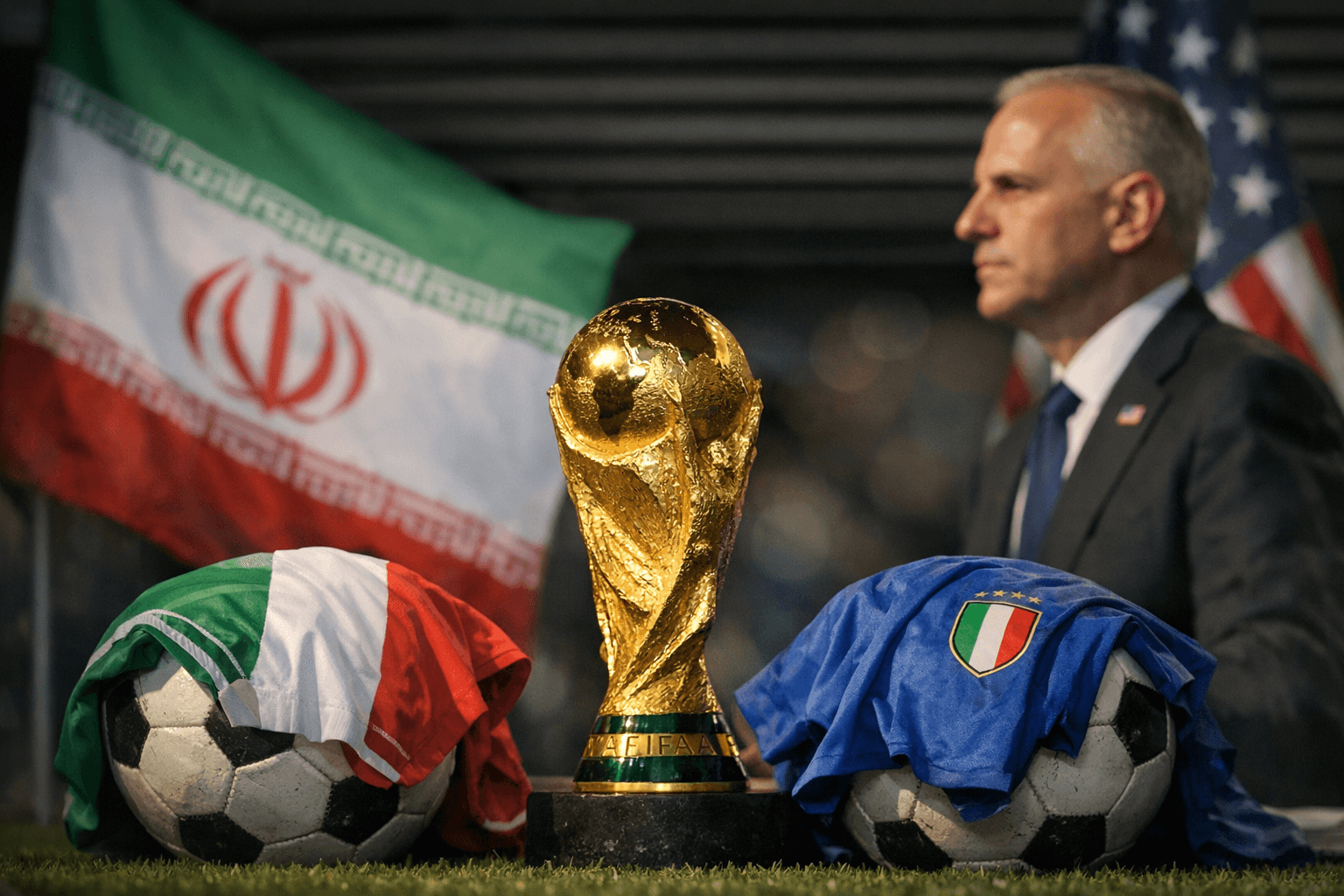
Italy’s absence from the field makes the suggestion especially combustible. The four-time champion missed the 2026 tournament after losing a playoff final 4-1 on penalties to Bosnia and Herzegovina, so any effort to install Italy would be seen by many federations as a political override of merit. If FIFA entertained that logic once, it could invite future pressure from governments that want to rewrite qualification after the fact.
The timing also reflects the growing overlap between Middle East conflict, transatlantic politics and the World Cup’s commercial machinery. Giorgia Meloni publicly called Trump’s criticism of Pope Leo XIV “unacceptable” on April 13, after the president’s remarks inflamed opinion in Italy, where 66% of people held a negative view of Trump. Against that backdrop, the Iran-to-Italy idea looks less like a sporting adjustment than a test of whether FIFA can keep its legitimacy when diplomatic pressure reaches the tournament.
This article was produced by Prism’s automated news system from verified source data, official records, and press releases, then run through automated quality and moderation checks before publishing. The system is built and supervised by the people who set the standards it runs under. Read our full AI policy.
Did this article answer your question?