Trump Faces Wave of Corruption Allegations, Firing Watchdogs and Qatar Jet Gift
Trump’s firing of federal watchdogs and a proposed $400 million Qatar jet gift intensified questions about how much oversight remained around his White House.
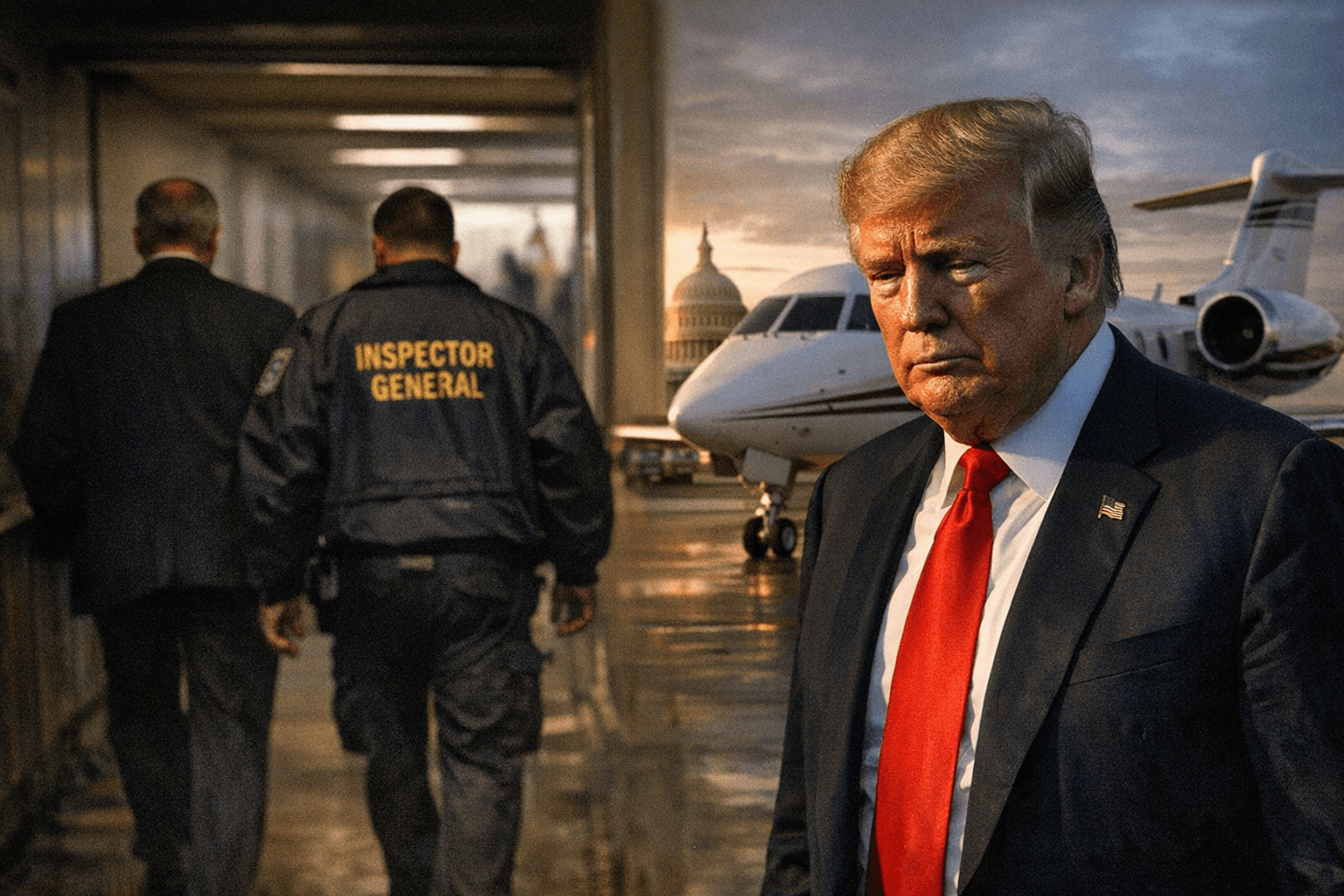
Donald Trump returned to the White House to a familiar kind of scrutiny, but with weaker guardrails around him. In the first days of his second term, he fired multiple inspectors general on January 24 and 25, 2025, removing at least a dozen and possibly about 17 federal watchdogs and stripping away a major layer of internal oversight.
That purge mattered because it landed as new conflicts-of-interest allegations were already piling up. On April 30, 2025, House Oversight Democrats said Rep. Gerald E. Connolly had compiled a non-exhaustive list of 100 conflicts of interest in Trump’s first 100 days, framing the period around crypto schemes, federal handouts and benefits flowing to billionaire allies. The numbers gave the criticism unusual weight: this was not a single ethics complaint, but a pattern that lawmakers said stretched across the opening months of the administration.
The sharpest new controversy came in May 2025, when reports said Qatar planned to give the United States a Boeing 747-8 jet valued at about $400 million for use as Air Force One. That plan immediately raised bipartisan ethical and legal questions about whether a foreign government could provide such a high-value gift, whether Congress would need to approve it and whether the arrangement would run afoul of the Constitution. For watchdogs and ethics lawyers, the episode fit an older pattern in which Trump’s public office and private interests kept colliding.

Those concerns were not new. During Trump’s first term, watchdog groups and state officials filed emoluments lawsuits arguing that his continued financial interests in hotels and other businesses violated the Constitution. The U.S. Supreme Court dismissed those cases as moot on January 25, 2021, after Trump left office, leaving the underlying questions unanswered but underscoring how often his business holdings had tested presidential ethics rules.
The difference in 2025 was institutional. In earlier administrations, inspectors general remained in place to probe misconduct, and presidents were expected to keep a clear distance from private business entanglements. Trump instead entered his second term still tied to a vast business empire while cutting away some of the officials most able to police abuses inside the executive branch. Ethics experts, including Kathleen Clark, and groups such as Citizens for Responsibility and Ethics in Washington and the Campaign Legal Center have long argued that arrangement created unusual conflict-of-interest risks. The result was a presidency that put the country’s anti-corruption guardrails under sustained strain, with public power and private profit still running perilously close together.
This article was produced by Prism’s automated news system from verified source data, official records, and press releases, then run through automated quality and moderation checks before publishing. The system is built and supervised by the people who set the standards it runs under. Read our full AI policy.
Did this article answer your question?

