Trump Hails Artemis II Astronauts Amid Deep NASA Budget Cuts
Trump welcomed the Artemis II crew at the White House as NASA’s lunar mission set records, even as his budget plan targets the science and education pipeline behind it.

Donald Trump used the White House on April 29 to celebrate four astronauts who helped deliver NASA’s first crewed lunar flyby in more than 50 years, even as his administration moves to cut major parts of the agency that feed the next generation of missions, scientists and engineers.
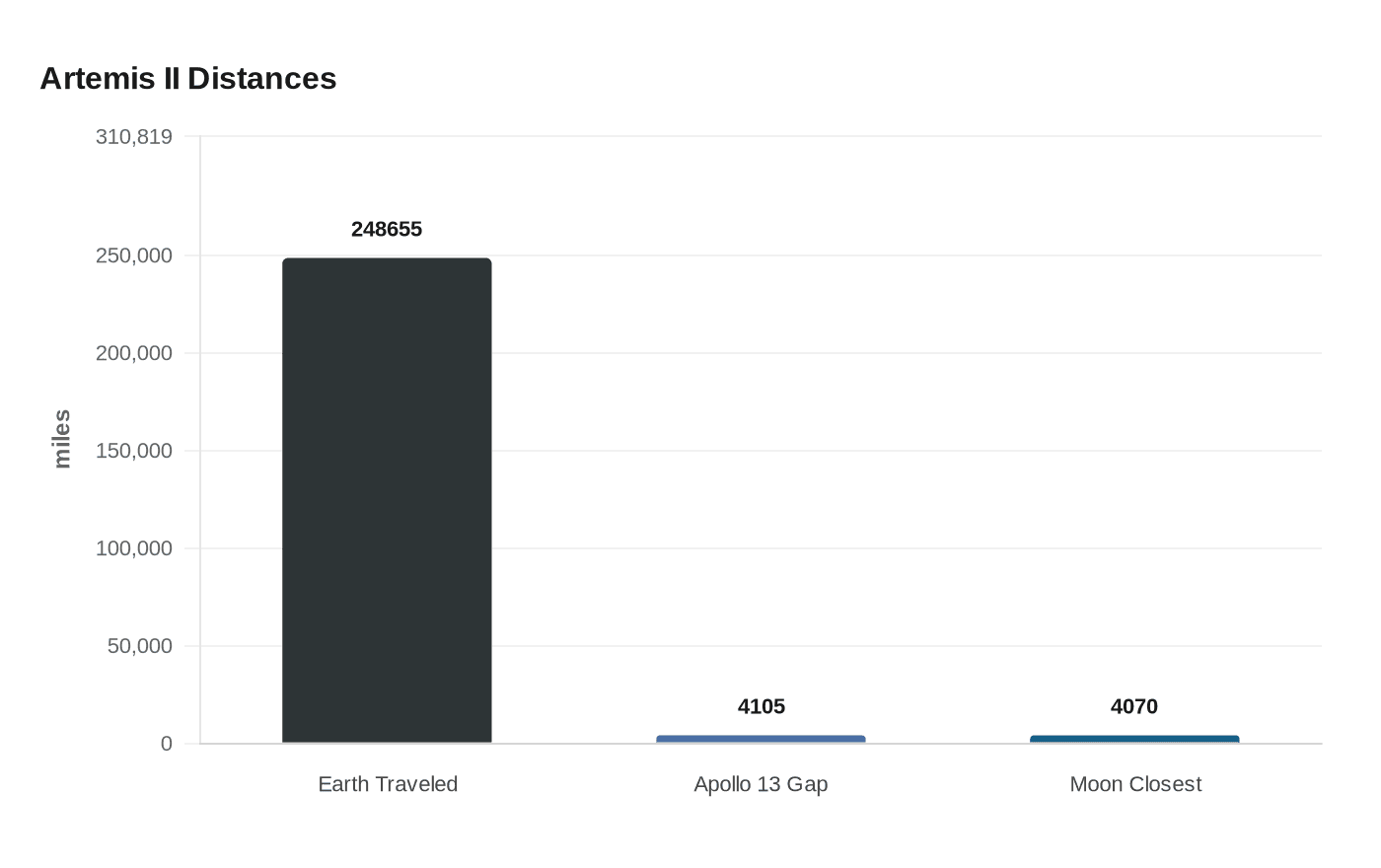
In the Oval Office, Trump hosted Reid Wiseman, Victor Glover, Christina Koch and Jeremy Hansen, the Artemis II crew that launched on April 1 from Kennedy Space Center in Florida on a planned roughly 10-day trip around the Moon and back. The mission splashed down off San Diego on April 10, and NASA said the crew had traveled 248,655 miles from Earth on April 6, surpassing the Apollo 13 crew’s long-standing distance record by about 4,105 miles. NASA also said the spacecraft came within about 4,070 miles of the Moon’s surface.

The event offered a clear picture of the politics of space now taking shape inside the White House: astronauts, flags and lunar ambition in front of the cameras, while the budget blueprint behind the scenes points in a different direction. NASA’s fiscal 2027 request keeps its focus on lunar exploration and American leadership in deep space, but it also proposes deep reductions to science funding and other programs, including education, research and diversity efforts that help sustain the broader space pipeline.
That tension matters far beyond one ceremonial visit. Artemis II is NASA’s first crewed flight test of the SLS rocket and Orion spacecraft around the Moon, and the agency has long cast Artemis as more than a single mission. The program has been tied to the goal of landing the first woman and first person of color on the Moon, while also building the scientific and technical foundation for longer-term lunar exploration.
Trump has made clear he wants human spaceflight to be part of his legacy. By putting the Artemis II astronauts on display at the White House, he embraced the symbolism of American exploration at a moment when the substance of his budget choices may make that future harder to sustain. The question now is not only how fast the United States can return to the Moon, but what kind of space program the White House is actually building to get there.
This article was produced by Prism’s automated news system from verified source data, official records, and press releases, then run through automated quality and moderation checks before publishing. The system is built and supervised by the people who set the standards it runs under. Read our full AI policy.
Did this article answer your question?

