Trump Holds Phone Call With Maduro, Discusses Possible U.S. Meeting
Multiple outlets reported that President Donald Trump held a phone call last week with Venezuelan leader Nicolás Maduro and discussed the prospect of meeting in the United States. The contact, if confirmed, would mark an unusual direct engagement between the two governments and could carry significant implications for sanctions, regional security, and oil markets.

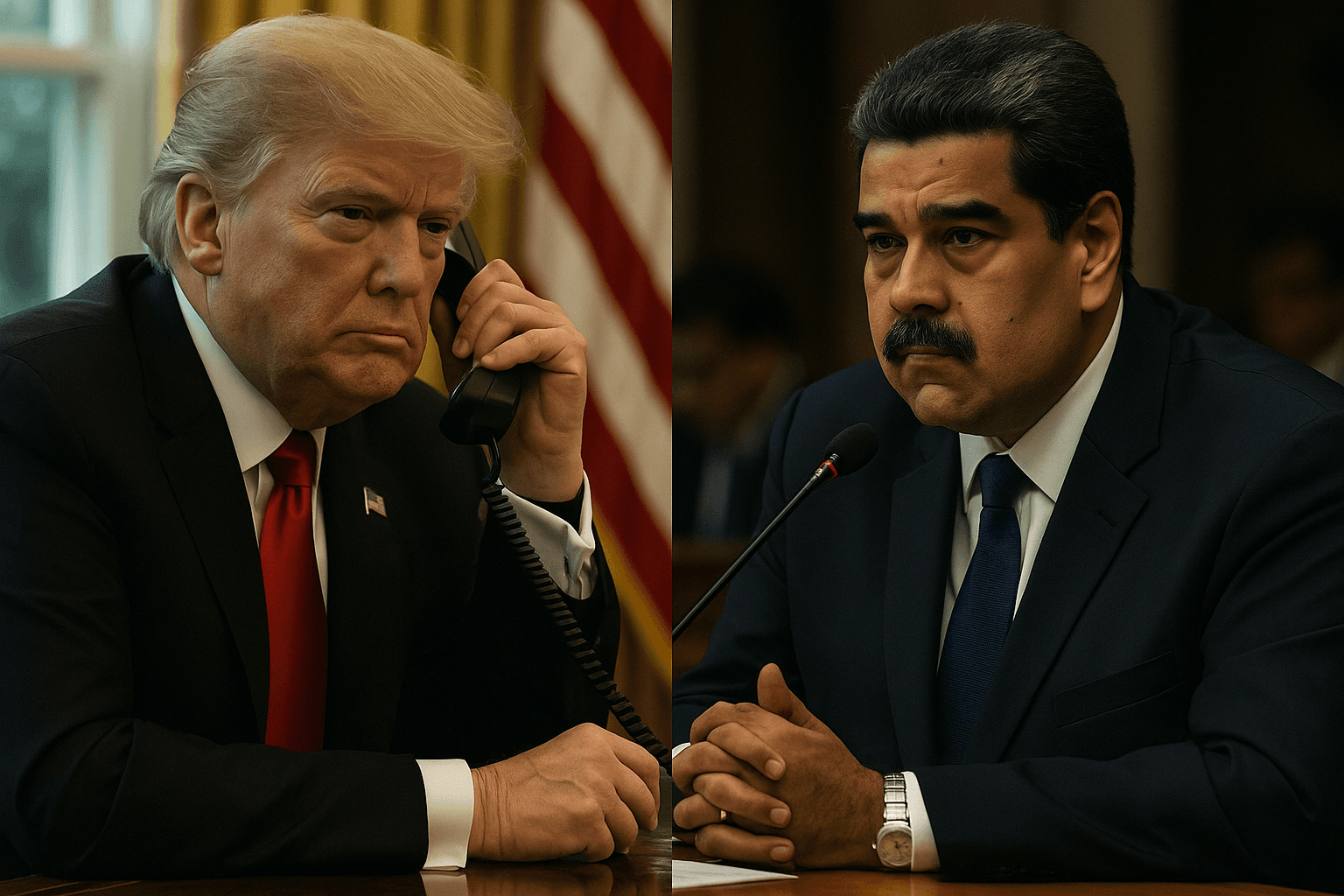
President Donald Trump spoke by phone last week with Venezuelan President Nicolás Maduro, multiple news organizations reported on November 29, 2025, citing people familiar with the call. The conversation included a discussion of a possible in person meeting in the United States, though no such meeting had been scheduled and the White House had not confirmed plans at the time of reporting. U.S. officials described the exchange as part of a broader set of diplomatic and operational options under consideration.
The reported contact comes amid heightened U.S. military pressure in the Caribbean this year, justified by Washington as aimed at countering narcotics trafficking and maritime criminal networks. The Trump administration has also pursued aggressive operations against smuggling routes tied to Venezuela, intensifying enforcement actions that have included seizures and interdictions in regional waters. Those measures reflect a broader strategic pivot toward hardening maritime security and disrupting illicit revenue streams that have helped sustain the Maduro government.
Economically the conversation signals a potential recalibration of U.S. policy that could reverberate through markets. Venezuela remains an oil dependent economy and the country's crude production has long been severely depressed relative to its pre crisis levels. Any credible move toward engagement or partial easing of restrictions could influence global oil flows and market expectations, particularly for heavy sour crude grades that Venezuelan fields historically supplied. Traders and energy companies will be watching for policy signals because even modest changes to sanctions enforcement or export facilitation could alter tightness in particular market segments.
For U.S. policymakers the calculus is complex. Direct engagement could create leverage to press on drug interdiction, secure the release of American detainees, or open new avenues for migration management. At the same time, normalizing ties risks political blowback at home and diplomatic pushback from regional partners who have long criticized Maduro. Washington must weigh short term operational gains against longer term goals of restoring democratic institutions and deterring malign influence from external actors that have supported Caracas.
The move also fits within a longer term trend of transactional diplomacy in Latin America, where energy needs, migration pressures, and security concerns increasingly intersect. Years of sanctions and economic collapse have left Venezuela politically isolated and economically vulnerable, narrowing policy options and increasing the appeal of ad hoc negotiations. Reengagement, if it proceeds beyond a phone call, could open the door to foreign investment and technical assistance for oil and infrastructure, but it could also entrench existing power structures if safeguards and conditionalities are not enforced.
Markets and capitals will be parsing the next actions closely. Financial investors will look for changes to sanctions language and licensing that could allow greater commercial activity, while security planners will monitor whether diplomatic openings translate into heightened cooperation on counter‑narcotics and maritime interdiction. For now the conversation remains an extraordinary, largely symbolic contact that signals an openness to explore options, but not a settled policy shift. The implications will depend on follow through, which as of November 29 has not been confirmed.
This article was produced by Prism’s automated news system from verified source data, official records, and press releases, then run through automated quality and moderation checks before publishing. The system is built and supervised by the people who set the standards it runs under. Read our full AI policy.
Did this article answer your question?

