Trump-led CFTC cuts staff, widens oversight of digital assets, prediction markets
Staffing at the CFTC fell 21% to 556 workers even as it took on digital assets and prediction markets tied to Trump-family business interests.

The federal watchdog assigned to police derivatives and prediction markets was cut to 556 full-time equivalent workers at the end of fiscal 2025, down from 708 a year earlier, even as its 2026 budget materials showed it being pushed into more digital-asset and prediction-market oversight. The squeeze has raised the stakes for ordinary investors and made the agency’s turf fight over speculative markets feel less like abstract regulation and more like a question of who gets protected when the trading turns toxic.
The shift began on February 4, 2025, when Acting Chairman Caroline D. Pham reorganized the CFTC Division of Enforcement to end “regulation by enforcement” and narrow its focus to fraud and helping victims. The old task-force structure was replaced by two units, the Complex Fraud Task Force and the Retail Fraud and General Enforcement Task Force. That retooling reduced the agency’s broad enforcement posture just as it was being asked to watch more fast-moving products.
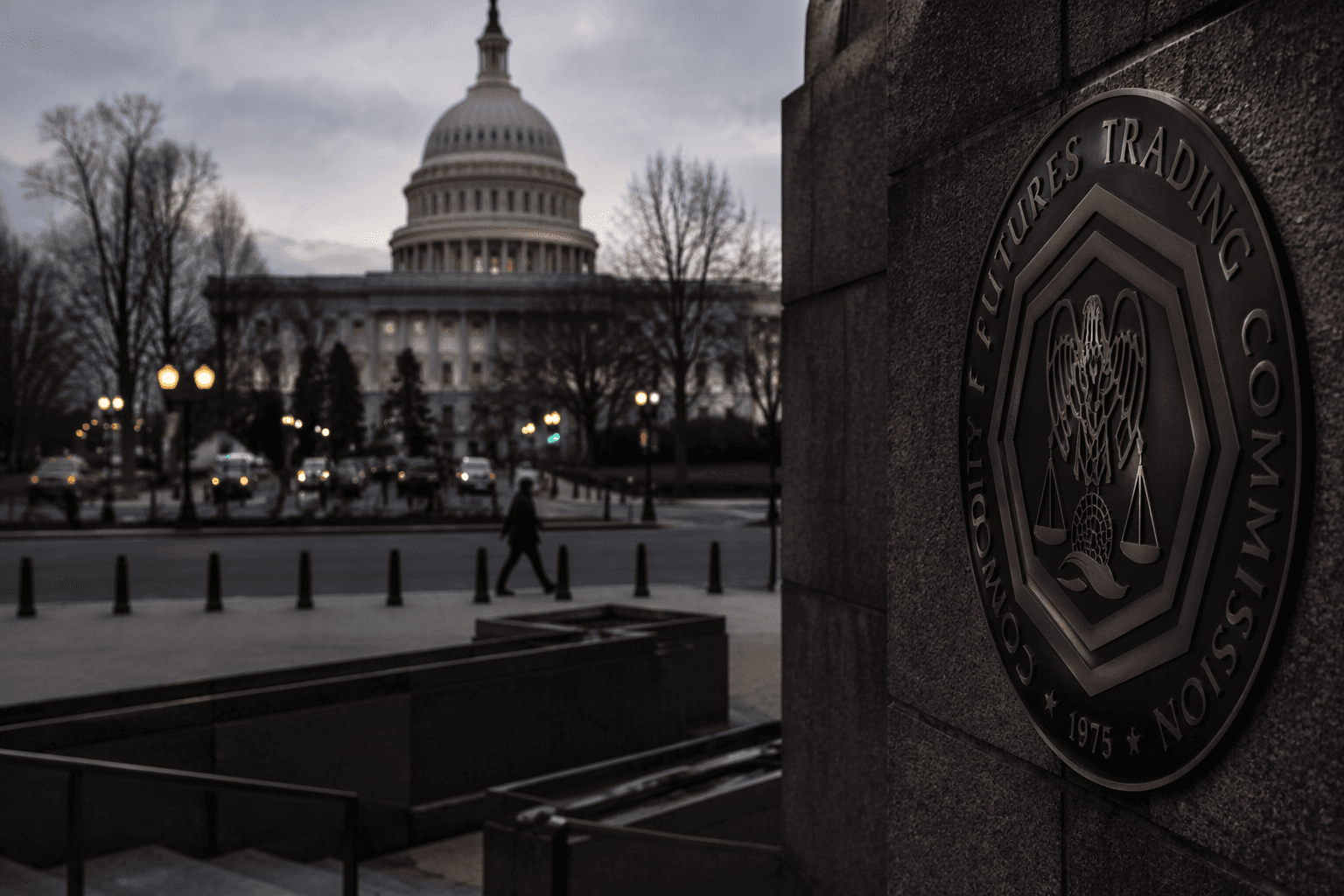
Michael S. Selig, nominated by President Donald J. Trump on October 27, 2025, confirmed by the Senate on December 18 and sworn in on December 22 as the CFTC’s 16th chairman, took over an agency already leaning harder into prediction markets. Selig wrote on February 17, 2026, that the CFTC has overseen prediction markets for decades, and on May 1 he said the agency remains a vigilant regulator and has strengthened its strategies against bad actors. His tenure has tracked with a more assertive push to define those markets as federal territory.
That claim has collided with state resistance. The CFTC sued New York, Wisconsin and Massachusetts over efforts to restrict prediction markets, then sued Minnesota on May 19, 2026 after it became the first state to enact a total ban. The commission also filed a Sixth Circuit amicus brief on May 12 reaffirming exclusive federal jurisdiction, and issued a no-action letter the next day involving data reporting for event contracts. The legal campaign shows a regulator expanding its authority at the same moment its ranks are shrinking.
The enforcement division has also warned that the markets carry real abuse risk. On February 25, 2026, it issued a prediction-markets advisory after two KalshiEX cases involving misuse of nonpublic information and fraud. One trader, accused of trading on his own candidacy, received a $2,246.36 penalty and a five-year suspension. Another trader tied to a YouTube channel was penalized $20,397.58 and suspended for two years. For ordinary investors, thinner staffing means fewer examiners, slower response times and weaker deterrence when speculation starts to look like manipulation.
The political money trail makes the picture harder to ignore. On August 26, 2025, Polymarket said 1789 Capital, the Trump Jr.-backed venture firm, invested in the company and that Donald Trump Jr. joined its advisory board. The investment was in the double-digit millions of dollars. Polymarket also said users placed $6 billion worth of trades in the first half of 2025. The pattern has the shape of regulatory capture: as public oversight narrows, the firms closest to power gain more room to grow, and the government’s ability to police speculative risk grows weaker.
This article was produced by Prism’s automated news system from verified source data, official records, and press releases, then run through automated quality and moderation checks before publishing. The system is built and supervised by the people who set the standards it runs under. Read our full AI policy.
Did this article answer your question?

