Trump nominates ousted FEMA chief Cameron Hamilton to lead agency
Trump has brought back Cameron Hamilton, the FEMA chief he fired after a break over the agency’s future, as storm season raises the stakes.
President Donald Trump has nominated Cameron Hamilton, the former acting FEMA chief who was pushed out after defending the agency, to lead the Federal Emergency Management Agency just as Washington is debating how much of the nation’s disaster response should remain in federal hands. The White House sent Hamilton’s nomination to the Senate on May 11, 2026, formally putting him in line to run the agency inside the Department of Homeland Security.
Hamilton’s return is striking because it follows a direct clash over FEMA’s existence. He testified before the House Appropriations Homeland Security Subcommittee on May 7, 2025, that he did not believe it was in the best interest of the American people to eliminate FEMA. He was removed the next day, after the administration and former Homeland Security Secretary Kristi Noem were openly weighing a smaller future for the agency.

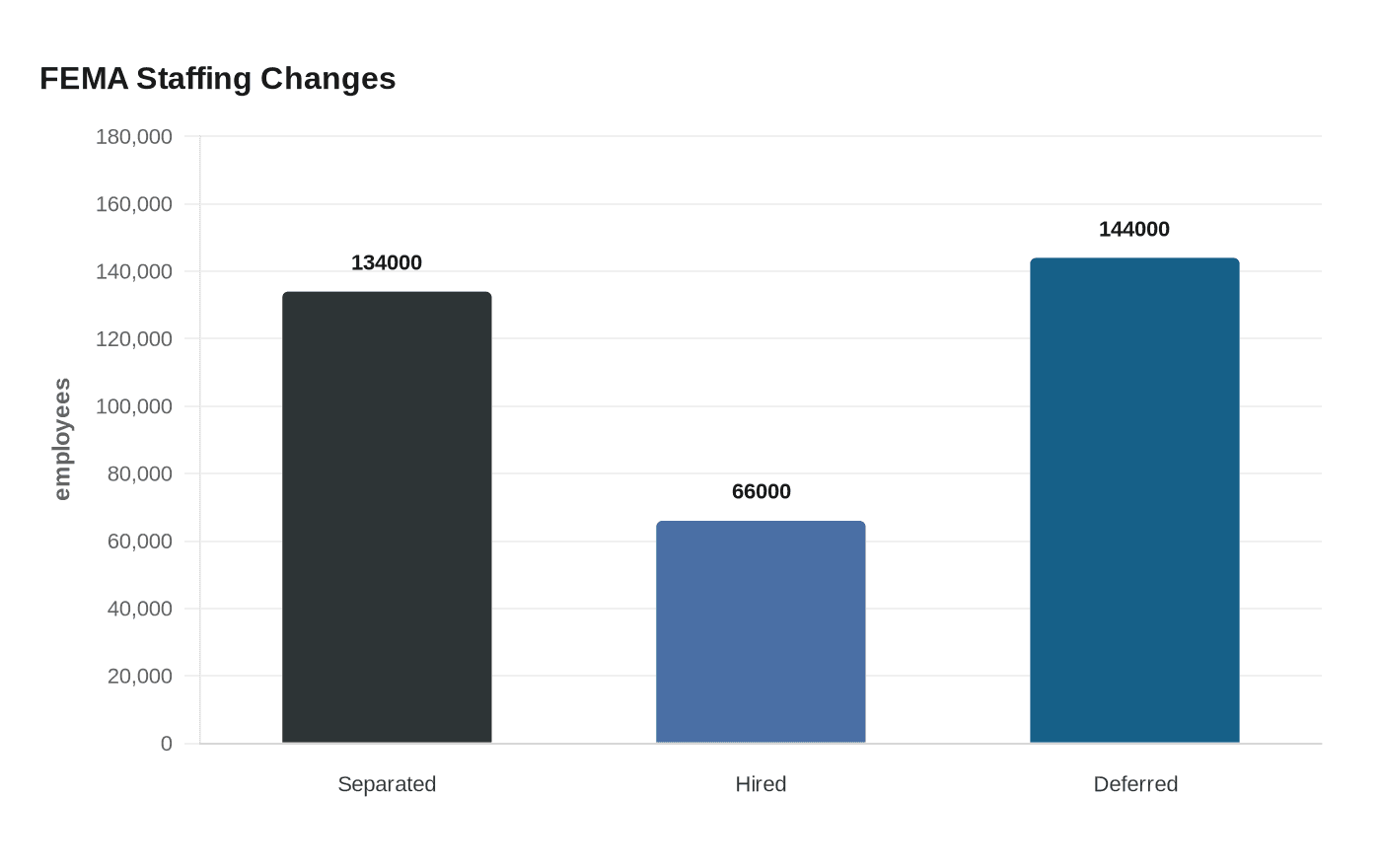
The nomination lands at a fragile moment for disaster readiness. FEMA is the federal coordinator when hurricanes, floods, wildfires and other emergencies overwhelm local and state response, but the Government Accountability Office reported that from January to June 2025 staffing declined at nearly all major agencies. About 134,000 employees separated during that period, about 66,000 were hired, and roughly 144,000 were approved for deferred resignation. Other reporting has said FEMA’s own workforce fell about 9.5% in the first half of 2025, with around 2,000 full-time employees leaving.
That backdrop matters heading into the most dangerous months of the year. Local officials and emergency managers depend on FEMA for staffing, logistics, housing assistance, debris removal support and recovery coordination after storms or fires. A smaller agency, led by a nominee once removed for resisting calls to eliminate it, underscores how much of the administration’s disaster policy still hinges on political control over the agency’s mission, budget and size.
The FEMA Review Council added another layer of pressure when it released its final report on May 7, 2026. The Department of Homeland Security said President Trump created the council on January 24, 2025, and its report cast FEMA as a “not the first responder” but a “force multiplier” for states, tribes and local governments. Some reporting said the council backed away from earlier ideas to cut FEMA staffing by 50% and instead moved toward a leaner, mission-focused agency with a larger role for state and local governments.
Hamilton’s nomination now puts that debate in front of the Senate. His confirmation hearing is likely to test not just his qualifications, but whether FEMA is headed for reinvention, contraction or another round of political strain just as hurricane and wildfire season intensify.
This article was produced by Prism’s automated news system from verified source data, official records, and press releases, then run through automated quality and moderation checks before publishing. The system is built and supervised by the people who set the standards it runs under. Read our full AI policy.
Did this article answer your question?

