Trump Officials Push Diplomacy as Iran War May End Without Hormuz Deal
Trump officials signaled the U.S. could declare victory in Iran without reopening Hormuz, as oil prices topped $100 per barrel for the first time since 2022.

The Trump administration signaled it could end the war against Iran without first securing the full reopening of the Strait of Hormuz, as top officials leaned on diplomatic messaging while U.S. crude oil prices surpassed $100 per barrel for the first time since July 2022.
White House Press Secretary Karoline Leavitt declared that reopening the Strait of Hormuz was not a "core objective" of the operation for President Trump, and Secretary of State Marco Rubio suggested the U.S. could declare victory even as Iran continued to block most tankers from the waterway. "The full reopening of the Strait is something the Administration is working towards, but the core objectives of the operation have been clearly defined for the American people by the Commander in Chief," Leavitt said.
The administration and much of the intelligence community had estimated it could take weeks, if not months, to return the strait to full operational status. About 20% of the world's oil supply typically flows through the waterway. Trump told aides he was willing to end the military campaign against Iran even if the Strait remained largely closed, leaving a complex operation to reopen it for a later date.
Leavitt cited Iran's willingness to allow an additional 20 tankers to sail through the Strait in the coming days as a win for "the president's diplomacy." Leavitt also described the Iranian officials currently negotiating with the U.S. as appearing "more reasonable behind the scenes privately" than previous Iranian leaders, many of whom she said were killed after "stringing" the U.S. along in negotiations.
Rubio said in an interview with Al Jazeera on Monday that the Strait of Hormuz would "reopen one way or another" after the military operation concluded, and described Iran as "weaker than it's been in 10 years." He maintained the U.S. still sought to form an international coalition to police the strait, but acknowledged it was a longer-term goal, telling counterparts at a G7 Foreign Ministers' meeting in France on March 27 that many understood the need for such a group.
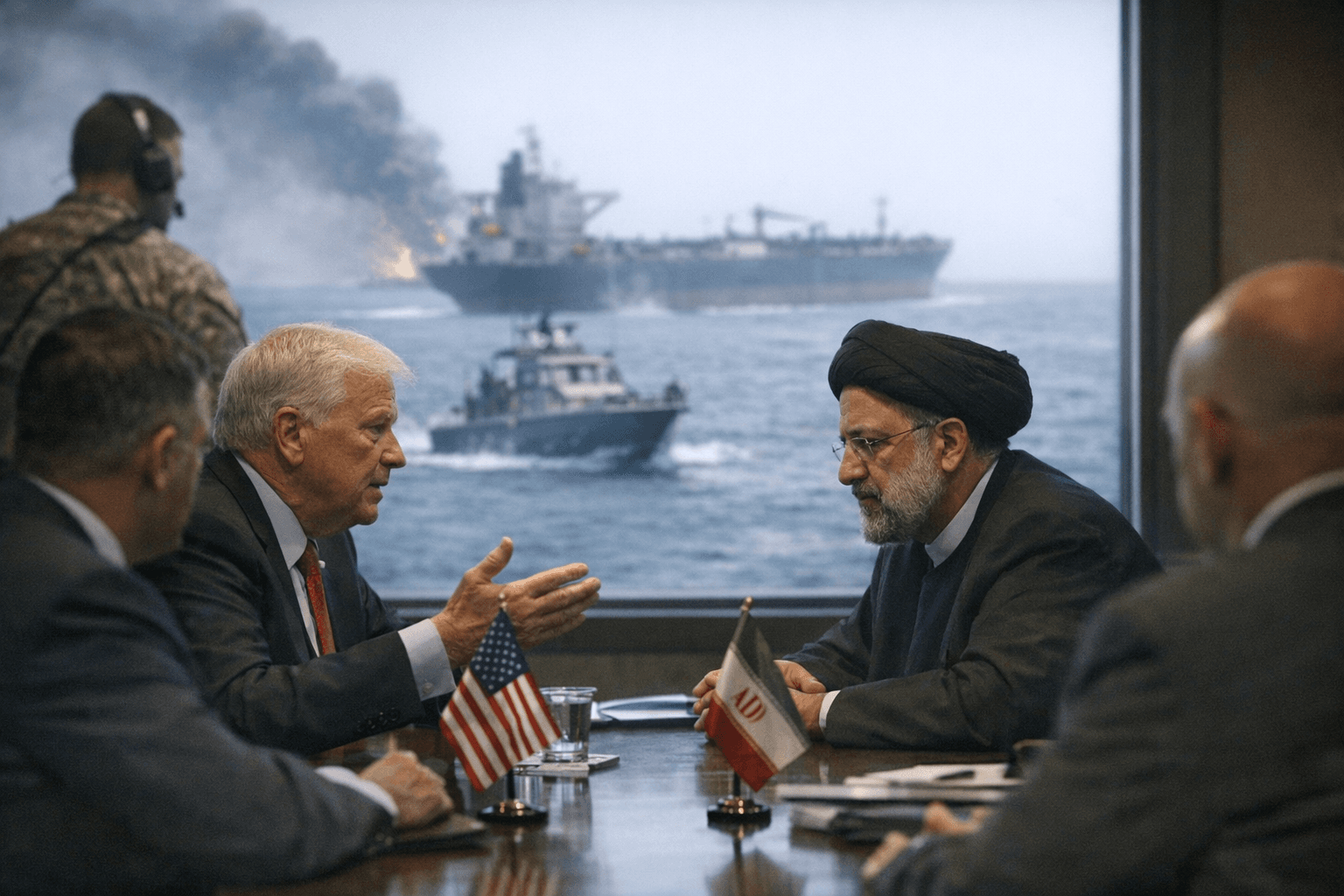
Iran's Foreign Ministry had deemed proposals presented in a 15-point U.S. plan as "excessive and unreasonable," and Iranian leaders denied being in direct talks with Washington. Rubio acknowledged it was "not quite clear how decisions are being made inside of Iran," expressing uncertainty over whether new supreme leader Ayatollah Mojtaba Khamenei had consolidated power.
Oil prices rose sharply, with U.S. crude settling above $100 per barrel, as the administration's ability to deliver a swift resolution remained in question. Trump told CBS News that prices would "drop when we leave, when it's over." Inside the White House, many top officials recognized that reopening the oil chokepoint was critical not only for ending the war but also for bringing down soaring oil and gas prices, which were shaping up to be a key liability for Republicans ahead of November's midterm elections.
A Kuwait-flagged tanker, the Al-Salmi, suffered material damage to its hull from a reported Iranian drone strike off the coast of Dubai on March 31, raising the possibility of an oil spill in surrounding waters. The strike underscored the gap between the administration's diplomatic framing and conditions on the water, with the conflict entering its fifth week and no formal ceasefire in sight.
Know something we missed? Have a correction or additional information?
Submit a Tip

