Trump orders early federal access to frontier AI models
Trump's latest AI order gives Washington voluntary early access to frontier models up to 30 days before release, aiming to catch cyber risks without slowing deployment.
Federal officials will get a first look at the most advanced AI models before they reach the public, a move meant to give Washington more oversight while stopping short of a licensing regime that could slow U.S. builders. The new order asks companies on a voluntary basis to provide access to frontier models up to 30 days before release, and the government is expected to use a benchmark process to assess advanced cyber capabilities.
The policy is the latest step in Donald Trump’s effort to reset federal AI policy around speed, national security and economic competition. On January 23, 2025, Trump signed Executive Order 14179, “Removing Barriers to American Leadership in Artificial Intelligence,” which revoked Biden’s October 30, 2023 AI order, Executive Order 14110, and directed the White House to develop an AI Action Plan within 180 days. That plan arrived on July 23, 2025 as “Winning the AI Race: America’s AI Action Plan,” a framework that identified more than 90 federal policy actions and pushed faster permitting for data centers and semiconductor fabs, along with federal procurement guidance favoring frontier large language models.
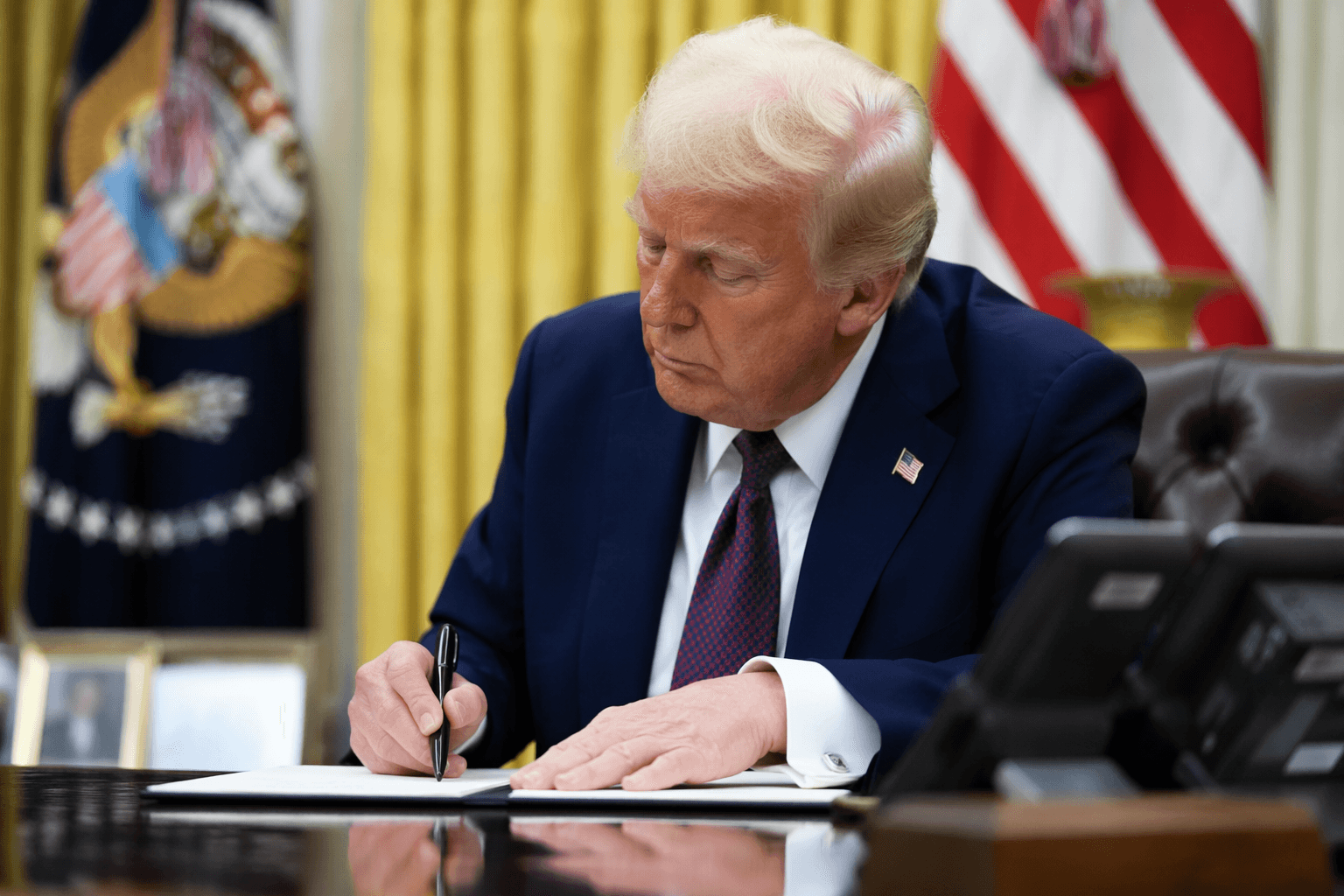
The new oversight order is narrower than a hard regulatory clampdown. It keeps the review process voluntary rather than imposing mandatory preclearance or licensing, a difference that matters for companies racing to commercialize frontier systems. CNBC reported on June 2, 2026 that Trump had delayed an earlier signing ceremony after saying he did not like certain aspects of the order, before moving ahead with the version now in place. The practical effect lands most directly on frontier developers such as Anthropic and OpenAI, both of which sit at the center of the current AI investment boom.
That boom is happening alongside a broader political and corporate alignment in Washington. CNBC also reported that Anthropic had confidentially filed for an IPO, while OpenAI was preparing for a possible offering, as the White House works closely with tech figures such as David Sacks, Elon Musk and Mark Zuckerberg. For the administration, the pitch is straightforward: increase federal visibility into the most powerful models without choking off innovation.
But critics have said the White House has already gone too far in stripping away protections. On January 30, 2025, Mozilla and the Consumer Federation of America urged the administration to keep AI testing and transparency rules in place, warning that systems used in veterans’ benefits and health care should be tested before deployment. The American Civil Liberties Union later said in December 2025 that Trump’s AI agenda threatened states’ ability to regulate AI and could put federal funding at risk for states with more than minimally burdensome rules. The fight now is over where oversight ends and restraint begins.
This article was produced by Prism’s automated news system from verified source data, official records, and press releases, then run through automated quality and moderation checks before publishing. The system is built and supervised by the people who set the standards it runs under. Read our full AI policy.
Did this article answer your question?

