Trump pauses Strait of Hormuz escort mission amid Iran talks
Trump froze Project Freedom just a day after launching it, leaving the Strait of Hormuz exposed while Iran talks hang over the world’s busiest oil chokepoint.
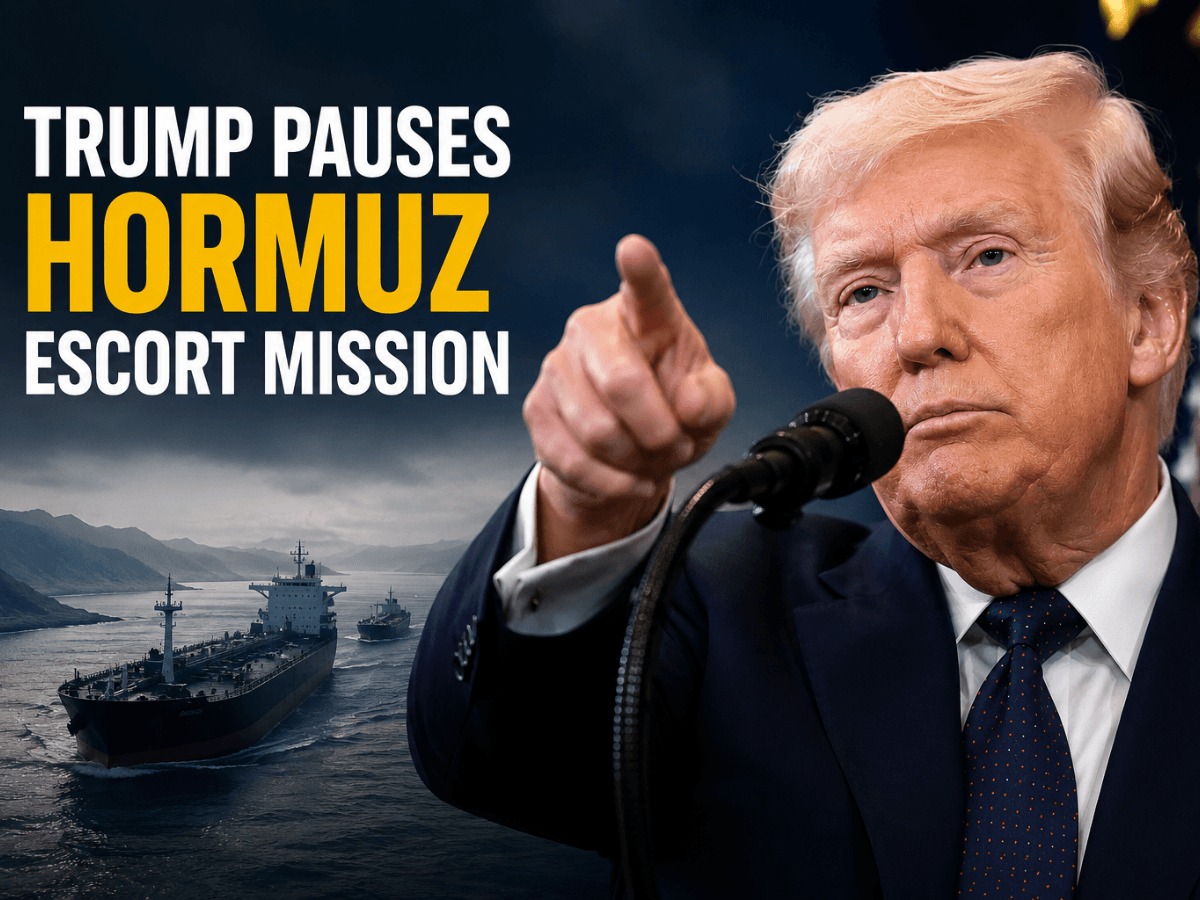
A pause in the U.S. escort mission through the Strait of Hormuz left the world’s most sensitive oil artery in a fragile holding pattern, with tanker routes, military posture and gasoline markets all hanging on the next move in Washington and Tehran. Donald Trump said on May 5 that he would halt Project Freedom for a short period to give the United States and Iran time to finalize a deal, even as the blockade of Iranian ports stayed in place.
The reversal came only a day after the White House unveiled the U.S.-led mission to guide commercial ships through the 21-mile-wide strait, where roughly one-fifth of the world’s oil and gas moves each day. The United States had already begun steering tankers along a safer route and clearing Iranian mines from part of the waterway farther from Iran’s coastline. That makes the pause more than a procedural change. It shifts the burden back onto diplomacy while leaving shipping companies, insurers and energy traders to gauge whether the waterway is genuinely easing or merely being held in reserve as leverage.
Trump said the pause came at Pakistan’s request, with Islamabad helping mediate between Washington and Tehran. Marco Rubio said U.S. offensive operations against Iran were over and described American forces as operating defensively, a message meant to separate the escort pause from any broader retreat. That distinction matters. If the move is de-escalation, the administration is trying to narrow the conflict before it widens. If it is hesitation, Washington may be signaling that it is reluctant to commit naval power for long without a clearer political payoff.
The risks are obvious. The Strait of Hormuz remains a choke point where a small disruption can ripple through global energy markets, especially when Iran keeps pressuring ships and warning that vessels transiting without its permission could be targeted. The U.S. State Department said Iran has threatened ships, laid mines and tried to charge tolls in the strait, language that underscores how quickly a maritime dispute can become an economic one. Any renewed disruption could push up freight costs, raise insurance premiums and send a fresh price shock through U.S. fuel markets.
The tension also echoes the Tanker War of the 1980s, when attacks on oil tankers and merchant ships in the Persian Gulf and the Strait of Hormuz became a defining feature of the Iran-Iraq War. Now, with a shaky ceasefire under strain and a United Nations resolution on freedom of navigation under discussion, the administration’s pause looks like a test of whether pressure can still produce a deal without surrendering the leverage that brought the escorts in the first place.
Know something we missed? Have a correction or additional information?
Submit a Tip
