Trump plan would allow quick asylum rejections without interviews
Trump's plan could let officials deny some asylum claims before interviews, putting applicants who miss the one-year deadline at immediate risk.

A Trump administration plan could let U.S. immigration officials reject some asylum applications before ever interviewing the people who filed them, a shift that would put the one-year deadline and its exceptions at the center of who gets a hearing and who gets turned away.
Under current rules, asylum seekers generally must file Form I-589 within one year of arriving in the United States unless they can show changed circumstances or extraordinary circumstances. The burden is on the applicant to prove the deadline was met, or that an exception applies, and ordinary cases are supposed to include an interview by U.S. Citizenship and Immigration Services under federal regulations. The new plan, outlined in internal federal documents, would let USCIS officers move forward only if they decide an applicant has already satisfied one of those exceptions, rather than automatically sending every case to an interview.

That change matters because an asylum denial on the papers can end a case before an applicant has a chance to explain a missed deadline, fill in missing evidence, or describe the conditions that forced a flight from home. Immigration advocates and legal groups say that kind of summary processing risks cutting off due process in a system where the difference between a timely filing and a late one can decide whether a person is even heard.
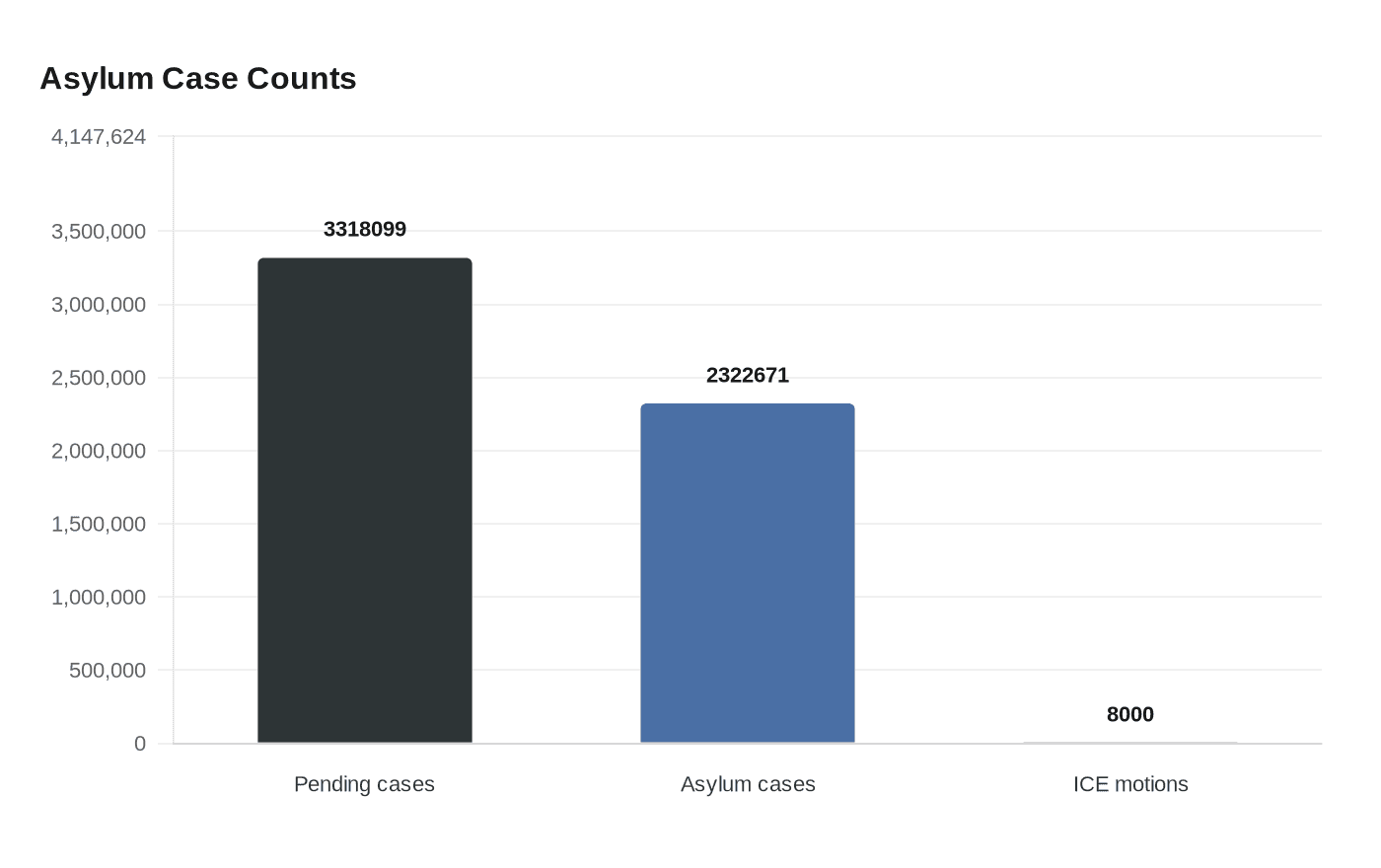
The proposal arrives as the immigration court system remains overwhelmed. TRAC reported 3,318,099 pending cases in February 2026, and 2,322,671 of them involved formal asylum applications. That means roughly 70% of the backlog was tied to asylum seekers waiting for hearings or decisions.
The administration has already moved to speed denials in other parts of the system. On April 11, 2025, Sirce E. Owen, the acting director of the Executive Office for Immigration Review, issued Policy Memorandum 25-28 saying adjudicators may pretermit legally deficient asylum applications without a hearing when there are no factual issues in dispute. In other words, the Justice Department signaled that judges can throw out weak claims without taking testimony first.
That broader push is unfolding alongside other efforts to narrow access. CBS News previously reported that ICE attorneys filed more than 8,000 motions in immigration court to toss out asylum claims by citing deportation arrangements with third countries. Another recent report said immigration judges were denying nearly 80% of asylum applications in 2026. Together, those moves show a system tilting toward faster rejections, with less room for applicants to make their case before they are sent away.
This article was produced by Prism’s automated news system from verified source data, official records, and press releases, then run through automated quality and moderation checks before publishing. The system is built and supervised by the people who set the standards it runs under. Read our full AI policy.
Did this article answer your question?

