Trump raises tariffs on South Korean imports to 25 percent, rattling markets
President Trump announced a tariff increase from 15% to 25% on South Korean imports, targeting autos, lumber and pharmaceuticals and unsettling Seoul and global markets.
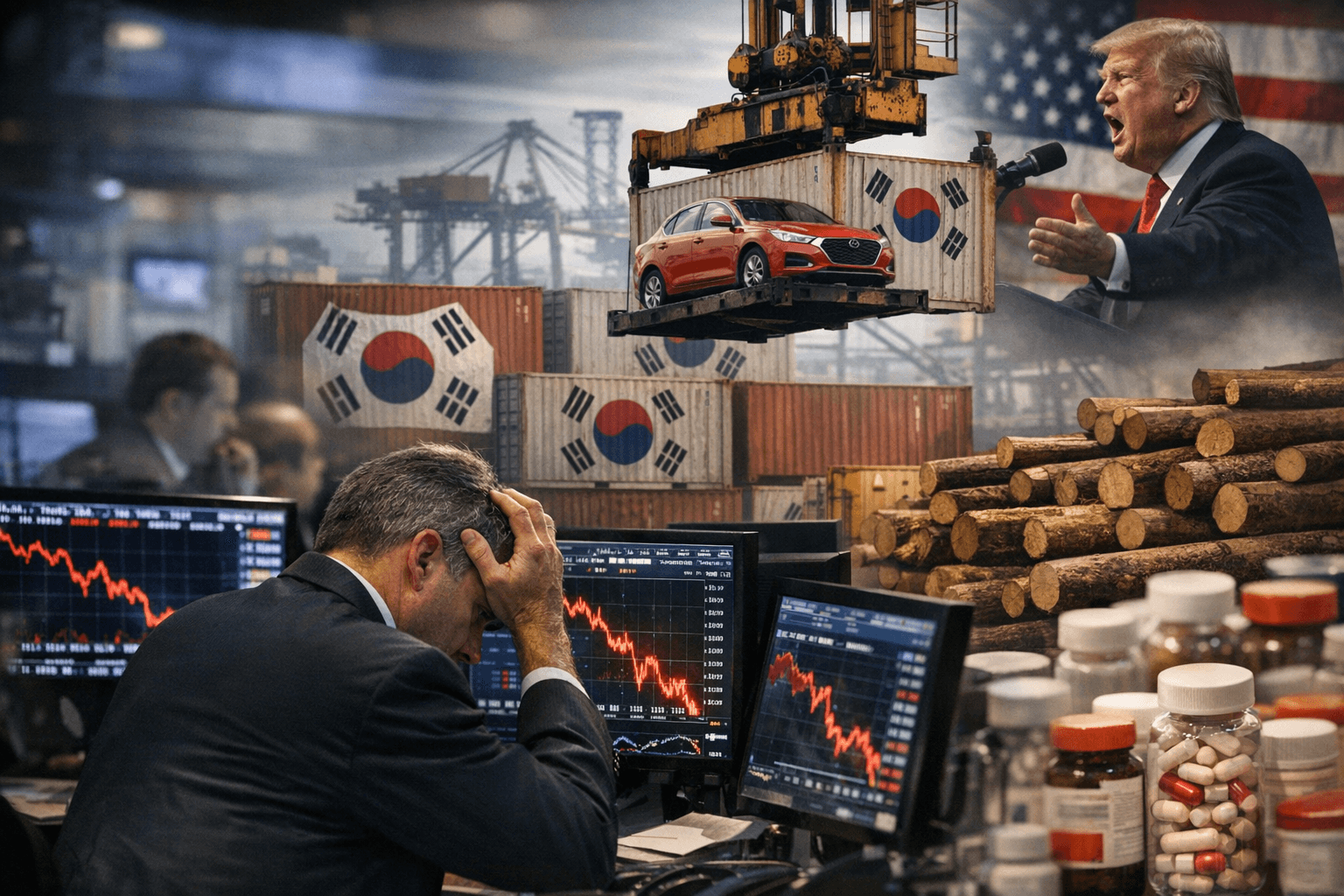
President Donald Trump announced today on social media that the United States will raise reciprocal tariffs on South Korean imports from the previously agreed 15 percent to 25 percent, citing the South Korean legislature's failure to enact a bilateral trade agreement. The move targets a range of products identified by the administration, including autos, lumber and pharmaceuticals, and immediately injected uncertainty into markets and supply chains.
The tariff hike reverses a prior accommodation that had limited reciprocal duties at 15 percent, and it comes amid heightened tensions over trade policy between Washington and a key U.S. ally. Administration officials framed the measure as leverage to force South Korean political action on the stalled bilateral deal, but analysts say the abrupt escalation risks broader economic fallout for both countries.
Financial markets reacted quickly. Asian equity markets were unsettled and the Korean won weakened against the dollar as investors reassessed export prospects. Export-oriented firms led losses in Seoul, where major automakers and parts suppliers have substantial exposure to U.S. demand. In the United States, import-sensitive sectors faced the prospect of higher input costs that could be passed on to consumers, potentially adding to inflationary pressure already elevated in recent years.
The immediate economic effect will be most pronounced in sectors explicitly singled out by the announcement. Korean passenger vehicles and light trucks, which have been a steady source of exports to the United States, could see margins compressed if duties are applied on shipments not produced in North America. Lumber and pharmaceutical firms that rely on cross-border supply chains may also confront higher costs and disrupted procurement plans. Multinational companies with integrated manufacturing footprints are likely to accelerate contingency planning, including shifting production, increasing local content in U.S. facilities or invoking contractual adjustments to manage duty exposure.
From a policy perspective, the administration’s unilateral tariff increase raises legal and diplomatic questions. Under World Trade Organization rules, broad tariff hikes that are not justified under national security or other narrowly defined exceptions can invite disputes and retaliatory measures. Seoul has historically preferred negotiation over escalation and could pursue formal dispute settlement or retaliatory duties, raising the risk of a tit-for-tat dynamic between two major economies.
Longer term, the episode underscores a trend toward trade frictions among allied economies and the growing political salience of tariffs as a lever of foreign policy. Firms and investors will watch whether Korean corporates accelerate investment in U.S. production to avoid duties, a shift that would reshape near-term trade flows but raise capital expenditure risks. For U.S. consumers, a sustained increase in tariffs on imports from a major supplier could lift prices for cars and other goods at a time when many households remain sensitive to higher living costs.
Policymakers in Seoul now face a difficult choice between political action to salvage the bilateral agreement and retaliatory measures that could inflame domestic economic costs. For markets and companies, the announcement marks the start of a period of heightened uncertainty that could reverberate across supply chains and trade patterns in 2026.
This article was produced by Prism’s automated news system from verified source data, official records, and press releases, then run through automated quality and moderation checks before publishing. The system is built and supervised by the people who set the standards it runs under. Read our full AI policy.
Did this article answer your question?


