Trump Rally Shooting Revives Fears Over Political Violence and Security
One attendee was killed and three people were wounded at Trump’s Butler rally, turning the campaign into a security crisis and reviving fears of political violence.
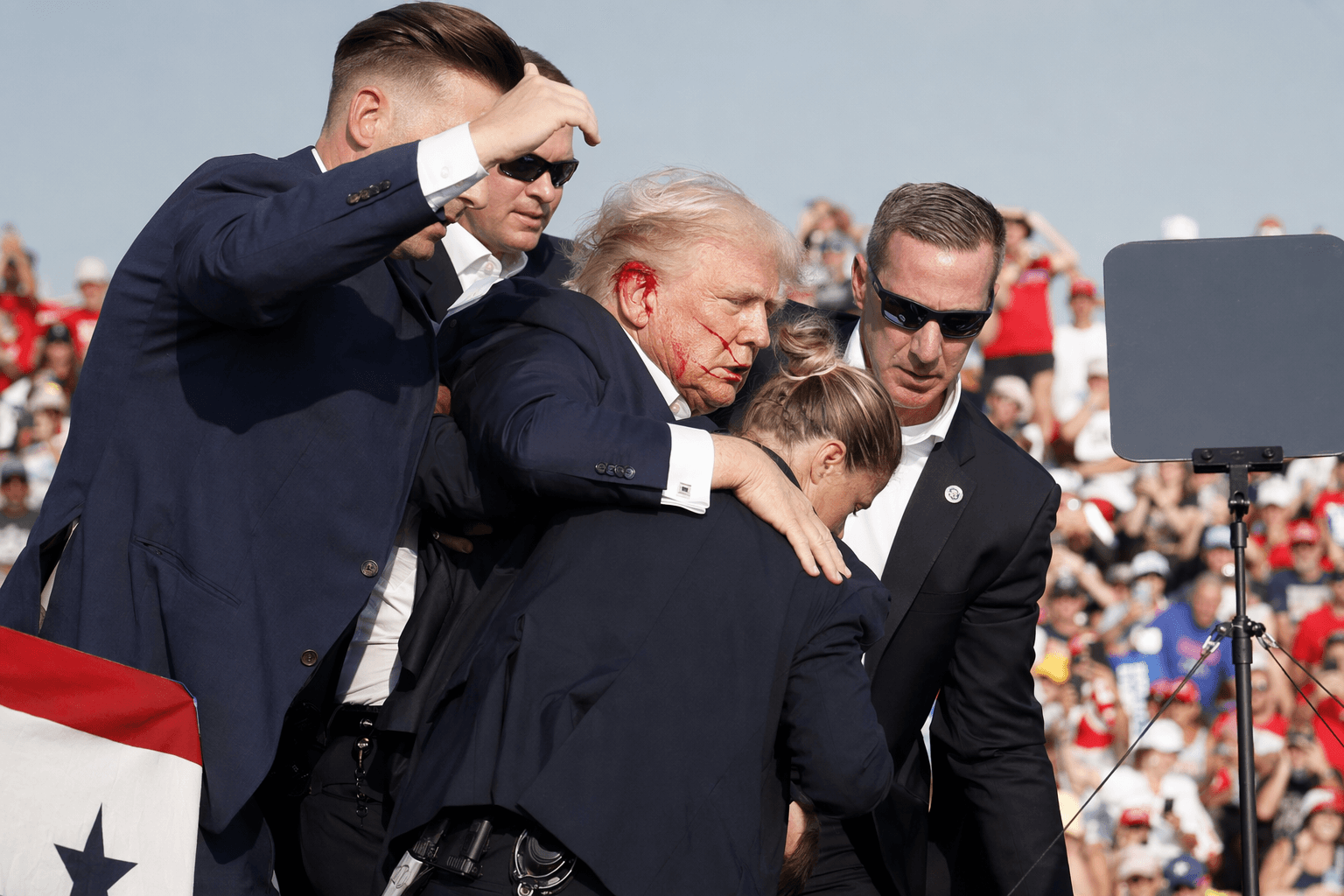
The shooting at Donald Trump’s Butler, Pennsylvania, rally left one attendee dead, three people wounded, including Trump, and the Secret Service with the shooter killed in the chaos. What began as a campaign event quickly became a national security story, forcing attention onto protective failures, the temperature of political rhetoric and the price of keeping a presidential candidate physically safe.
History suggested that the danger does not end with the gunfire. The United States has had four assassinated presidents, Abraham Lincoln, James A. Garfield, William McKinley and John F. Kennedy, and repeated attempts on presidents and candidates have made security a recurring problem around the office. Ronald Reagan was shot in Washington, D.C., on March 30, 1981, less than a decade after two failed attempts on Gerald Ford and 18 years after Kennedy was killed in Dallas on November 22, 1963. Each attack shifted attention away from policy and toward whether the presidency could still be conducted in public.
President Joe Biden responded from the Oval Office by urging Americans to cool heated political rhetoric and ordering a review of what security measures went wrong. The shooting hit at a moment when the 2024 race was intensifying, and Trump was abruptly removed from the public stage for security reasons. That is one of the lasting political effects of assassination attempts: a candidate or president may become physically safer, but also more isolated, more shielded by security protocols and less able to project the openness that modern politics demands.
The sense of danger deepened after another apparent assassination attempt involving Trump at a Florida golf course, a case that federal authorities treated as a serious criminal matter. In that episode, prosecutors brought charges in federal court, and later trial proceedings featured dozens of government witnesses. Together, the Pennsylvania shooting and the Florida case reinforced how quickly political violence can spill beyond one event and reshape an entire campaign’s tone.
The broader history is just as telling. After Kennedy’s assassination, Lyndon B. Johnson created the Warren Commission on November 29, 1963, signaling how a presidential killing can trigger a longer security state around the office. The National Archives has long treated presidential protection as a major federal concern, a reminder that every new threat leaves behind a more guarded presidency, one that must balance visibility against survival.
This article was produced by Prism’s automated news system from verified source data, official records, and press releases, then run through automated quality and moderation checks before publishing. The system is built and supervised by the people who set the standards it runs under. Read our full AI policy.
Did this article answer your question?

