Trump rewrites tariffs after court rulings strike down key duties
Courts have knocked out Trump’s IEEPA tariffs, but a 10% global surcharge and Section 232 duties on metals and medicines still hang over importers.

Donald Trump’s tariff program is no longer one policy so much as a stack of contested measures, some erased by courts, some still collecting revenue, and some already heading toward the next legal fight. The result is a moving target for importers, manufacturers and retailers trying to price goods while Washington keeps rewriting the rules.
The clearest defeat came for the tariffs Trump imposed under the International Emergency Economic Powers Act. The U.S. Court of International Trade ruled on May 28, 2025, that those duties exceeded presidential authority and were unlawful. The U.S. Supreme Court went further on February 20, 2026, in a 6-3 decision saying IEEPA does not authorize the president to impose tariffs. That ruling invalidated the April 2025 “Liberation Day” tariffs and the fentanyl-related duties on Chinese, Canadian and Mexican products.
Trump responded by reaching for other statutes. On February 20, 2026, he invoked Section 122 of the Trade Act of 1974 to impose a temporary 10% global import surcharge, effective February 24, 2026. The White House said Section 122 allows a surcharge of up to 15% for no more than 150 days unless Congress extends it, and U.S. Customs and Border Protection confirmed the duty took effect on February 24. That makes Section 122 the main stopgap tariff still standing, even as legal challenges continue.
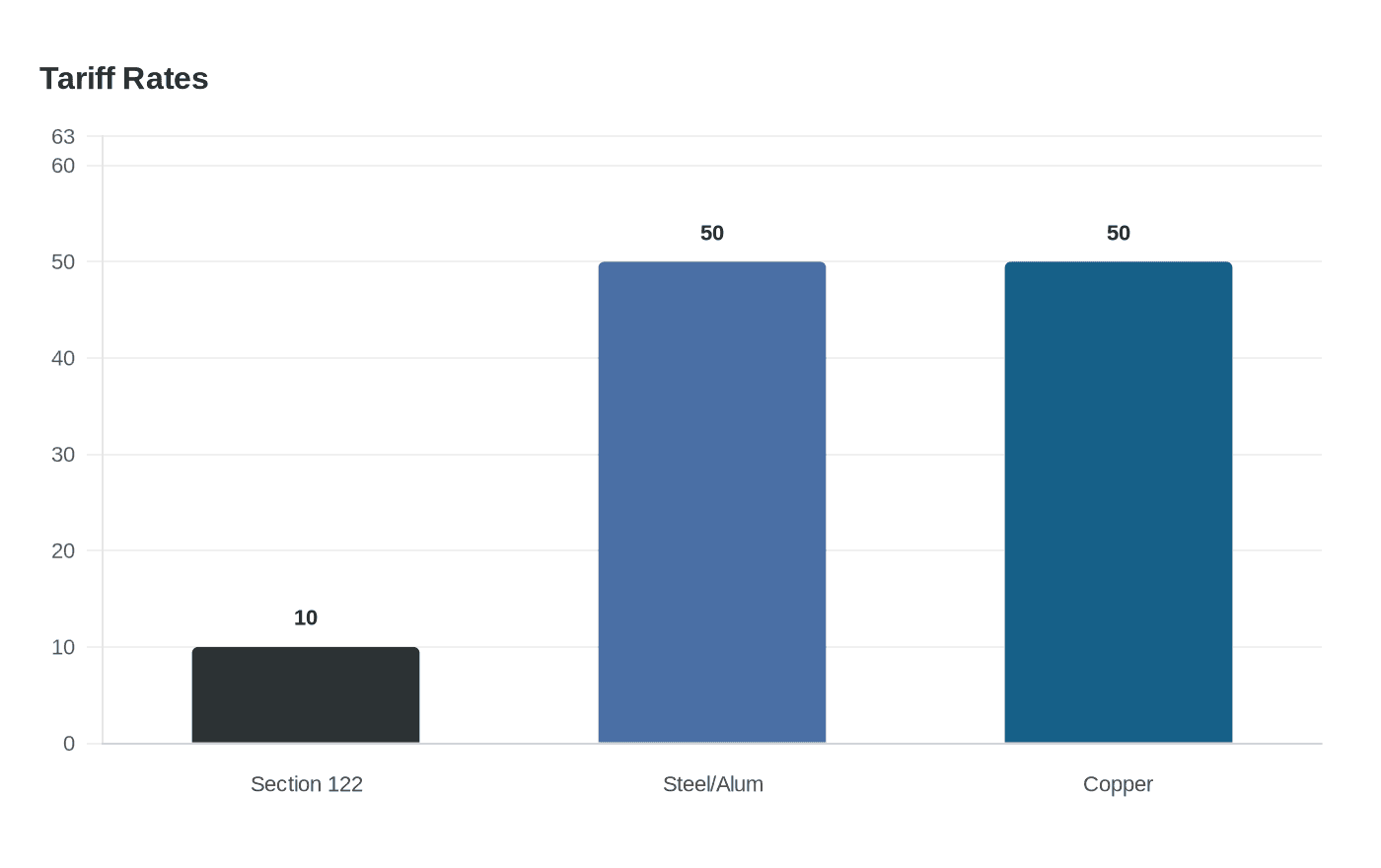
Section 232 tariffs also remained in force after the Supreme Court ruling. Trump’s administration used that authority again on April 2, 2026, announcing new duties on patented pharmaceuticals and pharmaceutical ingredients after the Commerce Department found those imports threatened U.S. national security. The pharmaceutical tariff framework includes exemptions and staggered effective dates, with some beginning July 31, 2026 and others September 29, 2026. The White House also strengthened tariffs on steel, aluminum and copper imports, after adding copper to the Section 232 program in July 2025 at the same 50% rate as steel and aluminum.
The broader tariff drive has already widened. The Congressional Research Service said Trump’s 2025 actions expanded Section 232 tariffs on steel, aluminum and autos, while also imposing duties on copper products, trucks and some wood products. Additional Section 232 investigations are still underway, leaving more tariff rounds possible.
For business, the problem is not only the tax itself but the instability. Importers and retailers face shifting duty rates, staggered start dates and the risk that one legal authority can vanish overnight while another takes its place. The Tax Foundation estimated the now-invalidated IEEPA tariffs had already raised more than $160 billion by February 20, 2026, and could have generated $1.4 trillion over 2026 to 2035 if left intact. On May 7, 2026, the Court of International Trade also ruled against Trump’s latest 10% global tariff, but relief was narrow and stayed for most importers during appeal, keeping the policy drag in place even as the legal fight continues.
This article was produced by Prism’s automated news system from verified source data, official records, and press releases, then run through automated quality and moderation checks before publishing. The system is built and supervised by the people who set the standards it runs under. Read our full AI policy.
Did this article answer your question?
%3Amax_bytes(150000)%3Astrip_icc()%2FCertificate-of-deposit-2301f2164ceb4e91b100cb92aa6f868a.jpg&w=1920&q=75)